Showing posts with label conservation. Show all posts

Tuesday, 3 March 2020

Peter Charles Howard Pritchard 1943-2020. An encyclopaedic knowledge of chelonians and their conservation. How did he start out?

The study and conservation of chelonians—turtles, terrapins and tortoises—has lost a major champion with the death on 25 February of Peter Pritchard at the age of 76. He and his Chelonian Research Institute were better known in the U.S.A. and the lands where chelonians breed than in his native United Kingdom. An appreciation of his work, influence and importance can be read on the website of Turtle Conservancy.


From Turtle Conservancy's website


I never met Peter Pritchard and often wondered how he had become interested in reptiles. Then I read an appreciation (on what is now a dead link) he had written of Angus d’Albini Bellairs (1918-1990):

Angus was the first herpetologist I ever met. He was the immediate successor to my father as Reader in Anatomy at St. Mary’s Hospital, my father (Dr. J. J. Pritchard*) having been appointed Professor of Anatomy at Queen’s University in Belfast, Northern Ireland the preceding year, and this connection gave me free access to a man I regarded as an intellectual hero.  My (signed) copy of his 1957 book, simply named Reptiles, is dated April 5 1958, when I was just 14 years old, and just a few years later I started to write a book of my own, which I ambitiously entitled Living Turtles of the World.  Despite the clearly schoolboyish flavor of this early draft, not to mention the lack of personal field experience and shortage of library access, Angus introduced me to the concept of peer review (although we were not exactly peers), and he read the whole thing, making gentle suggestions in pencil wherever he saw fit. 
Whenever I was in London, I would find my way to the dusty chambers of St. Mary’s (made famous by Sir Alexander Fleming), and knock on Angus’ door for a conversation on the subject of mutual interest, namely herpetology.  At such times, he would always open a bottle of sherry and bring some small-size laboratory beakers from which we would drink it, as he urged me to pursue an experimental approach to herpetology, by means such as studying underwater respiration in softshell turtles, or scute regeneration in chelonians.  (Somehow, I never became “experimental”, instead concentrating on natural history, taxonomy, skeletal anatomy, and conservation aspects).
Angus also introduced me to other herpetologists, including Miss Grandison, the Keeper of Zoology at the British Museum, a lady who had seemed rather remote and doctrinaire when I wrote to her, but was more like a favorite auntie once encountered in person.  I was also privileged, through her, to meet J. C. Battersby, on his very last day before retiring in 1961; he had been a “boy attendant” of G. A. Boulenger, no less, appointed in 1916.
Angus introduced me to the bizarre militaristic hierarchies at the London Zoo (Regents’ Park), where the “gentlemen officers” (the Curators etc) lorded it over the non-commissioned ranks (head keepers and below), only the former being admitted to such places as the Fellows’ Restaurant.  He himself was, of course, “top of the heap,” a scholar and a gentleman, although unpaid in status as “honorary herpetologist,” and I think his extensive wartime military experience was what prompted him to refer to the Reptile House staff as his “sergeant major,” his “corporal,” etc… 

And that’s how it all began, although his interest in animals was first piqued by being taken as a small boy to London Zoo. Even though his first degree was in chemistry at Oxford, he moved to Florida to work for his Ph.D. with Archie Carr (1909-1987), the doyen of research and conservation of turtles.

The book Pritchard referred to was his Living Turtles of the World, published in 1967—when he was 24—by the infamous Herbert R. Axelrod’s TFH Publications. A completely rewritten survey of the world’s chelonians stretching to nearly 900 pages, also published by TFH, appeared as Encyclopedia of Turtles in 1979. Axelrod himself took a number of the photographs. I have a copy—still a useful reference—on my shelves.

The following video on, and including Peter Pritchard, appeared in 2016.


*Peter Pritchard’s father. John Joseph (Jack) Pritchard. was born in 1916 in Adelaide, South Australia. By the age of 19 he had a first degree and arrived in Oxford on a Rhodes Scholarship to work at Oxford in the Department of Physiology. After becoming medically qualified in London he moved into anatomy, first at UCL, then St. Mary’s before moving to Belfast as Professor. His research was on bone growth and repair, a subject the reader will notice of considerable interest and importance in the life of chelonians. He died in 1979, aged 63.


Saturday, 23 November 2019

Chinese Giant Salamanders: More information on those we had in the lab in 1960s Hong Kong

In the last post I noted how Edward George Boulenger had, in his description of a new species in 1924, noted: ‘Head…very much depressed’. I have found some photographs and videos of Chinese giant salamanders which show a similar appearance to that described by Boulenger but many which do not. Boulenger’s species (which had been regarded as synonymous with Andrias davidianus), Andrias sligoi, has been resurrected as a result of molecular phylogenetic analysis published this year. One can argue whether the species rank is warranted but there seems no doubt that the classic lineage, davidianus is different from sligoi and that they are geographically isolated. All sorts of questions then spring to mind: Is the ‘very much depressed’ head characteristic of the sligoi lineage? Or is it only in that state at a certain stage of growth? Are there other tissues present beneath the skin and bone that give a non-depressed appearance, changed by nutritional state, for example?

I have also looked at photographs of giant salamander skulls and replicas online, and again there do seem to be that remain flat posterior to the eyes while other show a rise in the region of the junction between the frontal and parietal bones.

I remembered that a very flat head described by Boulenger was not a feature of the Chinese giant salamanders bought in alive for class dissection at the University of Hong Kong in the 1960s. I took several photographs (and previously discussed some of them here) and they are shown below. To me the head seems more bulldog-like with a short ‘muzzle’ and, to continue the canine analogy, a ‘stop’— the rise in the skull beginning at the line of the eyes; in other words, the heads of these animals bought from the human food chain did not resemble Boulenger’s sligoi or some of the photographs of live specimens in circulation.


This one had lunged at my wife's hand with mouth open, and is ready to take on all comers


The bulldog-like shape of the head is particularly evident here


In the last post I noted the distance between the nostrils in Chinese and Japanese giant salamanders. I did a rough calculation from the photograph above (it had to be rough given the perspective). The distance between the nostrils was approximately 24% of head width, close to 21.5, the mean of five specimens in U.S. museums, detailed by Liu in his book published in 1950.

The pattern of tubercles on the head of our lab specimens is similar to that shown in a drawing in Liu’s book for A. davidianus but not that of sligoi shown in a drawing by or for Boulenger published on the ZSL website.

Is it, therefore, likely that the 1960s Hong Kong specimens were not from the sligoi genetic lineage but one of the other lineages from the mountain ranges of north-western China?

The question is interesting because it would suggest the main source for the trade in live salamanders going through Guangzhow (Canton), said to be the centre of the trade, was not the closer Nanling mountains but the mountains on the edge of the Tibetan plateau to the north and west.

In the old zoology store in the now-demolished Northcote Science Building there were some preserved specimens. My recollection is that there were several giant salamanders of modest size in jars of spirit rather than formalin. Did they survive the grand clear out when the department moved out and then moved on again to the Kadoorie Biological Sciences building? I was told a lot of stuff had been thrown out when I was external examiner in the department in the late 1990s but would somebody please have a look. If they still exist they could add something to the molecular phylogeny research and the pattern of trade for the human food market.

I have been fascinated by giant salamanders ever since seeing my first, the large Japanese one that lived in the vestibule of the aquarium at London Zoo. I never saw it move. The dozen or so for class use in the vertebrate course in Hong Kong were fascinating during the short time they were there. They were decidedly feisty; my wife had to move quickly as salamander wrangler when they made a lunge for her fingers during the photoshoot on the roof of the Northcote Science Building. I know they had to be ordered, with notice when they were needed. Food/Chinese medicinal items often came into Kong Hong from Chinese provinces like Yunnan and Sichuan far to the west in the1960s. There was a shelf of bear paws in the Chinese Merchandise Emporium on Queen’s Road.

We went through giant salamander country in Sichuan two years ago, with roads descending alongside the rocky streams and the slacker water in flatter valleys. Unfortunately, because many of us would like to have seen the set-up, the only salamander farm we saw was deserted, with overgrown or empty outdoor tanks.

Reading about what is known about giant salamanders I am struck by the need for more basic biology, particularly their reproductive biology. A major research facility, aimed at multigenerational captive breeding, could, alongside further studies in the wild, well be justified. If the Giant Panda deserved such a major effort, surely the Giant Salamander does as well. Given the massive increase in internal tourism in China, a well-designed centre with stunning exhibits could be a major attraction and a useful source of income.

I can only hope that the conservation measures being supported by ZSL and partners in China are successful and the survival of the giant salamanders in the wild and throughout their range can be assured.


References are in previous post.

Tuesday, 19 November 2019

Chinese Giant Salamanders: How many species are there?

Two well-publicised papers, published in 2018 and 2019, based on analysis of mitochondrial and nuclear genes, propagate the view that there is more than one species of giant salamander in China, that these species are ‘cryptic’ in that they do not differ in appearance, and that some are in imminent danger of extinction through ignorance of their existence. The authors certainly established that there are a number of distinct genetic lineages of giant salamander in China, enough to convince adherents to the phylogenetic species concept that they constitute different species. However, whether they are ‘good’ biological species is a matter that can be debated endlessly.

Giant salamanders in China in the wild are endangered because of over-collecting for the human food trade and from loss of habitat. Those working on the origins, evolution and conservation of these animals face major difficulties. The escape or release of wild-caught and farmed animals transported alive in large numbers throughout China in recent decades means that the geographical origin of newly-collected specimens cannot be guaranteed. By using specimens in museums collected before the vast increase in trade, the authors of the 2019 paper have overcome this problem but at a cost; the number of available specimens was small—just 17 individuals—since the DNA of many early specimens had been degraded by preservation in formalin.

The lineages are associated with the mountain ranges formed during the great geological upheavals that formed the Tibetan plateau starting about 3.3 million years ago. The authors of the 2019 paper realised that two of the lineages could be attributed to species that had been named in the past.

One lineage was be attributed to the classical domain of the Chinese giant salamander—in the northern Yangtze/Sichuan region—and conforms with Andrias davidianus. A second lineage from the Pearl River tributaries in the Nanling Mountains of south-eastern China appears to be that described by Edward George Boulenger in 1924 as a separate species, Andrias sligoi, that was later lumped into A. davidianus. A third lineage from the Huangshan mountains of north-eastern China has never been described as a separate form previously and could be a new, as yet un-named, species.

Boulenger noted morphological differences between what he named Megalobatrachus (now Andrias) sligoi and M. maximus. He would, wouldn’t he, since that is how new species were described then. But just as at the present with molecular genetic data, different people in the trade regarded some differences as too small to justify separation into a new species; others regarded the tiniest difference sufficient.

At that time Boulenger took his father's (George Albert Boulenger) view that any observable differences between Chinese and Japanese giant salamanders were too small to consider them as two species and continued to lump them into one, M. maximus. While he could find no consistent difference between the Chinese and Japanese forms, others claimed they could and the species maximus was split again into the Chinese, davidianus, and the Japanese, japonicus.

Ignoring the arrangement of tubercles on the head (which appear to differ somewhat in the Chinese and Japanese species) Boulenger also differentiated sligoi by its longer, flatter, and smoother head, and by the shorter distance between the eye and lip.

How Boulenger distinguished his new species, M. sligoi

Boulenger’s new species did not survive as such. Later authors argued it was no different or insufficiently different from davidianus and into the latter it was lumped. Liu in his Amphibians of Western China, published in 1950, condemned Boulenger’s erection of sligoi as a separate species:

Neither the length of the head (which is difficult to define, and which was not defined by Boulenger) nor the relative distance of the eye from the labial border are valid characters.

But Liu did not say why the characters are not valid!

We therefore seem to have agreement between morphology (whether declared ‘valid characters’ or not) and molecular genetics published 95 years later. However, I too have doubts about Boulenger's comparison (see later article). But Boulenger may have been right all along, and the name given recently, South China Giant Salamander, Andrias sligoi, an appropriate one. However, that is only if you agree that species should be defined in that way and not by the biological species concept.

Before accepting the increased number of proposed giant salamander species, perhaps it is worth considering whether the results of the recent artificial mixing up of lineages in both China and Japan (A. davidianus has been released into Japan) have not already invalidated that proposal.

‘Good’ biological species do not or only rarely interbreed in the wild. The classic difficulty with deciding whether species whose ranges do not overlap (i.e. they are allopatric) are ‘good; biological species, is that they do not meet in the wild, and the question of if, say, a geographical barrier were to be removed, would they interbreed naturally, cannot be answered. However, if lineages interbreed freely after translocation, then the case for their being biological species is severely dented if not holed beneath the waterline. Indeed, in the 2018 paper, the authors, do show that hybridisation between lineages has occurred in farms. Similarly, hybridisation between Chinese and Japanese forms has occurred in Japan where the former has been introduced.

On the evidence of hybridisation, then, the case for a number of ‘good’ species of giant salamander, according to the biological species concept, is weak.

The authors of the two papers (many of the authors are common to both) are concerned, rightly, with the conservation of giant salamanders and with the measures that should be taken to ensure their survival in the wild. However, the type of evidence used—that different lineages equal different species—is clearly not acceptable to adherents of the biological species concept. Indeed, if it that premise were correct, two of my daughters-in-law would be of a different species to me and my grandchildren interspecific hybrids. Thus, Jerry Coyne, a world authority on speciation from the University of Chicago, in his blog, Why Evolution is True, wrote:

…virtually every paper I’ve seen on the process of speciation—that is, on the ways that new species come into being—deals not with the accumulation of genetic distance per se, but on the development of reproductive barriers that eventually prevent populations from exchanging genes.

Greg Mayer of the University of Wisconsin, making the same general point from a different case on Coyne’s website:

…At the time, this bothered me, as I saw it as an application of the old morphological species concept, extended to genetic data: if you can tell them apart, they are different species. This is also what Jerry argued against… an arbitrary amount of morphological or genetic difference, or inferred time of separation based on the amount of genetic difference, is not a sound basis for a species concept.

Here, sadly, there may be incompatibility between the politics of conservation and science. Conservationists find it easier to provoke politicians into action with measures to protect species rather than populations and habitats—thus the more species, the better the argument and the greater geographical spread of habitat protection.  However, Jerry Coyne has argued cogently:

…the ‘splitting’ of species [in this case discussing the Giraffe, ‘split’ into different ‘species’ by virtue of differences in genetic lineage] is a conservationist motivation, not an attempt to partition out nature in biologically and evolutionary meaningful ways’.

The research on the giant salamanders reminds us of some fundamental biological questions, like the perpetual problem of how we define a species, as well as some urgent practical conservation concerns. Indeed the research highlights the urgent need to protect, manage and re-introduce populations of giant salamanders in the wild.

However we regard Boulenger’s Megalobatrachus (now Andrias) sligoi, the discovery of his type specimen is an interesting story that I will cover in a further article…and can we determine where those giant salamanders used for class dissection in Hong Kong in the 1960s came from?


Boulenger EG.. 1924. On a new giant salamander, living in the Society’s gardens. Proceedings of the Zoological Society of London, 1924, 173–174 

Turvey ST, Marr MM, Barnes I, Brace S, Tapley B, Murphy RW, Zhao E, Cunnigham AA. 2019. Historical museum collections clarify the evolutionary history of cryptic species radiation in the world’s largest amphibians. Ecology and Evolution 2019;00:1–15. https://doi.org/10.1002/ece3.5257

Yan F, Lü,J, Zhang B, Yuan Z, Zhao H, Huang S, Wei G, Mi X, Zou D, Xu W, Chen S, Wang J, Xie F, Wu M, Xiao H, Liang Z, Jin J, Wu S, Xue C, Tapley B, Turvey ST, Papenfuss TJ, Cunningham AA, Murphy RW, Zhang Y, Che J. 2018. The Chinese giant salamander exemplifies the hidden extinction of cryptic species. Current Biology, 28, R590–R592. https://doi. org/10.1016/j.cub.2018.04.004 


Saturday, 29 June 2019

Feathers Fly in London. Why on earth was Chalmers Mitchell of London Zoo on the wrong side of a conservation battle of the early 1900s?

Peter Chalmers Mitchell
I have never been able to make up my mind about Sir Peter Chalmers Mitchell FRS (1864-1945). At the Zoological Society he was treated as a god; icons of his reign as Secretary between 1903 and 1935 were still around the offices in the 1990s. His biographers and obituarists concentrated almost entirely on his work running the Zoo and in his life in Spain during the civil war rather than as a scientist or writer on biological questions of his day.

The more I read about Mitchell (he adopted his second first name, his mother’s surname, to make a non-hyphenated double-barrelled surname in the Scottish style) I realised he was a skilful political manipulator and self-publicist with modest scientific credentials, even by the standards of the times.

What I did not know was his involvement—clearly on the wrong side—in a major bird protection and conservation measure of the early 20th century. Only when I read William T. Stearn’s (1911-2001) 1981 book on the history of the Natural History Museum a few years ago did I come across the story.

Sir William Flower when Director of the Natural History Museum became concerned at the vast numbers of birds being killed around the world to satisfy the fashion of adorning women’s hats with feathers, wings and even the skins of whole birds. A Bill to prohibit the importation of skins and feathers passed through the Lords but was rejected by the House of Commons in 1908. And the numbers really were vast—millions of birds each year.

Six years later, in 1914, the Trustees of the Museum supported another Bill to suppress the plumage trade on the grounds of protection (the killing of adult birds with young left to die in the nest) and conservation. However, the trade was highly profitable and trade organisations galvanised their supporters against the Society of Protection of Birds, formed specifically to lobby for abolition. A major supporter of the trade was, amazingly, the Selborne Society, named for Gilbert White and Britain’s first national conservation organisation, dedicated to the ‘preservation of birds, plants and pleasant places’. Equally amazingly, Mitchell was fielded by the group formed by the trade to oppose the proposed legislation. Instead he and many of the great and good who were members of the Selborne Society argued in favour of the trade and argued it could be supported by captive breeding: 

…to consider and suggest to those interested the best means to protect, maintain and encourage the increase of all useful species including those used in the feather trade, so as to ensure a regular supply without endangering any.

Stearn takes up the story:

The opponents of the Plumage Bill, then before Parliament, accordingly convened a meeting at Burlington House, Piccadilly, against the proposed legislation. At this meeting C.E. Fagan, Assistant Secretary of the Natural History Museum, Sidney Harmer and Ogilvie-Grant represented the Museum’s Trustees in their attempt to prohibit the import of feathers. Rather surprisingly, Dr (later Sir) Peter Chalmers Mitchell (1864-1945), Secretary of the Zoological Society of London, chose to appear on the platform in support of the plumage traders and, by reason of his office, thereby implied that the Zoological Society likewise supported them against the Natural History Museum and the bird protectionists. Fagan therefore requested Mitchell to state publicly before he addressed the meeting whether he was about to speak in his official capacity as representing the views of the Zoological Society’s Council in opposition to the Bill, or whether he was about to express his own personal opinion. Being pressed for a definite and unequivocal reply, he was forced to admit that he had no mandate from the Zoological Society and attended merely in a private capacity. This was all the Museum representatives wanted. An eye-witness recorded that ‘after the meeting Mitchell, livid with rage, stepped down from the platform and, coming up to where we were sitting, stopped in front of Fagan and positively hissed out “I demand of you a public apology!” He got an appropriate reply but no apology, public or private’. Thereafter Mitchell refused to shake hands or even to speak to Fagan. The retirement of Fletcher in 1919 as Director [of the Museum] provided the opportunity of revenge. The Plumage Bill did not, however, receive royal assent until 1921 and not until 1922 did it become operative.

Fellows of the Zoological Society were clearly disturbed by Mitchell’s behaviour and they found a spokesman in Sir Harry Johnston (1858-1927)--of Okapi fame—who wrote several letters to The Times. One, 18 February 1914, concluded:

It was further announced with some emphasis that an address on the economic preservation of birds by Mr. S. L. Bensusan, presided over by the Countess of Warwick and supported by Dr. Chalmers Mitchell, F. R. S., would take place on February 16. From the brief Press notices of the meeting published to-day, I can discern no reason why bird-lovers should abate their hostility to the unreasonable developments of the plumage trade. Dr. Chalmers Mitchell, a very distinguished biologist and the Secretary of the Zoological Society, is president of the Committee for the Economic Preservation of Birds. But unless he disavows the statement made in the pages of the Selborne Magazine that his committee deprecates legislation for tho protection of birds or would postpone it to some vague future period, he is not acting fairly towards the numerous Fellowship of the Zoological Society; for there are, I am convinced, in that society a great many persons besides myself who consider that, if the Zoological Society Is to intervene in the question at all, it should be to range itself on, the side of the Government and of the advisers of tho Government in the Natural History Museum, and assist in bringing forward as soon as possible a measure which shall on behalf of Great Britain close the now open market for the traffic in the skins of rare, beautiful, or useful wild birds.

The Countess of Warwick, incidentally, was Daisy, mistress of the Prince of Wales (Edward VII) and others.

The eventual outcome of the plumage Bill was that the Selborne Society, the first on the scene for conservation in England, was completely eclipsed by the (later Royal) Society for the Protection of Birds which now has more than one million members.

Five years later, in 1919, Mitchell certainly did have his revenge on the staff of the Museum who were sent by the Trustees to oppose him and who challenged his representation of the Zoological Society in 1914. Fagan, an able administrator, had effectively run the Museum under the less than effective efforts of two Directors. However, his pay was low. The Trustees therefore proposed with the the support of scientists in the museum to appoint Fagan as Director for a couple of years until his statutory retirement and the appointment of another scientist to the job. Mitchell organised a protest from the Royal Society and a letter to The Times signed by 20 FRSs. It would have been an easy matter to get them to sign. Here was a proposal to appoint an administrator, who was described as a ‘member of the clerical staff’ to a scientist’s job. The Trustees had to back down but they did appoint Sidney Frederic Harmer—a member of the team opposing Mitchell over the plumage Bill. Harmer, already a strong candidate, had written to Nature in support of Fagan taking over for a few years and had stated that he would not run against him. William Robert Ogilvie-Grant (1863-1924), Curator of Birds at the Museum and the other representative of the Museum who opposed Mitchell wrote to the Times:

[The Trustees] might certainly be supposed to know better what is for the benefit of the Museum than a number of university professors who, however individually able, deal with a side of natural history which has little or no connexion with the making and improvement of museum collections...I served under Owen, Flower, Lankester, and Fletcher, and have had more than thirty years’ experience of Mr Fagan as an enthusiast for the Museum, an encourager of scientific work, and as an administrator, and I should most warmly welcome his promotion to the post of which he has already done so much of the work.

Two hours before he retired the very ill Director, Sir Lazarus Fletcher FRS, in a letter wrote:

The present agitation is probably being stirred by Chalmers Mitchell who is very skilled in the memorialistic method and knows by experience and success all its possibilities. He got his own post by a successful use of the method. Nearly all the signatories have attacked the Trustees in the same way again and again…I have been a Fellow of the Royal Society for thirty years and know the line the Fellows will take.

Despite the open hostility of a number of Fellows of the Zoological Society during the feather war of 1914, Chalmers Mitchell survived as Secretary—he was skilled in packing the Council with supporters—and sailed on. Here indeed was a Scotsman on the make. 


Clarke R. 2005. Informal adult education between the wars. The curious case of the Selborne Lecture Bureau. Birkbeck College, Faculty of Continuing Education Occasional Papers No. 6

Stearn WT. 1981. The Natural History Museum at South Kensington. London: Heinemann


Thursday, 13 June 2019

Hinge-backed Tortoises: Bushmeat and Snails

I shouldn’t have been surprised, but I was. It had not entered my head that the hinge-backed tortoises of the West and Central African forests loom large in the bushmeat trade until I read a paper published last year in Herpetological Journal. Numbers of both species involved, Forest Hinge-backed Tortoise, Kinixys erosa, and Home’s Hinge-backed Tortoise, K. homeana, have decreased markedly in recent decades. Habitat loss, collection for human food and for collection for the inaccurately titled ‘pet’ trade have all been blamed for the decline.

The paper reported interviews with people in Côte d’Ivoire, Togo and Nigeria. Confirmation of major declines in population were obtained in Togo and Nigeria. The interesting point to emerge is that these tortoises are collected from the forest by gatherers of snails—also for human consumption. Thus one might expect the number of wild snails for sale in a shop to be positively correlated with the number tortoises on sale. That prediction was confirmed.

The authors made the point that snail gatherers pose more of a danger to tortoises than ordinary hunters for bushmeat. Snails and tortoises occupy the same microhabitat and searches for one are bound to reveal the other.

More about Kinixys tortoises here.

Embed from Getty Images

Kinixys homeana


Luiselli L, Dendi D, Pacini N, Amadi N, Akani GC, Eniang EA, Ségniagbeto GH. 2018. Interviews on the status of West African forest tortoises (genus Kinixys), including preliminary data on the effect of snail gatherers on their trade. Herpetological Journal 28, 171-177.

Saturday, 17 March 2018

Yellow-crested Cockatoo: critically endangered but still being traded illegally

In February 2017 I wrote a series of posts on the critically endangered Yellow-crested Cockatoo (Cacatua sulphurea) of Indonesia and East Timor. News this week from TRAFFIC shows that this cockatoo is still being caught and traded for the pet trade in south-east Asia. An illegal shipment of animals, including a hundred cockatoos of three species, was seized in the Philippines last week.


Thursday, 8 February 2018

Conservation Trusts and Charities: How good are they?

When travelling abroad I often see or hear of the work of some non-governmental conservation body or other working on a particular species, group of species or habitat. Sometimes they are big organisations and sometimes they are small, even one-man bands running on money provided by sponsors. The cynic in me, though, asks: How do we know that the work they are doing needs to be done? How effective are they at doing what they say they are doing? How efficient are they in doing what they are doing? Are some doing more harm than good, or having no effect?

I do not know the answers. There is competition for funding from private and corporate sponsors, government agencies and non-governmental organisations. Therefore the websites and written material of organisations are there to say how bad the problem they are are working on is and what a great job they are doing in tackling it—advertising puff in other words, just like that put out by British universities and so-called universities.

My impression—and I have no evidence to back it up—is that many organisations do a very good job in difficult conditions but I have the lingering suspicion some are there to provide their founders with an income to enjoy the lifestyle.

My very limited Latin prevents me from adapting Quis custodiet ipsos custodes? to Who watches the conservationists? 

Tuesday, 23 January 2018

Black Rats and black rats. Close encounters of different kinds

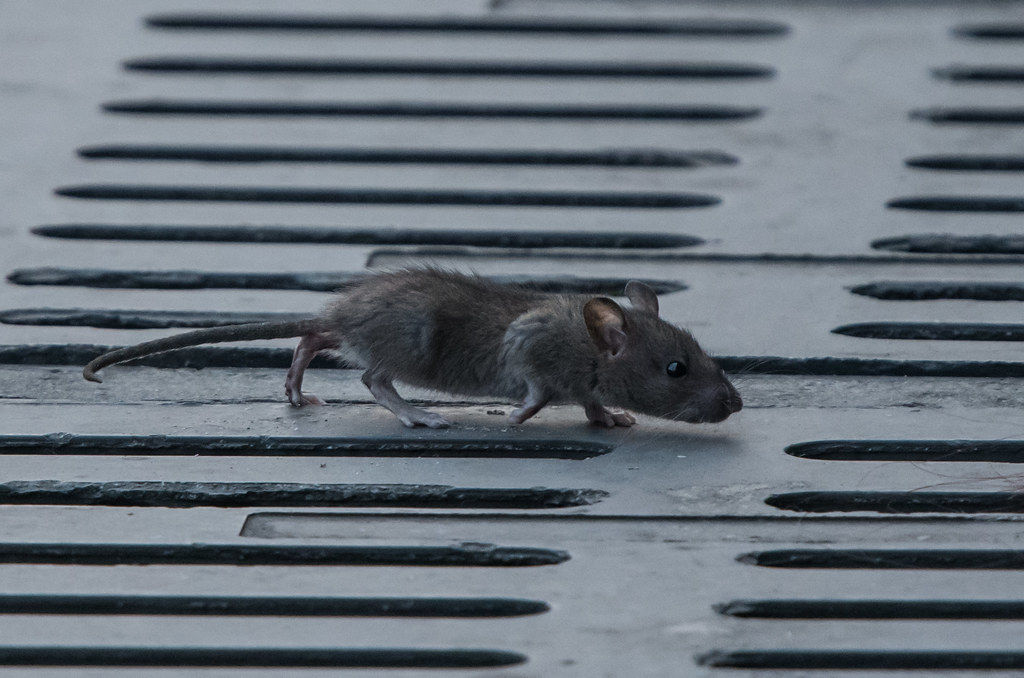
A Black Rat in Sichuan

The last wild mammal we saw before leaving in Sichuan in November was a Black Rat (Rattus rattus). It was moving on a grating over a drain at a service station on a motorway near Chengdu. For some reason the overhead artificial lighting late on a winter’s afternoon played havoc with my video. However. Tim Melling took still photographs and this is one of them:


Black Rat (Rattus rattus)


Black Rats, originally from India and south-east Asia, arrived in Britain in Roman times. Of lighter build than the Brown Rat (Rattus norvegicus) which arrived in the 18th Century, they have a less shaggy coat, larger ears and a relatively longer and narrower tapering tail which has been described as semi-prehensile. They were once common and widespread in sea ports although the Brown Rat, once introduced, would fight and kill them. In and around ports, where arriving ships topped up the supply, they lived in buildings, usually in the roof where they could invade other buildings by climbing across cables or through attics. Black Rats were also known as Roof Rats. A building could be infested with Black Rats living in the roof and Brown rats living at or below ground level.

There was a massive decline in Black Rat numbers in Britain during the latter half of the 20th Century. Intensive reporting of infestations by local authority medical officers and the laying of poison baits coupled with statutory requirements for owners of buildings to free them of rats and for ships to be treated as buildings in that respect. The construction of rat-proof ships also helped but there were still reports twenty-five years ago of Black-Rat-infested ships turning up in British docks; in Hull in 1992 the Russian factory ships known as Klondikers were of particular concern.

By the 21st Century Black Rat in Britain were only being reported from the islands of Lundy in the Bristol Channel, the Shiant Islands in the Outer Hebrides and a small island in the Firth of Forth. Shipwrecks or visits by sailors in ships’ boats are thought to have been responsible for introducing the species and/or the Brown Rat to these islands. Because of the devastating effects on breeding seabirds, extermination programmes have wiped out the rats on Lundy, Ailsa Craig (although I do not know whether the rats there were Black or Brown, or both) to the enormous benefit of nesting seabirds. Now I read a similar programme on the Shiants in 2015-16 has been successful.

A black rat in Troon—a Black Rat or a black Brown Rat?

Rats have loomed large in my life recently. The well-spaced fairways and very rough and tough ‘rough’ of Royal Troon Golf Course make it a haven for local wildlife but also a killing field. The foxes, stoats and birds of prey ensure the course is littered with body parts of birds (mainly gulls) and rabbits. A couple of weeks ago I was surprised to find the partial remains of a rat on one of the fairways.  I, nor my playing partners, could remember having seen the remains of a dead rat before. But what was surprising was that the fur on the remaining skin was black and the tail in the light of what passes for dawn in January in Scotland seemed long. First I checked that the hair was not just wet and simply looked black; it was black. My thought was that this could either be a black (i.e. melanistic) Black Rat or that there was an outside chance this could be a Black Rat, especially since the port of Troon is at the other end of the town from the course. Fortunately, a fellow player in our two-ball foursome had his new phone with him and we managed a photograph in the very poor light.

The photograph suggested that the shape of the tail seemed more Brown-Rat like than Black. While experts on these non-native British rats had a look at the photograph and concluded that it was a black Brown Rat—probably—I found that Black Rats once did occur in Ayrshire with five or fewer than five infestations being reported for the old County of Ayr in 1951. Specifically excluded were the burghs of Ayr and Kilmarnock, which suggests the Black Rat, if not that common, was present in the seaports along the Ayrshire coast. In 1956 when numbers of Black Rats throughout Britain had declined markedly, there were still reports of individual Black Rats for the County of Ayr.


In the London docks, the incidence of black Brown Rats was 1.66 per cent in the 1940s. Is that still the case in present-day populations in Britain? The evidence I have read suggests that the population is dimorphic (rather than black ones appearing by frequent mutation) and that black form is not uncommon. However, a low proportion surely suggests a strong selection pressure against black. Are they more easily seen by predators if they are short of food and have to forage by day? Whatever the explanation, the remains of melanistic Brown Rat appeared at my feet as I approached my ball. What happened next—to my ball, that is? Politer not to ask.

Bentley EW. 1959. The distribution and status of Rattus rattus L in the United Kingdom in 1951 and 1956. Journal of Animal Ecology 28, 299-308.

Lock J. 2006. Eradication of brown rats Rattus norvegicus and black rats Rattus rattus to restore breeding seabird populations on Lundy Island, Devon, England. Conservation Evidence 3, 111-113.


Wednesday, 8 November 2017

American terrapins (or turtles): problems as pets and pests

Red-eared Slider - photograph by Greg Hume (used on Wikipedia)

Those of us who came into the biological sciences through a particular interest in reptiles and amphibians (and there are a good number of us) were sufficiently naive to believe that the few young American terrapins (turtles in US-speak) that occasionally appeared in provincial British pet or aquarist shops in the 1950s and early 1960s represented a relatively small number taken from the vastness of the U.S.A. wilds and that they were easy to keep. We were soon disabused of the latter. The unfortunate terrapins soon developed soft shells and swollen eyelids and only lasted a few months.

The problem was exacerbated was the pet trade itself. There appeared on the British market in 1959 the ‘turtle bowl’ designed it was said to house small terrapins. It came complete with a plastic palm tree and some food in the form of ant pupae. Swift passage to death was assured.


Some people were trying to get the word out that in terms of housing young terrapins had to be kept more like tropical fish. For example, Mrs Monica Green (1925-2014) who was Secretary of the British Herpetological Society for 57 years took the reviser and publisher of a second edition of a booklet published in the 1930s to task in the magazine Water Life (Volume 9, No 3)  in 1954 for repeating duff information on how to rear young terrapins. But the message was slow to get out and failed to appear in any of the British books on reptile keeping. Many pet shop/fishkeeping owners were in complete ignorance until magazines began to carry articles and information passed by way of mouth on just what equipment and food were needed to keep these animals successfully.

I must know make a sideways leap because we often forget most scientists setting out to be just that went—and perhaps still go—to university without ever having seen a scientific paper. Having to wade through long and tortuous papers and reviews for evenings on end came something of a shock. I supposed I was more fortunate than most because I had joined, at the suggestion of George Boyce, the British Herpetological Society in 1961. The subscription was modest and its journal was posted to members. It has to be said that the papers in the journal at that time were of highly variable quality but the problem in those days was to get sufficient papers to publish not on what percentage had to be rejected. But one which I think, with hindsight, influenced me greatly was entitled, ‘The care of young red-eared terrapins (Pseudemys scripta elegans) in the laboratory’. There were proper scientists describing how they had developed a protocol for keeping terrapins in terms of such factors as temperature, light, ultraviolet radiation/vitamin D, food and calcium supplementation. It showed me that a bit of science and a bit of empiricism could make it possible to keep animals successfully. The authors were Brian Blundell Boycott and M.W. Robins.
Brian Boycott FRS
from Biographical Memoirs
(see below)

Brian Boycott (1924-2000, elected FRS 1971) was a neuroscientist. He got a first degree in zoology the hard way—the very hard way—by part-time student at Birkbeck College, London while working to support himself. His first job was as an animal attendant at the National Institute of Medical Research, then in Hampstead, so he was ideally placed later to have both the experience and knowledge to find out how to keep animals in optimal conditions. His biographer, Heinz Wässle, wrote:


He learnt animal care the hard way and, more importantly, he was exposed to people with no academic ambition or background, to people who had sets of values and motivations different from those he had experienced. In retrospect this experience left its traces on his character. Brian socialized easily with people from greatly different backgrounds. Forty years later, at the Max Planck Institute in Tübingen, he became a good friend of Herr Baur, one of the people who worked in the animal house. Herr Baur owned a small farm with a vineyard and produced his own bread, delicious sausages, excel- lent wine and apricot brandy. Every so often Brian pretended that he was not hungry when the members of the laboratory went for lunch. Instead he secretly enjoyed a frugal lunch with Herr Baur in the animal house…

There must have been a realisation that with the ready supply from the USA young terrapins could be ideal candidates for some research. Boycott and Guillery used them to study memory. Similar advice on the care of terrapins in in the laboratory world to that formulated by Boycott and Robins was being promulgated in the U.S.A. and in Britain by the late 1950s.

Later, in the 1960s, Dr Edward Elkan (1895-1983), the father of reptilian pathology, investigated the  ‘eye disease’ of small captive terrapins. He found that the effects were widespread throughout the body and due to the lack of Vitamin A in the diet.


Edward Elkan
(from here)
Eventually, after what Elkan described as an ‘annual holocaust’ of imported animals, the word spread amongst amateur herpetologists and then to pet owners and pet shop owners. Terrapins could be reared to adulthood.

But then another problem was recognised. The majority of hatchling terrapins were hatched on ‘turtle farms’ in the southern states of the USA where they and the adults were fed on the waste from chicken processing factories. Salmonella was rife in chickens and so infection was passed to the terrapins and thence to the mouths of children and adults handling the animals or touching the water in which they were housed. While each outbreak of Salmonella from terrapins affected the market for a time, the trade remained vast especially during the Mutant Ninja Turtle craze.

No good turn goes unpunished for now pet owners throughout the world had the knowledge and the products to rear terrapins to adulthood. But there is a lot of difference between the cuteness of a baby terrapin and that of an adult the size of a plate. They may bite; they eat a lot of food and the water soon becomes foul. Many people in Northern Europe found they could no longer house their pets and zoos were inundated with cast-offs. Then, because there was no way to get rid of unwanted pets, they were released into ponds, reservoirs, rivers and streams. Fortunately, in Britain, for example, the temperatures are too low for successful hatching of eggs in the wild and like most of Northern Europe have escaped the long-term consequences of their release even though they live for decades. By contrast, in warm places like Hong Kong, Red-eared Terrapins have become an important invasive species. Not only is there a very large urban population keeping pets and releasing them when they outgrow their tank, but Buddhists have released them in large numbers in order it is said to bring good karma. There are now Red-eared Terrapins (now renamed Trachemys scripta elegans) over the place: reservoirs, fish ponds and large populations in the parks on Hong Kong island. The local relatively common species has declined.

A number of countries have acted to limit the movement of young terrapins from and within the USA, starting on public health grounds after the Salmonella scares but now because of the potential and demonstrated damage to native fauna. For example, the EU for example banned the import, sale or transfer of ownership of Trachemys scripta in 2016. But the trade in Hong Kong, Singapore and much of the rest of the world where imported terrapins have already or have the potential to cause damage continues.

Over a period of thirty years, a solved animal welfare problem morphed into an unforeseen conservation blight.

Boycott BB, Guillery RW. 1962. Olfactory and visual learning in the Red-eared Terrapin, Pseudemys scripta elegans. Journal of Experimental Biology 39, 567-577.

Boycott BB, Robins MW. 1961. The care of young red-eared terrapins (Pseudemys scripta elegans) in the laboratory. British Journal of Herpetology 2, 206-210.

Elkan E, Zwart P. 1967. The ocular disease of young terrapins caused by vitamin A deficiency. Pathologia veterinaria 4, 201-222.

Wässle H. 2002. Brian Blundell Boycott. 10 December 1924-22 April 2000. Biographical Memoirs of Fellows of the Royal Society 48, 51-68.