Showing posts with label Taxonomy. Show all posts

Tuesday, 19 November 2019

Chinese Giant Salamanders: How many species are there?

Two well-publicised papers, published in 2018 and 2019, based on analysis of mitochondrial and nuclear genes, propagate the view that there is more than one species of giant salamander in China, that these species are ‘cryptic’ in that they do not differ in appearance, and that some are in imminent danger of extinction through ignorance of their existence. The authors certainly established that there are a number of distinct genetic lineages of giant salamander in China, enough to convince adherents to the phylogenetic species concept that they constitute different species. However, whether they are ‘good’ biological species is a matter that can be debated endlessly.

Giant salamanders in China in the wild are endangered because of over-collecting for the human food trade and from loss of habitat. Those working on the origins, evolution and conservation of these animals face major difficulties. The escape or release of wild-caught and farmed animals transported alive in large numbers throughout China in recent decades means that the geographical origin of newly-collected specimens cannot be guaranteed. By using specimens in museums collected before the vast increase in trade, the authors of the 2019 paper have overcome this problem but at a cost; the number of available specimens was small—just 17 individuals—since the DNA of many early specimens had been degraded by preservation in formalin.

The lineages are associated with the mountain ranges formed during the great geological upheavals that formed the Tibetan plateau starting about 3.3 million years ago. The authors of the 2019 paper realised that two of the lineages could be attributed to species that had been named in the past.

One lineage was be attributed to the classical domain of the Chinese giant salamander—in the northern Yangtze/Sichuan region—and conforms with Andrias davidianus. A second lineage from the Pearl River tributaries in the Nanling Mountains of south-eastern China appears to be that described by Edward George Boulenger in 1924 as a separate species, Andrias sligoi, that was later lumped into A. davidianus. A third lineage from the Huangshan mountains of north-eastern China has never been described as a separate form previously and could be a new, as yet un-named, species.

Boulenger noted morphological differences between what he named Megalobatrachus (now Andrias) sligoi and M. maximus. He would, wouldn’t he, since that is how new species were described then. But just as at the present with molecular genetic data, different people in the trade regarded some differences as too small to justify separation into a new species; others regarded the tiniest difference sufficient.

At that time Boulenger took his father's (George Albert Boulenger) view that any observable differences between Chinese and Japanese giant salamanders were too small to consider them as two species and continued to lump them into one, M. maximus. While he could find no consistent difference between the Chinese and Japanese forms, others claimed they could and the species maximus was split again into the Chinese, davidianus, and the Japanese, japonicus.

Ignoring the arrangement of tubercles on the head (which appear to differ somewhat in the Chinese and Japanese species) Boulenger also differentiated sligoi by its longer, flatter, and smoother head, and by the shorter distance between the eye and lip.

How Boulenger distinguished his new species, M. sligoi

Boulenger’s new species did not survive as such. Later authors argued it was no different or insufficiently different from davidianus and into the latter it was lumped. Liu in his Amphibians of Western China, published in 1950, condemned Boulenger’s erection of sligoi as a separate species:

Neither the length of the head (which is difficult to define, and which was not defined by Boulenger) nor the relative distance of the eye from the labial border are valid characters.

But Liu did not say why the characters are not valid!

We therefore seem to have agreement between morphology (whether declared ‘valid characters’ or not) and molecular genetics published 95 years later. However, I too have doubts about Boulenger's comparison (see later article). But Boulenger may have been right all along, and the name given recently, South China Giant Salamander, Andrias sligoi, an appropriate one. However, that is only if you agree that species should be defined in that way and not by the biological species concept.

Before accepting the increased number of proposed giant salamander species, perhaps it is worth considering whether the results of the recent artificial mixing up of lineages in both China and Japan (A. davidianus has been released into Japan) have not already invalidated that proposal.

‘Good’ biological species do not or only rarely interbreed in the wild. The classic difficulty with deciding whether species whose ranges do not overlap (i.e. they are allopatric) are ‘good; biological species, is that they do not meet in the wild, and the question of if, say, a geographical barrier were to be removed, would they interbreed naturally, cannot be answered. However, if lineages interbreed freely after translocation, then the case for their being biological species is severely dented if not holed beneath the waterline. Indeed, in the 2018 paper, the authors, do show that hybridisation between lineages has occurred in farms. Similarly, hybridisation between Chinese and Japanese forms has occurred in Japan where the former has been introduced.

On the evidence of hybridisation, then, the case for a number of ‘good’ species of giant salamander, according to the biological species concept, is weak.

The authors of the two papers (many of the authors are common to both) are concerned, rightly, with the conservation of giant salamanders and with the measures that should be taken to ensure their survival in the wild. However, the type of evidence used—that different lineages equal different species—is clearly not acceptable to adherents of the biological species concept. Indeed, if it that premise were correct, two of my daughters-in-law would be of a different species to me and my grandchildren interspecific hybrids. Thus, Jerry Coyne, a world authority on speciation from the University of Chicago, in his blog, Why Evolution is True, wrote:

…virtually every paper I’ve seen on the process of speciation—that is, on the ways that new species come into being—deals not with the accumulation of genetic distance per se, but on the development of reproductive barriers that eventually prevent populations from exchanging genes.

Greg Mayer of the University of Wisconsin, making the same general point from a different case on Coyne’s website:

…At the time, this bothered me, as I saw it as an application of the old morphological species concept, extended to genetic data: if you can tell them apart, they are different species. This is also what Jerry argued against… an arbitrary amount of morphological or genetic difference, or inferred time of separation based on the amount of genetic difference, is not a sound basis for a species concept.

Here, sadly, there may be incompatibility between the politics of conservation and science. Conservationists find it easier to provoke politicians into action with measures to protect species rather than populations and habitats—thus the more species, the better the argument and the greater geographical spread of habitat protection.  However, Jerry Coyne has argued cogently:

…the ‘splitting’ of species [in this case discussing the Giraffe, ‘split’ into different ‘species’ by virtue of differences in genetic lineage] is a conservationist motivation, not an attempt to partition out nature in biologically and evolutionary meaningful ways’.

The research on the giant salamanders reminds us of some fundamental biological questions, like the perpetual problem of how we define a species, as well as some urgent practical conservation concerns. Indeed the research highlights the urgent need to protect, manage and re-introduce populations of giant salamanders in the wild.

However we regard Boulenger’s Megalobatrachus (now Andrias) sligoi, the discovery of his type specimen is an interesting story that I will cover in a further article…and can we determine where those giant salamanders used for class dissection in Hong Kong in the 1960s came from?


Boulenger EG.. 1924. On a new giant salamander, living in the Society’s gardens. Proceedings of the Zoological Society of London, 1924, 173–174 

Turvey ST, Marr MM, Barnes I, Brace S, Tapley B, Murphy RW, Zhao E, Cunnigham AA. 2019. Historical museum collections clarify the evolutionary history of cryptic species radiation in the world’s largest amphibians. Ecology and Evolution 2019;00:1–15. https://doi.org/10.1002/ece3.5257

Yan F, Lü,J, Zhang B, Yuan Z, Zhao H, Huang S, Wei G, Mi X, Zou D, Xu W, Chen S, Wang J, Xie F, Wu M, Xiao H, Liang Z, Jin J, Wu S, Xue C, Tapley B, Turvey ST, Papenfuss TJ, Cunningham AA, Murphy RW, Zhang Y, Che J. 2018. The Chinese giant salamander exemplifies the hidden extinction of cryptic species. Current Biology, 28, R590–R592. https://doi. org/10.1016/j.cub.2018.04.004 


Monday, 12 November 2018

Hong Kong Rodents: Huang’s Rat or Niviventer is back on the list

In my post of 2 May 2013, I considered what had happened to the name of a beautiful species of rat that occurs in Hong Kong. For decades it was known as Huang’s Rat, Rattus huang but it came to be lumped into what was Rattus fulvescens and is now Niviventer fulvescens.

The genus Niviventer was erected by Joe Truesdell Marshall (1918-205) for a group of Asian rodents previously included in Rattus. They can be distinguished by their white belly (niveus—snowy white in Latin).

Generous to a fault, I bought my wife a copy of a volume in that remarkable series The Handbook of Mammals of the World. It is the volume, Rodents II, which covers, as superbly as ever, with information up-to-date at the time of going to press, rats and mice. Having been granted access I found that Niviventer huang has been resurrected as a result of phylogenetic research in China and has been given the common name of South China White-bellied Rat.

As has been said many times, the rats and mice of China are confusing to say the least. Researchers find that specimens have been wrongly identified in museums throughout the world and one only has to look at maps of where specimens have been collected from to realise that whole regions have been missed.

Modern phylogenetics are way above my pay grade and I am not entirely sympathetic to drawing conclusions on whether a species thus defined constitutes a ‘good’ biological species reproductively isolated (or with very limited gene flow) from its near relative. I have looked up the references given in the Handbook. The main work seems to have been done with two genes, one mitochondrial and one nuclear on, in some cases, very small samples. Whether that number of genes and that number of individual samples, together with the statistical methods used, would satisfy all phylogeneticists I do not know. The authors, most of whom are based in Beijing, do make the point that more work is needed on N. huang since, on their reckoning, it may comprise more than one species.

More recently than the press date of the book, another group, based in Kunming, also examined niviventers using one mitochondrial and three nuclear genes. They found less strong evidence for the existence of N. huang as a species separate from N. fulvescens

Are there any morphological differences between the two species? The Beijing group found that N. huang could be differentiated from N. fulvescens by head and body length.


I have combined the maps in the Handbook to show the
current views on the distribution of the two species


Clearly, much more work with an extensive sampling of niviventers right across the distribution of these two and other species in China is needed but for the time being at least Huang’s Rat or Niviventer is back on the list of Hong Kong mammals, while N. fulvescens is out.

The only recent photograph I have been able to find of Niviventer huang
is this one from a website in Russian which Google Translate says in the
Russian-Vietnamese Research and Technology Centre


Wilson DE, Lacher TE, Mittermeier RA (editors). 2017. Handbook of Mammals of the World. Volume 7. Rodents II. Barcelona: Lynx Edicions.

Lu L, Ge D, Chesters D, Ho SYW, Ma Y, Li G, Wen Z, Wu Y, Wang J, Xia L, Liu J, Guo T, Zhang X, Zhu C, Yang Q, Liu Q. 2015. Molecular phylogeny and the underestimated species diversity of the endemic white-bellied rat (Rodentia: Muridae: Niviventer) in Southeast Asia and China. Zoologica Scripta 44 475-494. doi:10.1111/zsc.12117 

Zhang B, He K, Wan T, Chen P, Sun G, Liu S, Nguyen TS, Lin L, Jiang X. 2016. Multi-locus phylogeny using topotype specimens sheds light on the systematics of Niviventer (Rodentia, Muridae) in China. BMC Evolutionary Biology16, 261-272. doi 10.1186/s12862-016-0832-8 


Thursday, 22 February 2018

Grass Snakes: How good science turned into fake news

Last year new research suggested that the European Grass Snake, Natrix natrix, should be split into two species. The split removed Natrix helvetica, now called the Barred Grass Snake (previously Natrix natrix helvetica) from Natrix natrix, the Common Grass Snake.


The research involved the study of both mitochondrial and nuclear, microsatellite, DNA. The authors showed that there is a division running through western Europe between the two forms. But there was more: evidence that the two forms were separate species rather than merely genetic lineages of the same species. A narrow hybrid zone was found between the two forms, indicating that while there is some mixing of genes, the selection against hybrids is strong and that there are intrinsic reproductive isolating mechanisms. In other words, there is evidence that the two forms are good biological species. An analogous case is that of the Yellow-bellied Toad of Western Europe (Bombina variegata) and the Fire-bellied Toad (B. bombina) of Eastern Europe.

I should point out that the hybrid zone between the two species of snake runs across Germany—where the research was done. That country, therefore, now has two grass snakes rather than one.

The split (or re-split since some earlier taxonomists regarded the species as separate) largely coincides with earlier morphological research done in the 1970s by Roger Thorpe, now of Bangor University in North Wales, who has written a useful comment on the new paper on ResearchGate including the rôle of the Ice Ages in causing the split.

At this stage, it was so far so good.

Anybody in Britain with the slightest knowledge of herpetology would have been surprised by the headlines that appeared in the media in early August. The Times, for example, carried the headline, ‘Snakes alive: new species has been living in England’. It and the rest of the British media, including not surprisingly the BBC, had clearly used a press release intended for the German media, since, while the name of ‘our’ grass snake changed to Natrix helvetica, we still had only the one species and not the two of the British media reports. I fired off a letter to The Times which was published on 12 August.


An article in a recent Herpetological Bulletin (British Herpetological Society) by two of the authors of the original paper gave a splendid explanation of what had happened:

This upheaval resulted from a complete misunderstanding of a press release by the Senckenberg Institution. The press release pointed out that Europe now has one more full snake species, which was misinterpreted as Britain gaining an additional snake species. In Brexit times, we have great sympathies with this approach. However, we have to face reality. Since the Kingdom of Hanover was lost from the United Kingdom in 1837, only one species of grass snake lives within UK borders (excluding a few introduced N. natrix and their offspring identified by our study). Until our paper was published (Kindler et al., 2017), the native British populations were assigned to the subspecies Natrix natrix helvetica, also widely distributed on the continent. Now, the strong evidence we presented indicates that this subspecies should be recognised as a full species, Natrix helvetica. Yet, this did not add another species to the British fauna, the British populations simply changed their identity label, as will all Britons when they leave the European Union. They will no longer be listed as EU citizens, but otherwise they will remain the same.
Finally, a photograph of a British Natrix helvetica. This is from the 2nd (1954) edition of Malcolm Smith's book in the Collins New Naturalist series, The British Amphibians and Reptiles. The photographer was Walter S. Pitt:


Kindler C, Chèvre M, Ursenbacher S, Böhme W, Hille A, Jablonski D, Vamberger M, Fritz U. 2017. Hybridization patterns in two contact zones of grass snakes reveal a new Central European snake species. Scientific Reports 7: 7378. DOI:10.1038/s41598-017-07847-9

Fritz U, Kindler C. 2017. A very European tale – Britain still has only three snake species, but its grass snake is now assigned to another species (Natrix helvetica). Herpetological Bulletin 141, 44-45.

Peaker M. 2017. Snake in the grass. [Letter]. The Times, 10 August 2017.

Thursday, 15 February 2018

What is the Chinese Mountain Cat aka Steppe Cat, Desert Cat, Felis bieti?

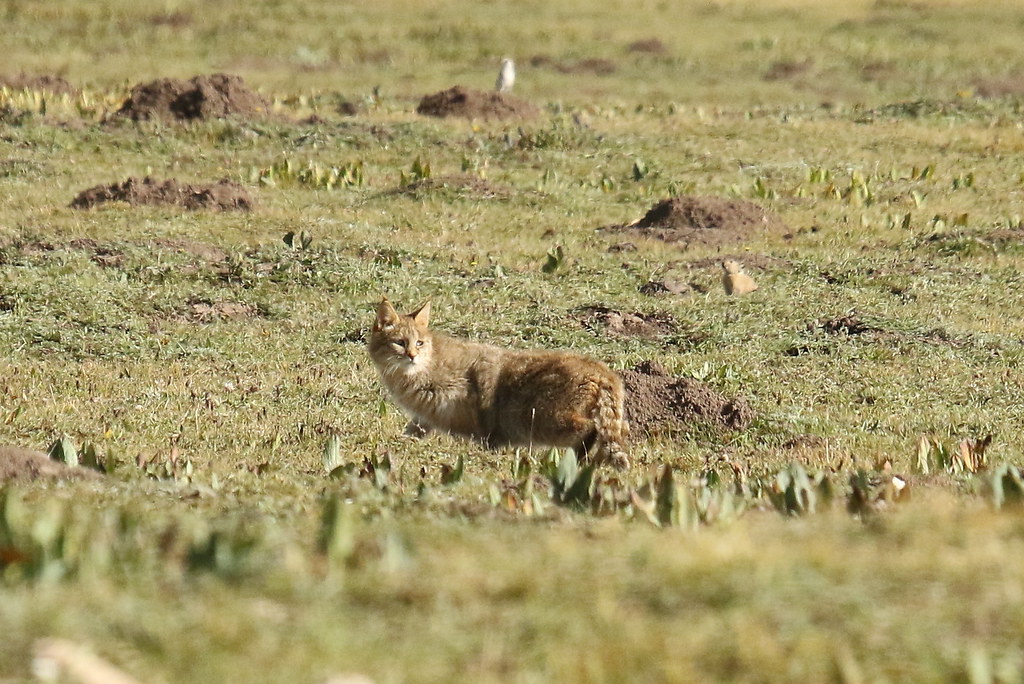
The Chinese Mountain Cats that we saw by spotlight on the Tibetan Plateau in Sichuan have found themselves to be in a state of taxonomic confusion and disagreement. This is not surprising  or unusual for a small cat since there are relatively few specimens in museums and the division of small cats into robust taxons is well known to be difficult. Add to that the differences in species concepts adopted and vigorously defended by different workers with the addition with several possible interpretations of DNA data, it is easy to see why recent papers have pulled the animal in two directions: first it was lumped into the local Wildcat (itself the subject of controversy); then it was restored as a proper species.

In 1892 Alphonse Milne-Edwards described a new species of cat; he named it Felis bieti for Felix Biet (1838–1904) a French missionary. Neither a type specimen nor the locality was noted in the original description but Glover Morrill Allen (1879-1942) in his book explained that Prince Henri d’Orléans (1867-1901) brought back the two specimens to Paris from Tongolo and Tatsienlu in Sichuan. Henri d’Orléans, noted duellist and anglophobe, led an expedition, at the insistence of, and paid for by, his father from Siberia to Indo-China.

Shortly after Milne-Edwards, Eugen Alexander Büchner (1861-1913) of St Petersburg described what turned out to be the same species as Felis pallida, a name actually appropriate to its appearance and one which Allen used for the common name, Pale Desert Cat in his book. A number of other common names have been used for F. bieti: Chinese Mountain Cat; Chinese Steppe Cat; Chinese Desert Cat.

It seems that nobody has found a modern location of Tongola but Tatsienlu is now known as Kangding on what, historically, was the border between China and Tibet (and, incidentally, about 60 km west of where we were watching Red Pandas).

Although my video as well as several other videos available on YouTube were taken at night by spotlight, it can be seen that the appearance of the cats is the same as a still photograph taken by day by Caroline Simpson two months before our visit:

Chinese Mountain Cat aka Chinese Desert Cat
Chinese Mountain Cat on the Tibetan Plateau, September 2017
Photograph by Caroline Simpson (from Flickr)

It is quite clear that all—except, and possibly importantly, one—of the still photographs and videos taken of ‘mountain cats’ on the Tibetan Plateau near Ruoergai in Sichuan conform with the description of the F. bieti. And this is where I went back into the classical descriptive zoology of the early 20th Century.

Reginald Innes Pocock FRS (1863-1947) wrote his Catalogue of the Genus Felis but it had to be edited and published posthumously by the Natural History Museum in 1951. There is a perfect description of ‘our’ cat under the subspecies F. b. bieti (which Pocock himself had proposed earlier to distinguish it from another subspecies that I will return to later and in a subsequent post). I will not repeat the description here other than to point out that he did not specifically mention the tail although he did describe it for his other subspecies; the tails were clearly similar.

I am therefore entirely content with the conclusion that ‘our’ Chinese Mountain Cats on the Tibetan Plateau in Sichuan were what had been originally described as Felis bieti.

As I mentioned earlier the molecular phylogeneticists have not left the difficult problem of small cat taxonomy untackled. Thus we had a paper in Science in 2007 which, in considering the origins of the domestic cat, lumped, amongst other lumpings, Felis bieti into the Wildcat as the subspecies, Felis silvestris bieti. It is this classification that one finds on many current websites. However, I did not find the authors’ argument persuasive (see below for a possible interpretation) since models drawn from mitochondrial DNA (i.e. maternal line) differed from those built from microsatellite (nuclear DNA) data.

One of the authors of the paper described, Andrew Kitchener, of what is now ungrammatically known as National Museums Scotland, then took the opposite view in 2009. After modelling the geographical distribution from 18,000 years ago until the present, he, with E.E. Rees of the University of Alberta at Edmonston, wrote:
The palaeo-DDMs [Deduced Distribution Model] provide no clear support for the redesignation of the Chinese steppe cat Felis bieti as a subspecies of F. silvestris [Wildcat] based on Driscoll et al.’s (2007) phylogeographical analysis, except that the effective loss of the central Asian distribution during the LGM [Last Glacial Maximum] may have resulted in introgression between F. bieti and F. s. ornata, in small isolated habitat fragments. Distinctive morphology and possible sympatry with Asian wildcats suggest that the Chinese steppe cat is a distinct species whether using the BSC or PSC.

The latter argument—that Felis bieti—is a ‘good’ species appears to be holding sway since the species has been retained in the IUCN’s Cat Specialist Group’s Cat Classification Task Force report, Revised Taxonomy of the Felidae published very recently. 

The Task Force was chaired by Andrew Kitchener and comprised a Core Group, an Expert Group and a Review Group. Given the wide membership, backgrounds and adherence to different species concepts, it is not at all surprising that disagreements remain. To complicate matters a little further, the Wildcat of Eurasia has been split/resplit into two species, Felis silvestris, the European Wildcat and Felis lybica, the African and Asian wildcats, so the section on Felis bieti reads:
There has been no recent taxonomic study of this species since Groves* (1980), although Driscoll et al. (2007) showed that Felis bieti was basal to Felis silvestris (sensu lato) according to mtDNA, but a sister taxon to Felis lybica ornata from microsatellites, which suggests that Felis bieti may have an ancient hybrid origin, possibly during the last glaciation when the distribution of F. l. ornata was apparently restricted to a very small area in Central Asia (Kitchener & Rees 2009). F. bieti is morphologically distinct and is supposedly sympatric with F. l. ornata, which would also preclude its recognition as a subspecies of F. silvestris/lybica. However, C. Driscoll (pers. obs.) maintains this species as a subspecies within F. silvestris (sensu lato).
The stated distribution of Felis bieti has tightened over the years, not as a result of habitat loss, but as a result of excluding misidentified specimens. Li He, Rosa García-Perea, Ming Li and Fuwen Wei began their paper of a study made in 2000 and 2001:
One of the problems is the difficulty of identification. This cat is almost unknown to Chinese scientists, and the few specimens kept at Chinese institutions are mostly misidentified. A similar confusion applies to local hunters, who do not know what species they are dealing with when they capture the animal (pers. obs.). Fur traders are probably more familiar with the identification of the species, but they do not have an interest in the geographical origin of any pelts that they receive. Therefore it is common to find incorrect information in the local literature, with the species often confused with manul Otocolobus manul, Asiatic wildcats of the Felis silvestris [lybica] ornata group, or lynx Lynx lynx (e.g. Wang, 1990, 1991). Thus any information on the distribution and occurrence of the species requires careful evaluation of the source.
The authors looked at 45 specimens and living individuals, 168 reports from the literature and 21 records from local hunters. However, I found the criteria for inclusion as F. bieti to be unclear and while some of the records were obviously wrong, I have the suspicion that further studies will reveal a wider distribution, particularly to the west. As a result of this study though, the distribution map below is the one that is currently accepted.

modified from Sanderson et al. 2010

We found it difficult at night to estimate the size of the Chinese Mountain Cats we saw. The Guide to the Mammals of China says about twice the size of a domestic cat but the data given by Pocock do not support such a large difference. The head-body length of skins in museums tend to be longer than in real life and so absolute size is not very informative. Some of the skins are from the fur trade and could well have been stretched. Pocock’s data showed a range of 16-23 inches for the skins of feral domestic cats from various parts of the world compared with 28-33.5 inches for specimens collected as, or assigned to, Felis bieti bieti. Taking the medians of 19.5 inches for the feral cats and 30.3 for F. bieti, the latter are about 1.5 times the length of a feral domestic cat. But given that feral cats tend to be smaller than those kept in the house, about a third larger seems a fair estimate. Indeed, Allen’s description begins, 'About the size of a house cat…'

Ours, and other sightings of Chinese Mountain Cats on the Tibetan Plateau in recent years, have been made possible by the efforts of that indefatigable guide to, and font of knowledge of, the birds and mammals of Sichuan, Sid Francis. There is, though, a fairly recent photograph from one of his trips to the Tibetan Plateau in 2015 of a  cat which does not appear to conform to the others. That cat was seen during and photographed by Yann Muzika; the photograph was shown in Small Wild Cat Conservation News in May 2015:

from Small Wild Cat Conservation News, May 2015

To my untrained eye it looks more like a Wildcat, i.e. Felis silvestris/lybica, even accounting for any possible seasonal shift in pelage. If so, the presence of this species together with F. bieti would demonstrate sympatry (i.e. both occur in the same area) and provide conclusive evidence that Felis bieti is indeed a ‘good’ species. In that respect it is interesting that the distribution map for the Wildcat in A Guide to the Mammals of China (which also has a good painting of F. bieti, if a little angular) has a series of question marks for that area of Sichuan.

I do have one main concern left though. There are photographs of animals, clearly identified as F. bieti that do not really conform with the photographs and videos shown and referred to in this article. I will deal with that question, with some delving into the classical literature and much inadequate knowledge in a subsequent post.

There is very much more to be discovered about the Chinese Mountain Cat and indeed many of the small cats of the world. We just counted ourselves lucky and privileged to have seen Chinese Mountains Cats and Pallas’s Cats on the grasslands of the eastern Tibetan Plateau.


*Colin Groves died on 30 November 2017.

The following will also provide references to other research on the Chinese Mountain Cat

Allen GM. 1938. The mammals of China and Mongolia. New York: American Museum of Natural History.

Driscoll CA, Menotti-Raymond M, Roca AL, Hupe K, Johnson WE, Geffen E, Harley EH, Delibes M, Pontier D, Kitchener AC, Yamaguchi N, O’Brien SJ, Macdonald DW. 2007. The near eastern origin of cat domestication. Science 317, 519-523. doi:10.1126/science.1139518

He L, Garcia-Perea R, Li M, Wei F. 2004. Distribution and conservation status of the endemic Chinese Mountain Cat Felis bieti. Oryx 38, 55-61.

Kitchener AC, Rees E. 2009. Modelling the dynamic biogeography of the wildcat: implications for taxonomy and conservation. Journal of Zoology 279, 144-155.

Kitchener AC, Breitenmoser-Würsten C, Eizirik E, Gentry A, Werdelin L, Wilting A, Yamaguchi N, Abramov AV, Christiansen P, Driscoll CA, Duckworth JW, Johnson WE, Luo SJ, Meijaard E, O’Donoghue P, Sanderson J, Seymour K, Bruford MW, Groves C, Hoffmann M, Nowell K, Timmons Z, Tobe SS. 2017. A revised taxonomy of the Felidae. The final report of the Cat Classification Task Force of the IUCN/SSC Cat Specialist Group. Cat News Special Issue (11). ISSN 1027-2992

Pocock RI. 1951. Catalogue of the genus Felis. London: British Museum

Sanderson J, Yufeng Y, Naktsang D. 2010. Of the only endemic cat species of China. 
http://www.catsg.org/fileadmin/filesharing/5.Cat_News/5.3._Special_Issues/5.3.5._SI_5/Sanderson_et_al_2010_The_Chinese_Mountain_cat.pdf

Wozencraft WC. 2008 In, Smith AT, Xie Y. editors, A Guide to the Mammals of China. Princeton: Princeton University Press.

Wednesday, 31 January 2018

Plateau Pika, O. curzoniae. Who was Mrs Curzon? I think I have found out

In 1858 Brian Houghton Hodgson (FRS 1877) gave the pika he first described and I wrote about in my last post, and now known to be a keystone species of the Tibetan Plateau, the specific name curzoniae. He ended his description:
This beautiful little animal is appropriately dedicated to the Hon’ble Mrs Curzon.
In the Eponym Dictionary of Mammals, the authors state: ‘Unfortunately this is as full a description of the lady as we can find’.

But who was she? The requirements for our Mrs Curzon are that as the Honourable Mrs Curzon she must have been the daughter of a viscount or baron, or to have married the son of one, and, it could be argued, have had a strong connexion with India.

I have been digging in genealogy websites and find that, out of several possibilities, Augusta Latham Hallifax (1837-1917) fits the bill. She was the daughter of Brigadier-General Robert Dampier Hallifax (sometimes shown as Halifax) and was born in South Africa. She married the Honourable Ernest George Curzon (1828-1885) on 14 January 1856 at Umbala (now Ambala), 120 miles north of Delhi.

Ernest George Curzon eventually became Colonel of the 52nd Regiment of Foot which served in India from 1853 until 1865. The regiment (later to become part of the Oxfordshire Light Infantry) took part in the Siege of Delhi during the Indian Mutiny in 1857, marching from Ambala. Augusta’s father would also have been in the Siege of Delhi had he lived long enough. Colonel of the 75th Regiment of Foot (later merged as part of the Gordon Highlanders), he was given the job as a Brigadier of leading one of two brigades from the vast military cantonment of Ambala to besiege Delhi. However, having passed Karnal, he became so ill that he was sent back there where he died on 1 June 1857. The Commander-in-Chief of the Army in India, George Anson, a Whig politician as well as a soldier, had died of cholera, four days after leaving Ambala, so it is possible or even highly likely that Hallifax was also a cholera victim.

Ernest George Curzon was the seventh child (out of ten) of Richard William Penn Curzon-Howe, 1st Earl Howe. Therefore he had the courtesy title of ‘The Honourable’, as did his wife. Four of Ernest and Augusta’s six children were born in India.

Hodgson’s paper* describing what we now know as the Plateau Pika appeared in the Journal of the Asiatic Society of Bengal. Volume 26 was published in 1858 but the papers were received in 1857. Indeed, his paper noted that it was sent from Darjiling (Darjeeling) in April 1857, fifteen months after Augusta Hallifax became ‘the Hon’ble Mrs Curzon'.

Fortunately, the National Portrait Gallery has two photographs (albumen prints) of Augusta taken in London by the French photographer, Camille Silvy (1834-1877) in 1860 (her fourth son was born in London in 1861):


Augusta Latham Curzon (née Halifax [sic] NPG Ax50799
©National Portrait Gallery, London

NPG Ax50798 ©National Portrait Gallery, London


Or does somebody have a better candidate for the beautiful little Mrs Curzon?

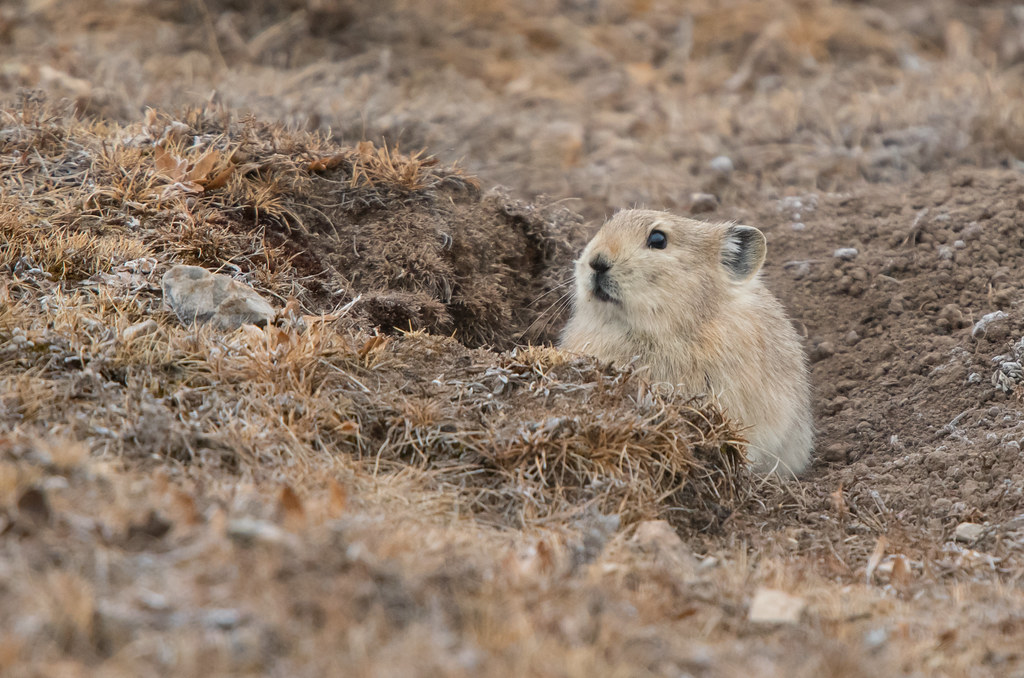
And here is Tim Melling's photograph of a Plateau Pika taken at about the same time as my video:

Plateau Pika


And, finally, Hodgson's paper to the Asiatic Society of Bengal:


*As well as the Plateau Pika, which he named Lagomys Curzoniae, he also described as a new species Mustela Témon which is now regarded as a subspecies of the Mountain or Altai Weasel, Mustela altai temon.

Beolens B, Watkins M, Grayson M. 2009. The Eponym Dictionary of Mammals. Baltimore: Johns Hopkins University Press


Hodgson BH. 1858. On a new Lagomys and a new Mustela inhabiting the north region of Sikkim and the proximate parts of Tibet. Journal of the Asiatic Society of Bengal 26, 207-208


Sunday, 5 November 2017

Another Orang-utan species? I doubt it too. I strongly doubt it


Orang-utan in Borneo
Orphaned animal photographed in 1999
No sooner had I written the last post on ‘taxonomic inflation’ than the media were sparking with news of a new species of orang-utan from Sumatra. I read the BBC News and The Times versions and found the claim unconvincing. I was just in the process of looking up the original paper when Jerry Coyne’s and Greg Mayer’s excoriating criticism—and of the ‘phylogenetic species concept’ in general—of the claim pinged into my Inbox. I will not repeat it since you can read it here on Jerry Coyne’s Why Evolution is True website. Make sure you read the comments as well.

Coming after a similar paper on splitting the giraffe into four species (again covered by Jerry Coyne here) published in the same journal (which much have referees or editors sympathetic to, or uncritical of, the phylogenetic species concept), I am particularly concerned that such claims, indeed any claims, are parroted uncritically by the news media and thus presented to the public as established fact. Science by hyped press release is not promoting the public understanding of science; the reverse in fact.

The ‘splitters’ of existing species appear to think that they are advancing the cause of conservation but they may be doing harm, as Shai Meiri and Georgina Mace warned ten years ago. Others have noted that in attempting to conserve species, splitting into ‘pseudo-species’ using the phylogenetic species concept may do more harm than good. By insisting on breeding each form separately (as is being done right now with the Bornean and Sumatran ‘species’ of orang-utan which were split earlier) zoos may be reducing the genetic diversity of already inbred captive populations, thereby decreasing the chances of survival should a re-introduction programme into a slightly-changed or degraded habitat be needed in the future on either of those islands.

The question of what constitutes a species goes on and on and there is no simple answer but it seems to me and to many others that the phylogenetic species concept is deeply flawed and that if the same arguments are applied to Man, then our species too must be split and split and split again. The modern molecular methodology applied to determine genetic lineage must be very seductive and there is no argument on the technical excellence of much of the work. However, I suspect it is another case of too much ‘molecular’ and not enough ‘biology’.

So, for the record I will continue to refer to the Orang-utan as Pongo pygmaeus whether it be from Borneo or Sumatra and to the Giraffe as Giraffa camelopardalis wherever in Africa it may be from. There is no need to be a sheep in the cinderella world of taxonomy.

Reticulated form of the Giraffe, Northern Kenya 1991

Masai form of the Giraffe, Kenya 1991

Thursday, 2 November 2017

‘For the survival of the species’: The mismatch between evolutionary biology and conservation biology...and 'taxonomic inflation'

'Jock' Marshall
from here
In the 1960s there was a board for newspaper clippings, notices and other ephemera on the corridor wall of the old zoology floor in the now-demolished Northcote Science Building at the University of Hong Kong. At the top was a cutting from an Australian newspaper reporting an interview with the larger-than-life Professor Alan John ‘Jock’ Marshall (1911-1967) then at Monash University in Melbourne. The clearly shocked journalist reported words to the effect that Marshall did not care what happened to individual animals; what did concern him was conserving species and if that meant some individuals dying in the process then so be it.

That, in a nutshell, describes the fundamental mismatch between evolutionary biologist’s view of species compared with that of the early conservation movement and hence, because of the publicity given to conservation activities, that of the public. So we have, on the one hand, biologists wincing when they hear ‘for the survival of the species’ in terms of natural selection while at the same time conservationists talk of their work ‘for the survival of the species’.

Early conservation efforts were seen as direct threats to large animals and in terms of getting the public and politicians engaged with he problem there is nothing so persuasive as a member of the charismatic megafauna. The World Wildlife Fund’s choice the Giant Panda is the most famous example. While there were—and still are—direct and major threats to the survival of individual species, the poaching of rhinoceroses being a prime example, the question of preserving habitats (or whole ecosystems, although I hate the term because it is misleading) tended to be put to one side. If you can conserve the large species, then there will be sufficient habitat for the smaller ones to be protected as well.

However, when it came to national conservation politics legal protection was often based on a species and not on a habitat. Across a wide geographical area, local extinctions from habitat loss or hunting were possible because the species there were either not sufficiently endangered or represented a very small proportion of the total population of the species. So, the pressure was on to increase the number of species by elevating geographical variants (often termed, probably unwisely, as subspecies) to the status of full species. But not only do conservation efforts benefit (if only at first sight) by increasing the number of species. Birders of the tick-list variety just thrive on species being ‘split’ and the tour companies are always at pains to point out the chances of seeing a a new ‘split’ in a particular area. The tourism industry also loves a distinctive name for their familiar animal. ‘This is Thornicroft’s giraffe, madam’ said the guide in Zambia who was surprised when madam replied, ‘Just a giraffe with a geographically distinctive pattern’.

The whole process of increasing the number of species by deviating from the biological species concept has been called ‘taxonomic inflation’. The increase is not new; some taxonomists of old split species ad nauseam but after dismissing the nonsensical claims there were reckoned to be 4,659 mammals in 1993. By 2005 that number had risen to 5,418, not as explained by Shai Meiri and Georgina Mace in their 2007 paper, by an increase in the discovery of new species but by the splitting of existing species. With mammals, that splitting has occurred to the greatest extent in Africa where a species may have a widespread distribution.

Meiri & Mace continued:


Most of these recently described species are allopatric or parapatric (i.e., with ranges that abut but do not overlap) populations, separated by barriers such as rivers. Given a barrier to gene flow, the accumulation of genetic and morphological differences is expected and may be of limited biological importance. It seems, however, that many recent taxonomic studies regard the presence of allopatric populations as an indication that speciation has occurred. We suggest that stronger evidence is needed to show that populations are sufficiently distinct to merit specific status. This evidence should be capable of discriminating genuine ecological and evolutionary distinctiveness from minor differences that could result from geographic isolation.

I am not going into the various species concepts here but the taxonomists who do such splitting rely on using genetic analyses to identify different lineages. Some—the ‘splitters’—then argue that if groups of animals show distinct genetic lineage then they should be treated as different species, regardless of the fact that morphological differences are minor or that members of one lineage recognised those of anther as being of the same kind and would breed with them if given the chance and do do so in captivity.

While ‘new’ species may at first sight be an attractive proposition for those seeking the input of conservation resources, Meiri & Mace argued that with limited funding, resources could be diverted from a really important projects and that splitting species does not necessarily have conservation value. They also supported the policy of supporting species ‘across their ranges, perhaps favoring phenotypically distinct populations or geographically isolated subsets so as to fully conserve variation’.

Have those lessons so well spelt out by Meiri and Mace been learnt? Was madam right about Thorncroft’s giraffe?

Meiri S, Mace GM. 2007. New taxonomy and the origin of species. PLoS Biol 5(7): e194. doi:10.1371/journal.pbio.0050194

Sunday, 28 September 2014

Genomes show why Hooded and Carrion Crows are different and stay different…and are they different species?

Over the years, as an outsider to the field, I have read about taxonomy and systematics and I have read about different species concepts and the attempts to define what species are. It has struck me that the whole discussion has been concerned with defining the species as a group as opposed to considering the individuals that make up that group. I just have the feeling that defining the group without reference to the individual came from an age when many if not most biologists argued intentionally or unintentionally for group selection with, for example, adaptations ‘important for the survival of the species’ on many lips. As the realisation grew that group selection was the result of flawed reasoning and that the individual is the unit of selection, nobody to me, or at least nobody that I could find, was writing about the species as a collection of individuals subject to natural selection (although this view does seem implicit in the Grants’ work on Galapagos finches). When I did consider the individual I realised that for many organisms, most vertebrates, for example, a species could be defined as those individuals with which an individual could breed to its selective advantage or to put it the other way round, with which an individual could breed without selective disadvantage. Therefore, to me the group—the species— is defined by the advantage it affords its individual members in terms of fitness.

My amateur definition includes those species identified as being completely reproductively isolated (i.e. those that conform to the Biological Species Concept as originally propounded) as well as those, like the Galapagos finches, in which there is gene flow between obviously different species or in which there is a hybrid zone between geographically adjacent forms that differ morphologically and/or behaviourally.  I therefore bridle when I hear only the former referred to as ‘good’ species by those wedded to the Biological Species Concept, with the others left to a ‘judgement call’ as to their status; ‘easily discernible’ should replace ‘good’.

To reiterate, my definition means that complete reproductive isolation (i.e. no gene flow) is not necessary in order to define a species. This definition provides for breeding between neighbouring closely related forms with a hybrid zone between them. If breeding with the other neighbouring form leads to the hybrid offspring having a selective disadvantage then the two forms are retained as distinct species even though introgression occurs.

It is with background that I read a recent paper in Science with great interest. Not only does it throw light on the species problem, it also occurs on my doorstep. The paper, The genomic landscape underlying phenotypic integrity in the face of gene flow in crows, is on the genetic differences between the Hooded Crow and Carrion Crow. It is also interesting not only in its own right but also for the comments it evoked from those trying to decide whether the two crows should be regarded as one or two species.


We live fairly near the hybrid zone between the Hooded and Carrion crows in the West of Scotland. A hybrid lived for several years in the surrounding gardens and school playing field even though it never looked the healthiest of birds and had, what the vets would described as, an ‘unthrifty’ appearance. As well as hybrids, Hooded Crows are reported occasionally since the hybrid zone is narrow at this point and hoodies occur on the islands of Arran and Ailsa Craig where they are said to prefer the higher ground compared with the Carrion Crow.


Carrion Crow


Hooded Crow


Discussion has centred on whether the new findings offer support to the arguments in favour of considering the two forms as two species, or as subspecies of one species. Over the years they have flitted between being regarded as two species or one. Linnaeus originally described them as two species but throughout the later part of the 20th century, the one species view prevailed with the Hooded Crow listed as a subspecies, Corvus corone cornix, alongside the Carrion Crow, C. c. corone. Then, in 2002 the British Ornithologists’ Union recommended that the two forms should be recognised as separate species (Knox et al 2002). The reasons for this (non-random mating and reduced fitness of the hybrids) and how they fit the Evolutionary Species Concept are explained by Parkin et al  (2003) and by Parkin (2003). Parkin (2003) concludes:

In the case of the crows, I believe that the Hooded and Carrion lineages maintain their separate identities through time and space, for hybrids are at a selective disadvantage. They should be regarded as separate species.

The work that has caused the flurry of interest was done on mainland Europe by Swedish, German and Spanish co-authors (Poelstra et al 2014). They compared Carrion Crows from Spain and Germany with Hooded Crows from Poland and Sweden (as in northern Britain there is a hybrid zone where the two forms meet). The differences detected in the genome and in gene expression have been described and discussed well elsewhere, for example, in a commentary in Science by Peter de Knijff. I will only state here some of the main conclusions.

Differences between the two forms were very small. Only 83 out of 8.4 million DNA positions were found to be fixed and therefore diagnostic of the two forms. As one would expect, the genes concerned were mainly associated with plumage colour. Of the 83 fixed differences 81 were found in a small region of chromosome 18.

de Knijff summed up the conclusions neatly: Poelstra et al. present a unique case of speciation whereby, despite substantial gene flow (especially from hooded crows into German carrion crows), phenotypic divergence likely caused by assortative mating and sexual selection is maintained by genetic variation in less than 1% of the genome. Invoking Darwin on species concepts he concludes: Obviously, forcing complex patterns of biological variation into a single hierarchically structured archive is a purely anthropogenic project. No matter how hard we try, there cannot be a robust, all-inclusive, objective species concept.

While the latter sentence is probably right, I am not sure that the concept of a species is entirely anthropogenic. Defined from the fitness of individuals, an assemblage does have some sort of real existence at an ecological level for example. What I am now convinced is that the Biological Species Concept has had its day in its classical mid-20th century form. It is and perhaps always was too dogmatic; its underlying hypothesis is simplistic and has been undermined by further observations and experiments. Evolution is more complex than that…and continues.

---------

de Knijff P. 2014. Carrion and hooded crows defeat Linnaeus’s curse. Science 344 1345

Knox AG, Collinson M, Helbig AJ, Parkin DT, Sangster G. 2002. Taxonomic recommendations for British birds. Ibis 144 707–710

Poelstra JW, Vijay N, Bossu CM, Lantz H, Ryll B, Müller I, Baglione V, Unneberg V, Wikelski M, Grabherr MG, Wolf JBW. 2014. The genomic landscape underlying phenotypic integrity in the face of gene flow in crows. Science (20 June 2014) 344 1410-1414

Parkin DT, Collinson M, Helbig AJ, Knox AG, Sangster G. 2003. The taxonomic status of carrion and hooded crows. British Birds 96 274–290

Parkin DT. 2003. Birding and DNA: species for the new millennium. Bird Study 50 223-242