Showing posts with label Sichuan. Show all posts

Tuesday, 30 July 2019

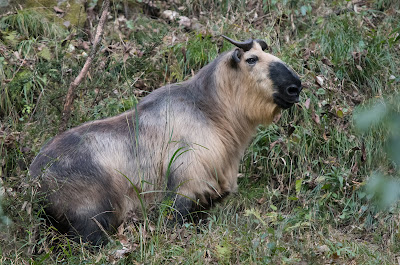
The Golden Takin: who, what and when

In previous posts I have described collecting and game shooting trips into the mountains of central China from which specimens were sent to the Natural History Museum in London in the years before the First World War. As a result of the first Oldfield Thomas at the Museum named as a new species a Takin, now known as the Golden Takin. I will return to the question of whether it is a ‘good’ species later. The first specimens, two females and a male, to reach London were from the later phases of the Duke of Bedford’s Exploration, almost immediately followed by George Fenwick-Owen’s travels with his companions over much of the same ground.


Golden Takin photographed in Shanghai Zoo by
J Patrick Fischer in 2011
(shown on Wikipedia)

In China

The leader of the Exploration, Malcolm Playfair Anderson, had an article published posthumously in which he described how he and his party, Frank Kingdon Ward and Dr Jack Smith, had obtained the skins and skulls in January 1910. They were in the Qinling Mountains, west-south-west of Xi’An when they heard reports of a strange animal called a ‘pan-yang’. Being busy with collecting small mammals and birds they hired a local hunter to shoot specimens. This the hunter did and sent a messenger with the news that two females were ready to be skinned. The next day Anderson, Ward and Smith along with porters set off on the steep, ice-bound climb. A village blacksmith had made some heavy iron crampons and these they needed. Ward could not keep up and eventually after a very cold night made his way back down. Anderson and Smith continued. By this time they had climbed from the village at 3,000 feet to above the tree-line at 10,000 feet. They stayed the night with sawyers who gave them food since Ward had been carrying all the provisions. The next day they reached the hunter and the animals. Anderson had no idea what the animals were, with Smith guessing a muskox. The cadavers were in thick ‘bamboo-grass’ on a steep slope and being frozen took a long time to skin. The party then retreated leaving the hunter to bring down the skins and skulls the following day. The descent was difficult in the freezing cold and high wind but a full moon enabled them to continue:

To right and left rose snowy peaks, at our feet was a precipice, and far below us lay vast caƱons filled with dark forest. By daylight it would not have appeared an unusual mountain scene, but in this enchanted light it was indescribably majestic. We paused awhile, forgetting that we were tired, shivering, and famished. 

They reached the inn in the village at midnight.

Anderson, Ward and Smith also, said Anderson, attempted to hunt for specimens themselves with the assistance of local hunters. They slept in a cave, more an overhanging rock, which is clearly the cave which Fenwick-Owen, Wallace and Smith occupied in considerable discomfort on their trip in 1911. The party did see takins and got within range for Anderson to have a number of shots shots. However, he missed. Then the hunter appeared to announce he had shot a male just below their ‘cave’. That was the third specimen to reach London.

From the dates in the accounts it would seem that Anderson reversed the order of the two occasions for his magazine article. He states that the party set off to shoot a Takin themselves on 8 January. In his description of the type specimen, one of the females, Thomas  gives the date it was shot as 15 January 1910. To add to the confusion, Wallace in describing the other ‘sportsmen’ who had shot takins in China notes that Smith, ‘our companion’, killed one in Shensi in 1910. So were takins, in addition to those sent to Thomas in London, collected during the Duke of Bedford’s Exploration?


The 'cave' in the Qinling Mountains used by both expeditions
(From Wallace's book)

In London

Oldfield Thomas was obviously delighted with the skins and skulls received from Anderson.

Of the majority of the Shen-si specimens there is little new to record, as Mr. Anderson had obtained the same species on his previous visit to the more northern part of the province. But in any case their interest is dwarfed by the discovery on Tai-pei-san of a magnificent species of Takin, quite different from the known W. Chinese species Budorcas tibetanus, and both in interest and beauty one of the most striking mammals that it has ever been my good fortune to describe. 

He first described it to the Zoological Society of London which was published as an abstract on 2 May 1911. Then in a fuller paper he described the specimens more fully. The type specimen for his new species, Budorcas bedfordi,  was one of the females. He went on:

The discovery of this splendid animal, whose golden-buffy colour renders it by far the most beautiful of its genus, is of the highest interest, and it is with great pleasure that I name the species in honour of the Society's President, during whose exploration of Eastern Asia it has been obtained. Mr. Anderson himself seems to have thought the occurrence of Takin on Tai-pei-san of special interest, and believed that they would probably prove to be new. He says: "The herds on Tai-pei-san are isolated by some hundreds of miles from the nearest others we could hear of, and as I could not learn that any other foreigner has hunted them on Tai-pei, I believe the chance for a new species is good.”
As a matter of fact, however, specimens had previously been obtained and had passed into the possession of the American Museum of Natural History at NewYork. But these were quite young, and showed, as it was not unnatural that the young should show, more or less of the normal coloration of the group, with blackish muzzle and extremities, and therefore in recording them Dr. Allen saw no reason to suppose them different from B. tibetanus. The practically unicolor condition of B. bedfordi proves therefore to be a characteristic of the adult, a fact which, in view of the peculiar specialization of such a colour, is not at all surprising.

Wallace writing in 1913, stated that the New York specimens had been purchased from a local hunter.

Is the Golden Takin a separate species?

The Golden Takin since its description by Oldfield Thomas has been lumped or split according to the views, whims or philosophies of taxonomists over the past century. Thus all the forms of takin, from the Himalayas in the west to the Qinling Mountains of China in the west have been lumped into one species, Budorcas taxicolor. Alternatively, the subspecies, for example B. t. tibetana (from the mountains of Sichuan) and B. t. bedfordi have been regarded as full species, as Thomas maintained. Generally, the lumpers held sway, the differences between the geographical forms being in coloration. The Takin appears as one species, for example, in the 4th edition of Walker’s Mammals of the World from 1983 and in A Guide to the Mammals of China from 2008. Recently however, those adhering to the phylogenetic species concept (PSC) have all the forms split as four species, with B. bedfordi resurrected, for example, in Volume 2 of Handbook of the Mammals of the World. Readers may be aware that I regard those who adhere to the PSC and not the biological species concept as akin to the man searching for his keys under the street light even though he did not lose them there on the grounds that is the only place where he can see. So, yes, you can take it that I see no reason to regard the Golden Takin as a ‘good’ biological species.

I cannot help wondering if Oldfield Thomas may have just got carried away when he erected the golden-coloured takin as a full species. After all, what better way than to recognise a benefactor, whose funding had really pushed forward knowledge on the mammals of China, by naming a most spectacular animal after him?


Takin distribution from IUCN's Red Data List (here). The RED line shows the approximate site of collection of
specimens by the Duke of Bedford's Exploration in January 1910. The BLUE Line shows the approximate site of Tangjiahe in Sichuan where the videos and photographs were taken in November 2017


What is a Takin?

The Takin is undoubtedly a strange looking animal. For years it was thought to be closely related to the Muskox. However, it was eventually realised—and recently confirmed by analysis of the entire mitochondrial genome—that the Takin belongs to the sheep and goats tribe, the Caprini (or the subfamily Caprinae, if following that scheme of classification) sharing immediate common ancestry with the true goats (Capra) and blue ‘sheep’ (Pseudois).

————————————————

Takins are animals of the mountains, moving up and down steep forested slopes with ease. In the summer they are most active at dusk and dawn but in winter may feed all day. Similarly, they move to higher altitudes in summer but in winter can be found in the valleys. They are mostly browsers. I have written about our encounters with Takins at Tangjiahe National Reserve in Sichuan previously (link here). The Takin here is usually referred to, not surprisingly, as the Sichuan Takin, Budorcas taxicolor tibetana, or by PSC devotees as B. tibetana. That article has a link to one of my videos. Another, showing Takins at night as well as by day is below. Clearly, as you will see, fallen, ripe persimmons are irresistible.


I have heard but seen little written that Takins are the most dangerous wild animal in China in terms of loss of human life and limb. They will certainly charge at perceived danger. When we tried to see the Takins in the the park in Thimpu, Bhutan, where a number are kept, we could not. The park was closed because one of the males was so aggressive that it had been charging at visitors through the wire fence to the detriment of the fence.

Finally, some photographs by Tim Melling of the same animals I videoed in Sichuan in November 2017. They can also be seen on Flickr along with Tim’s other photographs.



Links to previous articles:

Oldfield Thomas here
Duke of Bedford’s Exploration here, here, and here
Fenwick-Owen’s Expedition here

Anderson MP. 1920. The discovery of the Chinese Takin. Natural History 20. 428-433.

Nowak RM, Paradiso JL. 1983. Walker’s Mammals of the World. 4th edition. Baltimore: Johns Hopkins University Press.

Smith AT, Xie Y (editors). 2008. A Guide to the Mammals of China. Princeton: Princeton University Press.

Thomas O. 1911. The Duke of Bedford’s zoological exploration of eastern Asia.—XIV. On mammals from southern Shen-si, Central China. Proceedings of the Zoological Society of London 1911, 687-695.

Wallace HF, 1913. The Big Game of Central and Western China. Being an Account of a Journey from Shanghai to London Overland Across the Gobi Desert. London: John Murray

Zhou M, Yu J, Li B, Ouyang B, Yang J. 2019. The complete mitochondrial genome of Budorcas taxicolor tibetana (Artiodactyla: Bovidae) and comparison with other Caprinae species: Insight into the phylogeny of the genus Budorcas. International Journal of Biological Macromolecules 121, 223-232.

Monday, 2 April 2018

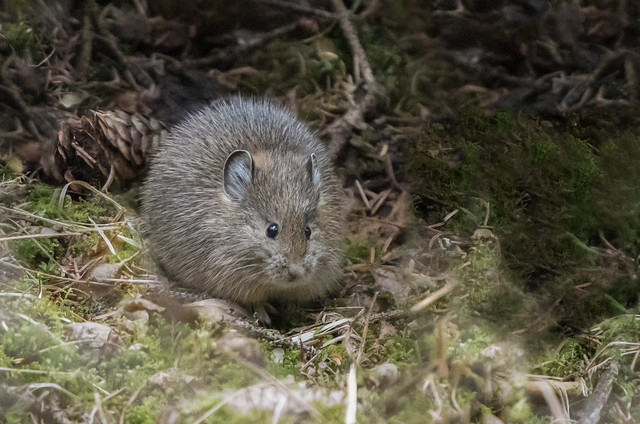
In a forest near Baxi in Sichuan: What Pika was this?

During a walk through a natural pine forest at an altitude of approximately 3,200 metres last November near Baxi in northern Sichuan we saw Chinese Grouse, Crested Tit-warbler, Przewalski’s Nuthatch, Grey Crested Tit, Giant Laughingthrush, Snowy-cheeked Laughingthrush and a flock of Sichuan Jays. A mature Sika stag appeared on the other side of a valley and Paul spotted three Yellow-throated Martens which left at high speed. But we also saw, and photographed, a pika. The question was: which species of pika?

A considerable amount of time has been spent and a considerable volume of email traffic has been generated in trying to determine the answer to that question. There have been false leads and false trails. The reason for that is severalfold: (i) we were in a little-studied area; (ii) the taxonomy and distribution of pikas is complicated and confused; (iii) published accounts of species and sightings are often inaccurate both in the scientific and popular literature; (iv) accounts of known types of habitat may be inaccurate or incomplete; (v) the similar appearance of a number of species.

Of one thing we were certain. The ear showed a narrow white margin.


Thomas's Pika
Photograph by Tim Melling

The most modern account of pikas is that in Handbook of Mammals of the World. Volume 6 published in 2016. This differs from the account and distribution maps shown in the standard field guide, published in 2008, since more has been discovered and some earlier errors sorted out. By locating Baxi Forest on the small-scale distribution maps in the Handbook (a major bend in the Yellow River provides a major feature to plot the position of Baxi), the following three species of pika, all with the white ear margin enter the field of possible candidates: Gansu Pika (Ochotona cansus), Tsing-ling (or Qinling) Pika (O. syrinx), Thomas’s Pika (O. thomasi).


From the Handbook of Mammals of the World, Volume 6, I have outlined the distributions of three species
of pika that are said to occur in the Baxi area plus the Moupin Pika now thought to occur to the south. Note
the discontinuous distribution. The published ranges of Thomas's, Gansu and Tsing-ling all incude Baxi.

'Our' pika has previously been identified by mammal watchers and photographers as the first and last of these as well as the Moupin Pika (O.thibetana). However, the latest published information is that the last species does not occur so far north.

The taxonomic scheme I am using here is that being used by IUCN and in the Handbook. It is based on the taxonomic revision published by Andrey Lissovsky of Moscow State University in 2014. Lissovsky had to pick apart a real can of worms found in past publications including lost type specimens, assignation of specimens or subspecies to a species without examination of the type specimens, the poor provenance of specimens used in DNA analysis as well as different interpretations made from examination of a limited number of specimens by earlier authors. He also did his own morphometric analysis on the skulls of 1090 pikas as well as an analysis of the cytochome b mitochondrial gene.

The detail of Lissovsky’s revision need not concern us. However, the three candidate species did emerge as full species, with the caveat that he recommended more work should be done on all but O. thomasi. A possible key finding, of relevance to our problem, is that Lissovsky showed that statistical analysis of all the skull measurements clearly distinguished Thomas’s Pika from those in the group which includes the Gansu, Tsing-ling as well as the Moupin Pika. The descriptions of Thomas’s Pika note the shape of the skull. Thus the Handbook states: ‘In general, Thomas’s Pika can be distinguished from all pika species by its elongated, narrow skull’.

We did not of course have another handy pika to compare ours with. However it is on the basis of the long, narrow skull that Vladimir Dinets an expert on the identification of Asian mammals with field experience in Sichuan also considers the species we saw as Thomas’s Pika. In an email to Sid Francis he did so also on the coloration of the throat. O. thomasi has a grey throat whereas O. syrinx has a rufous throat and chest. In addition, O. syrinx has a flat top to its skull.

Therefore, in terms of anatomy, pelage and distribution, it would seem our pika was indeed Thomas’s.

However, there is a problem in reconciling the identification as Thomas’s Pika with the published habitat of our animal. As I remarked earlier, our was in a natural pine forest. But the habitat stated in the Handbook and the field Guide is as follows: ‘Alpine shrub mountain zone at elevations of 2800-4100 m. Thomas’s Pika occurs in shrubby areas and does not penetrate subalpine meadows; it is a shrub dweller’ and ‘Inhabits hilly shrub forest (rhododendron, Salix, Caragana jubata, Potentilla fruticosa)…’. By contrast the habitat of the Gansu Pika is ‘subalpine meadows, inhabiting spare shrubs and thickets at forest edges’. But then the habitat of the Tsling-ling Pika is given as ‘forests at elevations of 1800-3100 m’. Initially I discounted Thomas’s because of the pine forest habitat of our pika. However, we were not far above the rhododendron forest so it is possible that the scrub forest habitat could extend to the scrubby understory of contiguous pine forest, possibly at different times of year. Indeed, Sid had seen the same species previously in nearby willow and rhododendron scrub forest. Clearly, more observations are necessary in the field but it does seem that a habitat extension is in order since O. thomasi may be found in pine forest too. Vladimir Dinets also noted that at another site he had found O. thomasi at higher elevations than O. syrinx; again this accords with our sighting at about 3,200 metres just outside the altitudinal range given for O. syrinx.

Vladimir Dinets shows photographs of pikas he has seen here.

Given the alleged presence of three small pika species with white ear margins in the Baxi area, we should expect each to occupy a different ecological niche and that the morphology of the skull should reflect that difference in habitat and the manner in which food is gathered in that habitat. O. thomasi has a long, narrow skull. This shape, one could predict with confidence, is related to its scrub forest habitat where grass, herbs and leaves would be nibbled out from between branches and stems. In short, Thomas’s Pika could be as adapted to life in the understory of a pine forest as to the scrub of a rhododendron forest.

I do not know whether the present taxonomy of the pikas will hold. All the molecular phylogeny is from mitochondrial DNA rather than or as well as nuclear DNA. We should, I suppose, expect to see a complicated picture for the number of species or lineages. The geological upheavals of the region are ones likely to have caused geographical isolation of populations, speciation or partial speciation and, possibly, later hybridization between temporarily isolated lineages.

Thomas’s Pika is endemic to China. It has the reputation of being rare but given its habitat that may be better expressed as rarely seen. It was first described in 1948 by the Russian zoologist A. I. Argyropulo in honour of Oldfield Thomas of the Natural History Museum in London. Thomas himself had named the Tsing-ling Pika, Ochotona syrinx*, in 1911; that specimen was collected on the Duke of Bedford's expedition. I will return to Oldfield Thomas in future posts on this blog.

So there we are. It does seem that our little pika, officially classified as ‘cute’ (but not quite so cute as the Plateau Pika) by its admirers in the Baxi Forest last November, was indeed Thomas’s Pika (Ochotona thomasi). Trying to identify and learn more about it has occupied a fair amount of time but uncovered how much more needs to be known about the natural history  and evolutionary history of these small mammals.

I am most grateful for the various exchanges and ideas being bounced around between Tim Melling (who also took the still photographs), Paul Markley and of course Sid Francis who also took us to the site. We can also give Sid the challenge of finding the other species of pika with white ear margins said to be in the Baxi area during his future trips. This is an area where citizen science can contribute to knowledge of little-studied species.

Finally, this is the video I took of the pika:


*With Lissovsky’s taxonomic revision and the application of the rule of priority to scientific names, the Tsing-ling Pika emerged as Ochotona syrinx. It was previously known as Ochotona huangensis but that name now appears to apply, as a junior synonym, to another species entirely:
As a consequence, the name for the taxon of pikas considered as a subspecies of Ochotona thibetana (Hoffmann 1993), or as the species O. huangensis (Yu et al. 2000, Hoffmann and Smith 2005) from the Qinling Mts, should be changed. The senior synonym for the pikas of the thibetana group from the territory, inhabited by taxon under discussion, is O. syrinx Thomas, 1911. According to the present analysis, the type specimen of O. syrinx from Tai Bai Shan Mt. within Qinling Range falls within the morphological variation of this thibetana-like taxon.… Thus, the valid name for this taxon should be O. syrinx.
Lissovsky AA. 2014. Taxonomic revision of pikas Ochotona (Lagomorpha, Mammalia) at the species level. Mammalia 78, 199-216.

Smith AT, Xie Y. (Editors). 2008. A Guide to the Mammals of China. Princeton University Press.

Wilson DE, Lacher TE, Mittermeier RA. 2016. Handbook of Mammals of the World. Volume 6. Lagomorphs and Rodents I. Barcelona: Lynx Edicions.

Sunday, 11 March 2018

Takins and Tufted Deer at Tangjiahe, Sichuan

We saw the last of China’s strange to-us ruminants at Tangjiahe National Nature Reserve during our trip with Naturetrek and with Sid Francis as our guide last November. Takin (Budorcas taxicolor) were all along the valley and a small group appeared at dusk around the hotel, eventually moving off as the car got close and passengers began to get out. Their movement, with, like the serow, short hind legs, can best be described as a lollop. Some we saw feeding on the flat ground; other on the wooded hillsides up which, again like the Chinese Serow, they can move at considerable speed. The closest we got to one during the day (there were lots around at night too) was one feeding on fallen ripe, persimmons* which look like discarded orange peel and that one is the star of the video.

Takin smell of an oily sebum that is secreted all over the body†. Once considered related to the muskox on grounds of their similar appearance, molecular evidence has placed them with the goats and sheep. We heard their strange alarm call (we were not there at the right time to hear the call made by males in the mating season); a very loud, short cough best describes it.

During early winter, the large herds that occupy the alpine meadows at the edge of the tree line break up and individuals or small group move into the valleys—which is where we found them.

It is apparently wise not to creep up and catch a Takin unawares. They will charge and have been known to kill human hunters and perhaps even the odd tourist.

Also in the valley were Tufted Deer (Elaphodus cephalophus). As well as the tuft on the head present in both sexes, males have long canine teeth that protrude from the mouth. We had a particularly good view of a female or possibly a young male—also a star of the video—which was close to the road in the middle of the morning and seemed unconcerned by the presence of human contact or camera shutters. It clearly had not read the book stating that they are secretive and crepuscular.

You can see that this Tufted Deer also had skin lesions along its back. Had she escaped from a large predator or was it a parasitic infestation?

Finally, the tuft of the anatomically eponymous deer? I can find no attempted explanation for the presence for the ‘bushy, dark tuft of hair on the forehead’. So I end with the question, Why?


*a few days later persimmons with fish roe were highly appreciated in a Hong Kong restaurant.

†There is a misleading statement in a field guide on the overall absence of skin glands.

Frey R, Hofmann RR. Larynx and vocalization of the Takin (Budorcas taxicolor Hodgson, 1850-Mammalia, Bovidae). Journal of Comparative Zoology 239, 197-214.

Friday, 9 March 2018

Balang Mountain and its ‘Cloud Ocean’ in Sichuan, China

Wildlife trips often have spectacular scenery to view and not all birdwatching is done at sewage farms around the world. Sichuan, in November, was no exception. We set off from from Wolong* at altitude 6,360 feet (1940 metres) in the dark. we headed west and then started to climb. The mist tuned into fog, and the car went round the first of many hairpin bends. Eventually we emerged above the cloud as the sun was appearing over the mountains. The cloud of the temperature inversion is often present and is a local tourist attraction called ‘Balang Cloud Ocean’. Onwards and upwards we reached the top of the pass, Balang Shan, at 14,700 feet (4480 metres). There we could see the sharp-peaked mountains to the north. After driving that way and down into a valley we had lunch at Rilong and eventually headed back.

On the way there we had seen Blue Sheep (Pseudois nayaur) high on an alpine meadow. They were still there when we stopped to look on the way back.

This is the video I took:


Attractive and unusual as the ‘Cloud Ocean’ is, birdwatchers of all persuasions, hate it since it scuppers completely any chance of seeing the pheasants for which the area is renowned. We did stop on the way up at a site where the Chinese Monal (Lophophorus lhuysii), a spectacular pheasant is often seen but the cloud was so thick we could see nothing.

We were in Sichuan in November—the best time to see Red Pandas—but in Spring with more birds about, the alpine meadows green and the plants in flower, the scenery must be even more attractive and not quite so cold. The effect of nearly a halving in the oxygen concentration compared with sea-level on the rate of breathing while walking uphill or even holding binoculars would, however, still be the same.

Here are some still photographs:

It is obvious why the phenomenon is called a 'Cloud Ocean'


Güldenstädt's Redstart (Phoenicurus erythrogastrus)


*Wolong was the site of the first captive breeding centre for Giant Pandas. It was closed to the public after the 2008 earthquake which devastated the town. There are still Giant Pandas there—we saw one from the road in a tree. The research is now on releasing captive-bred pandas in the wild.

Monday, 5 March 2018

The Complex-Toothed Flying Squirrel: Spotted in Sichuan, China

Surely having the most unhelpful common name for the casual observer of any mammal, the Complex-toothed Flying Squirrel suffers two other great disadvantages—it is, well its faeces are, used in Chinese medicine and it is also hunted for human consumption. Although no figures on population are available because studies have not been made, loss of habitat and pressure from hunting have led it to be classified as ‘Near Threatened’ by IUCN.

Over three evenings out with the spotlights at Labahe in Sichuan, we had 32 sightings of the huge Red and White Giant Flying Squirrels (Petaurista alborufus) on the rock faces and high trees along the valley walls. The next most common squirrel was the Complex-toothed (Trogopterus xanthipes). We also saw a Grey-headed Flying Squirrel (Petaurista caniceps). We were at an altitude of about 1,800 metres.

Two Complex-toothed Flying Squirrels were highly co-operative. The first was in the road while the second was on a rock face next to the road. This is the video:


But why complex-toothed? The name refers to the ‘complicated and wrinkled dental ridge’ of the crowns of the upper and lower cheek teeth. Now as all of you who have read Roy Lewis’s Evolution Man know, ‘…there is nothing that an evolving animal worries about more than how his teeth are getting along’. So why does this squirrel have ‘complex’ teeth when others do not. It is not stretching too much into the realms of a just-so story to suggest there must be something special about its diet. Indeed, that does seem to be the case since the diet is stated to be primarily oak leaves—hardly the most digestible material to live on. An efficient chew to grind the leaves must get the digestive process off to a good start. By contrast, the diet of the larger—huge in fact—Red and White Flying Squirrel is said to be ‘acorns, other nuts, fruit and leafy vegetation, as well as insects, larvae and, perhaps, bird’s [sic] eggs’.

Whether this diet and what must, even with fermentation in the hind-gut, involve a large intake—and output—of material, is connected with the use of the faeces in Chinese medicine and the keeping of these squirrels in captivity for that purpose might also be worthy of speculation. I read there are reports of studies to look at biologically-active substances in faecal extracts but of course there is huge gap between demonstrating an effect on isolated cells and there being any effect in vivo. But I am still left wondering: who on earth would have thought of turning to the faeces of a particular squirrel to cure anything?

But no, since you ask, we did not see one of the flying squirrels in flight. That would be just greedy.

A still grabbed from video of the Red and White Giant Flying Squirrel (Petaurista alborufus).
These flying squirrels are over a metre in length. This one is on a rock face above the river.

Smith AT, Xie Y. (Editors). 2008. A Guide to the Mammals of China. Princeton University Press.

Wilson DE, Lacher TE, Mittermeier RA. 2016. Handbook of Mammals of the World. Volume 6. Lagomorphs and Rodents I. Barcelona: Lynx Edicions.

Friday, 2 March 2018

Forktails, Dippers, other birds and Tibetan Macaques in the mountain valleys of Sichuan

Forktails comprise seven species of bird. They live along fast-moving rivers and streams in the mountain forests of Asia.

We had previously seen the Little Forktail (Enicurus scouleri) in Bhutan. The next time we saw this species was in the mountains Sichuan, China along the rivers at Labahe (altitude 1,900 m) and Tangjiahe (1500 m). I was close enough to take some video of the species feeding on the rocks in the river, searching the algal growths for small invertebrates. Although forktails are known to enter the water, this one kept moving out of the way of large splashes of water that seemingly could have swept it downstream. The Little Forktail differs from the others in that its tail—which is raised then lowered and splayed constantly—is short. Particularly noticeable were the white, smooth legs. I suppose it is not surprising that the legs are so smooth since any protrusion of scales would catch the water flowing past and, therefore, require more energy expenditure in order simply to stand on a rock.

We saw a second, larger, species, at Tangjiahe, the White-crowned Forktail (Enicurus leschenaulti) but they did not linger and were soon out of sight.

Another species along the rivers was the Brown or Pallas’s Dipper (Cinclus pallasii). I caught it diving under the water. Also in the area were White-throated Dipper (C. cinclus), a species I can see at home any day of the week.

As we walked downstream we met a troupe of Tibetan Macaques (Macaca thibetana). We saw lots of them in Sichuan especially where they can hang around to pester tourists for food. The fur is incredibly thick and the species must rank as one of the more attractive species of macaque.

I have made a video of the two walks we had along the river at Labahe which shows these as well as other species.


Monday, 26 February 2018

On the Tibetan Plateau, November 2017: Gazelles and Blue Sheep

Tibetan Gazelles (Procapra picticaudata) inhabit the Tibetan Plateau of China, with just a few occurring in India. It was a species I was hoping to see and we did. Small herds appeared some distance away as dawn broke. Although we could see them clearly through binoculars, it was too dark for photography. Later, as we drove across the grassland, a single gazelle was by the road.

Described by Brian Hodgson in 1846, the Tibetan Gazelle is now far less common than it once was owing to hunting and deterioration of its habitat caused by domestic livestock. It is classified as Near Threatened by IUCN.

Another species (also first described by Hodgson) of the mountainsides that surround the Plateau is the Blue Sheep (Pseudois nayour) and it was here that we had our best view of them. A large flock feeding and resting on the steep grassy slope of an alpine meadow was behaving just as it says in the book. Classified of Least Concern by IUCN they are the favoured prey of Snow Leopards. Their range extends into Bhutan, Burma, Nepal, India, Pakistan and the Pamir Mountains of Tajikistan.

These two species, as well as some other mammals and birds can be seen in my video taken over three days on the Plateau and ending with a heavy snow fall as we drove south from Ruoergai.


Thursday, 15 February 2018

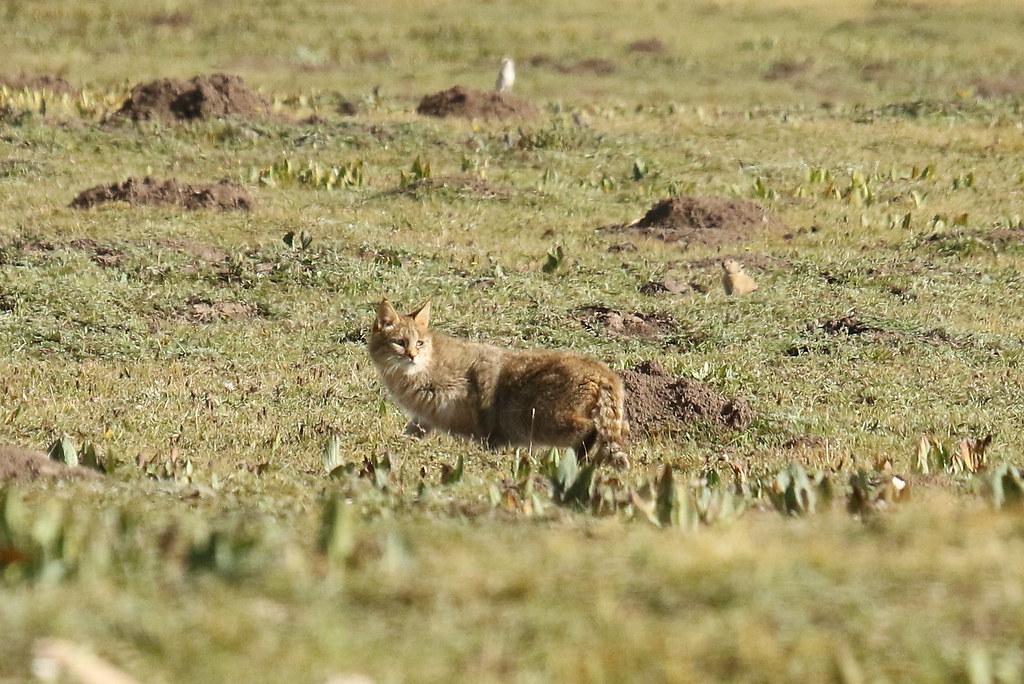
What is the Chinese Mountain Cat aka Steppe Cat, Desert Cat, Felis bieti?

The Chinese Mountain Cats that we saw by spotlight on the Tibetan Plateau in Sichuan have found themselves to be in a state of taxonomic confusion and disagreement. This is not surprising  or unusual for a small cat since there are relatively few specimens in museums and the division of small cats into robust taxons is well known to be difficult. Add to that the differences in species concepts adopted and vigorously defended by different workers with the addition with several possible interpretations of DNA data, it is easy to see why recent papers have pulled the animal in two directions: first it was lumped into the local Wildcat (itself the subject of controversy); then it was restored as a proper species.

In 1892 Alphonse Milne-Edwards described a new species of cat; he named it Felis bieti for Felix Biet (1838–1904) a French missionary. Neither a type specimen nor the locality was noted in the original description but Glover Morrill Allen (1879-1942) in his book explained that Prince Henri d’OrlĆ©ans (1867-1901) brought back the two specimens to Paris from Tongolo and Tatsienlu in Sichuan. Henri d’OrlĆ©ans, noted duellist and anglophobe, led an expedition, at the insistence of, and paid for by, his father from Siberia to Indo-China.

Shortly after Milne-Edwards, Eugen Alexander Büchner (1861-1913) of St Petersburg described what turned out to be the same species as Felis pallida, a name actually appropriate to its appearance and one which Allen used for the common name, Pale Desert Cat in his book. A number of other common names have been used for F. bieti: Chinese Mountain Cat; Chinese Steppe Cat; Chinese Desert Cat.

It seems that nobody has found a modern location of Tongola but Tatsienlu is now known as Kangding on what, historically, was the border between China and Tibet (and, incidentally, about 60 km west of where we were watching Red Pandas).

Although my video as well as several other videos available on YouTube were taken at night by spotlight, it can be seen that the appearance of the cats is the same as a still photograph taken by day by Caroline Simpson two months before our visit:

Chinese Mountain Cat aka Chinese Desert Cat
Chinese Mountain Cat on the Tibetan Plateau, September 2017
Photograph by Caroline Simpson (from Flickr)

It is quite clear that all—except, and possibly importantly, one—of the still photographs and videos taken of ‘mountain cats’ on the Tibetan Plateau near Ruoergai in Sichuan conform with the description of the F. bieti. And this is where I went back into the classical descriptive zoology of the early 20th Century.

Reginald Innes Pocock FRS (1863-1947) wrote his Catalogue of the Genus Felis but it had to be edited and published posthumously by the Natural History Museum in 1951. There is a perfect description of ‘our’ cat under the subspecies F. b. bieti (which Pocock himself had proposed earlier to distinguish it from another subspecies that I will return to later and in a subsequent post). I will not repeat the description here other than to point out that he did not specifically mention the tail although he did describe it for his other subspecies; the tails were clearly similar.

I am therefore entirely content with the conclusion that ‘our’ Chinese Mountain Cats on the Tibetan Plateau in Sichuan were what had been originally described as Felis bieti.

As I mentioned earlier the molecular phylogeneticists have not left the difficult problem of small cat taxonomy untackled. Thus we had a paper in Science in 2007 which, in considering the origins of the domestic cat, lumped, amongst other lumpings, Felis bieti into the Wildcat as the subspecies, Felis silvestris bieti. It is this classification that one finds on many current websites. However, I did not find the authors’ argument persuasive (see below for a possible interpretation) since models drawn from mitochondrial DNA (i.e. maternal line) differed from those built from microsatellite (nuclear DNA) data.

One of the authors of the paper described, Andrew Kitchener, of what is now ungrammatically known as National Museums Scotland, then took the opposite view in 2009. After modelling the geographical distribution from 18,000 years ago until the present, he, with E.E. Rees of the University of Alberta at Edmonston, wrote:
The palaeo-DDMs [Deduced Distribution Model] provide no clear support for the redesignation of the Chinese steppe cat Felis bieti as a subspecies of F. silvestris [Wildcat] based on Driscoll et al.’s (2007) phylogeographical analysis, except that the effective loss of the central Asian distribution during the LGM [Last Glacial Maximum] may have resulted in introgression between F. bieti and F. s. ornata, in small isolated habitat fragments. Distinctive morphology and possible sympatry with Asian wildcats suggest that the Chinese steppe cat is a distinct species whether using the BSC or PSC.

The latter argument—that Felis bieti—is a ‘good’ species appears to be holding sway since the species has been retained in the IUCN’s Cat Specialist Group’s Cat Classification Task Force report, Revised Taxonomy of the Felidae published very recently. 

The Task Force was chaired by Andrew Kitchener and comprised a Core Group, an Expert Group and a Review Group. Given the wide membership, backgrounds and adherence to different species concepts, it is not at all surprising that disagreements remain. To complicate matters a little further, the Wildcat of Eurasia has been split/resplit into two species, Felis silvestris, the European Wildcat and Felis lybica, the African and Asian wildcats, so the section on Felis bieti reads:
There has been no recent taxonomic study of this species since Groves* (1980), although Driscoll et al. (2007) showed that Felis bieti was basal to Felis silvestris (sensu lato) according to mtDNA, but a sister taxon to Felis lybica ornata from microsatellites, which suggests that Felis bieti may have an ancient hybrid origin, possibly during the last glaciation when the distribution of F. l. ornata was apparently restricted to a very small area in Central Asia (Kitchener & Rees 2009). F. bieti is morphologically distinct and is supposedly sympatric with F. l. ornata, which would also preclude its recognition as a subspecies of F. silvestris/lybica. However, C. Driscoll (pers. obs.) maintains this species as a subspecies within F. silvestris (sensu lato).
The stated distribution of Felis bieti has tightened over the years, not as a result of habitat loss, but as a result of excluding misidentified specimens. Li He, Rosa GarcĆ­a-Perea, Ming Li and Fuwen Wei began their paper of a study made in 2000 and 2001:
One of the problems is the difficulty of identification. This cat is almost unknown to Chinese scientists, and the few specimens kept at Chinese institutions are mostly misidentified. A similar confusion applies to local hunters, who do not know what species they are dealing with when they capture the animal (pers. obs.). Fur traders are probably more familiar with the identification of the species, but they do not have an interest in the geographical origin of any pelts that they receive. Therefore it is common to find incorrect information in the local literature, with the species often confused with manul Otocolobus manul, Asiatic wildcats of the Felis silvestris [lybica] ornata group, or lynx Lynx lynx (e.g. Wang, 1990, 1991). Thus any information on the distribution and occurrence of the species requires careful evaluation of the source.
The authors looked at 45 specimens and living individuals, 168 reports from the literature and 21 records from local hunters. However, I found the criteria for inclusion as F. bieti to be unclear and while some of the records were obviously wrong, I have the suspicion that further studies will reveal a wider distribution, particularly to the west. As a result of this study though, the distribution map below is the one that is currently accepted.

modified from Sanderson et al. 2010

We found it difficult at night to estimate the size of the Chinese Mountain Cats we saw. The Guide to the Mammals of China says about twice the size of a domestic cat but the data given by Pocock do not support such a large difference. The head-body length of skins in museums tend to be longer than in real life and so absolute size is not very informative. Some of the skins are from the fur trade and could well have been stretched. Pocock’s data showed a range of 16-23 inches for the skins of feral domestic cats from various parts of the world compared with 28-33.5 inches for specimens collected as, or assigned to, Felis bieti bieti. Taking the medians of 19.5 inches for the feral cats and 30.3 for F. bieti, the latter are about 1.5 times the length of a feral domestic cat. But given that feral cats tend to be smaller than those kept in the house, about a third larger seems a fair estimate. Indeed, Allen’s description begins, 'About the size of a house cat…'

Ours, and other sightings of Chinese Mountain Cats on the Tibetan Plateau in recent years, have been made possible by the efforts of that indefatigable guide to, and font of knowledge of, the birds and mammals of Sichuan, Sid Francis. There is, though, a fairly recent photograph from one of his trips to the Tibetan Plateau in 2015 of a  cat which does not appear to conform to the others. That cat was seen during and photographed by Yann Muzika; the photograph was shown in Small Wild Cat Conservation News in May 2015:

from Small Wild Cat Conservation News, May 2015

To my untrained eye it looks more like a Wildcat, i.e. Felis silvestris/lybica, even accounting for any possible seasonal shift in pelage. If so, the presence of this species together with F. bieti would demonstrate sympatry (i.e. both occur in the same area) and provide conclusive evidence that Felis bieti is indeed a ‘good’ species. In that respect it is interesting that the distribution map for the Wildcat in A Guide to the Mammals of China (which also has a good painting of F. bieti, if a little angular) has a series of question marks for that area of Sichuan.

I do have one main concern left though. There are photographs of animals, clearly identified as F. bieti that do not really conform with the photographs and videos shown and referred to in this article. I will deal with that question, with some delving into the classical literature and much inadequate knowledge in a subsequent post.

There is very much more to be discovered about the Chinese Mountain Cat and indeed many of the small cats of the world. We just counted ourselves lucky and privileged to have seen Chinese Mountains Cats and Pallas’s Cats on the grasslands of the eastern Tibetan Plateau.


*Colin Groves died on 30 November 2017.

The following will also provide references to other research on the Chinese Mountain Cat

Allen GM. 1938. The mammals of China and Mongolia. New York: American Museum of Natural History.

Driscoll CA, Menotti-Raymond M, Roca AL, Hupe K, Johnson WE, Geffen E, Harley EH, Delibes M, Pontier D, Kitchener AC, Yamaguchi N, O’Brien SJ, Macdonald DW. 2007. The near eastern origin of cat domestication. Science 317, 519-523. doi:10.1126/science.1139518

He L, Garcia-Perea R, Li M, Wei F. 2004. Distribution and conservation status of the endemic Chinese Mountain Cat Felis bieti. Oryx 38, 55-61.

Kitchener AC, Rees E. 2009. Modelling the dynamic biogeography of the wildcat: implications for taxonomy and conservation. Journal of Zoology 279, 144-155.

Kitchener AC, Breitenmoser-Würsten C, Eizirik E, Gentry A, Werdelin L, Wilting A, Yamaguchi N, Abramov AV, Christiansen P, Driscoll CA, Duckworth JW, Johnson WE, Luo SJ, Meijaard E, O’Donoghue P, Sanderson J, Seymour K, Bruford MW, Groves C, Hoffmann M, Nowell K, Timmons Z, Tobe SS. 2017. A revised taxonomy of the Felidae. The final report of the Cat Classification Task Force of the IUCN/SSC Cat Specialist Group. Cat News Special Issue (11). ISSN 1027-2992

Pocock RI. 1951. Catalogue of the genus Felis. London: British Museum

Sanderson J, Yufeng Y, Naktsang D. 2010. Of the only endemic cat species of China. 
http://www.catsg.org/fileadmin/filesharing/5.Cat_News/5.3._Special_Issues/5.3.5._SI_5/Sanderson_et_al_2010_The_Chinese_Mountain_cat.pdf

Wozencraft WC. 2008 In, Smith AT, Xie Y. editors, A Guide to the Mammals of China. Princeton: Princeton University Press.

Monday, 5 February 2018

Encounters with the Chinese Mountain Cat (and other nocturnal mammals) on the Tibetan Plateau in China

No sooner had we turned off the main road south of Ruoergai on the Tibetan Plateau in Sichuan and turned on the spotlights to scan the grasslands than a Chinese Mountain Cat was spotted by its eye shine. It was a good distance away but our track and its path were converging. Then the cat turned towards us as it hunted for rodents and I was able to take some video footage by torchlight. My camera was at the limit and the footage at these very low light levels is grainy but the salient features of this little-known cat that we could see through binoculars can just be discerned.


The late evening turned out to be one of those night-spotting classics that make spotlighting or lamping such a worthwhile experience. None of the mammals were close enough to be filmed but all could be seen through binoculars. After that Mountain Cat (Felis bieti) we saw another two plus Woolly Hares (Lepus oiostolus), a Red Fox (Vulpes vulpes), an Asian Badger (Meles leucurus), a Steppe Polecat (Mustela eversmannii) which was searching pika burrows for prey but then disappeared from view, and three Wolves (Canis lupus). The wolves were stopping, listening and then moving on to stop and listen again. Domestic yak herds are kept on the grasslands and it is hardly surprising that the yak herders have the enormous and fierce Tibetan Mastiff as guard dogs.

The following night Tibetan Foxes (Vulpes ferrilata) abounded; we saw ten, as well as a Mountain Cat and a Red Fox. On a final night it was Red Foxes, six this time, a Mountain Cat and an Asian Badger.

It was the density of the predators that surprised us, especially the numbers of Tibetan and Red Foxes in a relatively small area. The grasslands of the Tibetan Plateau are really productive in terms of producing large rodent and lagomorph populations which together with the odd dead yak must provide rich pickings for the carnivores.

I will return to the Chinese Mountain Cat in a later post.

Monday, 29 January 2018

A morning on the Tibetan Plateau in Sichuan: 2. Plateau Pika - another fluffy animal

The Plateau or Black-lipped Pika, Ochotona curzoniae is an animal of, and confined to, the Tibetan Plateau. Ecologists have it marked as a keystone species of the Plateau where it is thought to increase plant growth by aerating and turning the soil through its burrowing. Many predators—like the Pallas’s Cat—rely on this species. Each family has a burrow with multiple entrances and a central nesting chamber.

As we found last November on the Plateau in Sichuan, they are extremely common. We were surrounded by pikas, eating close to a burrow or dashing from one to another. Also extremely common was the White-rumped Snowfinch (Onychostruthus or Montifringilla taczanowskii). We noticed that in areas where these snowfinches settled, the pikas appeared from their burrows. Presence of the finches appeared to assure the pikas that there were no predators near. Snowfinches nest in old pika burrows.

There was another species of snowfinch present in smaller numbers but formed into larger flocks, the Rufous-necked Snowfinch (Pyrgilauda or Montifingilla ruficollis).

Pikas do not hibernate (unlike marmots which had disappeared for the winter). The do make stacks of hay, usually inside the burrow, which they obviously use to supplement their diet of live grasses and herbs, especially in winter. They also have a much thicker, lighter-coloured coat in winter. However, it appears that mortality during the winter is high, with only 1-2% of adults surviving to breed for two years.

Pikas, like all lagomorphs, are coprophagic. They break down their vegetarian diet in the hindgut i.e. beyond the point that some of the nutrients produced can be absorbed. Two types of faecal pellet appear, the normal hard ones that litter the ground and special soft ones which they eat and send through the digestive tract again.

A Plateau Pika eats a lot of grass—61 g/day and there are lots of Plateau Pikas. It has been estimated that in energy intake terms, about 6.2 million kilojoules per hectare are consumed each year by pikas in the alpine meadows of Qinghai-Tibet or 1.3 times that consumed by the domestic sheep kept there*. It is perhaps then not surprising that the Plateau Pika is regarded as an agricultural pest and that they have been, and are being, poisoned in vast numbers in order to protect the existing, and encourage the spread of, livestock industry in China. The damage caused to the grassland, to predator populations and, ultimately, to agricultural productivity itself can be imagined. We see vast areas of natural grassland infested by domestic yaks: the locals see agricultural land infested by pikas and rodents. But we can hardly complain; we have fields upon fields of rye-grass monoculture for our livestock.

My video below shows a Plateau Pika that was filmed from the same position I used for the Pallas’s Cat (see my last post) at an altitude of over 3,500 metres.


*Zhang Z, Zhong W, Fan N. 2003. Rodent problems and management in the grasslands of China. In, Rats, mice and people: rodent biology and management, edited by Singleton GR, Hinds LA, Krebs CJ, Spratt DM. ACIAR Monograph No. 96, pp 316-319

Saturday, 27 January 2018

A morning on the Tibetan Plateau in Sichuan: 1. Pallas’s Cat - a seriously fluffy cat on video

Last November, we had a great morning of wildlife on the grasslands of the Tibetan Plateau north of Ruoergai in Sichuan. We arrived at the site (altitude 3,535 metres or 11, 300 feet) just before dawn. Almost immediately saw a Pallas’s Cat in the beam of the spotlight. However, it soon moved away. As light began to reveal the grassland we could see Plateau Pikas dashing in and out of their burrows. After short walk we looked over an area of marshland where there was a family of Black-necked Cranes (Grus nigricollis), the same species we had seen in Bhutan in 2016. The light was very poor but I managed to take a couple of still photographs at the extreme range of the zoom lens.


Black-necked Cranes

After walking back towards the car with pikas running and snowfinches flitting around us, two Pallas’s Cats were seen on a ridge. These cats are said to be solitary so we assumed that the two we saw together were a mother and her well-grown offspring. While some of the party tried to get nearer—and quickly becoming aware of the shortness of breath occasioned by rushing uphill at that altitude—but without frightening the cats, I set up a tripod and camera to take some video as one of the cats moved along the ridge line. Even with extra weighting gusts of wind moved the tripod slightly. These cats are only the size of a large domestic moggy and do not appear that big on the screen but you will be able to see their incredibly thick winter coat (which they shed in summer), the very flat face characteristic of the species and the low-set ears. Their slinky movement along the ground can only be described as like that of a miniature snow-leopard.

So this video is like the dog that talked; remarkable for not that it talked well but that it talked at all.


Compared with other cats, the very short jaw has a set of premolar teeth missing. It is easy to see that these are ambush predators; nothing, not even their ears stand out from their outline. Pikas, their main prey on the plateau, must only be aware of them as they pounce.

In Mongolia, their distribution is said to depend on adequate cover since the cats are preyed upon by wolves and foxes. Perhaps it is not surprising that the site we were visiting, which is well-known amongst the cognoscenti, has a couple of small quarries in which the cats can hide and in which one of ours was seen to disappear from view.

They are animals of the steppes of Central Asia and have been recorded as high as 5,000 metres (these were at about 3,500 metres). Known as the Manul in Mongolia this cat was named Felis manul by Peter Paul Pallas (1741-1811) in 1776. Pallas was a Russian of German extraction employed by Catherine the Great as Professor of Natural History at the Academy of Sciences in St. Petersburg and to explore the geography and natural history of the outer regions of Russia. His expedition lasted from 1768 until 1774. Numerous mammals and birds are named after him.

Another Russian explorer and naturalist, Nikolai Alekseevich Severtzov (1827–1885), moved Pallas’s Cat out of the genus Felis because it was so different from the rest of the species in that genus. He put it in a new genus Otocolobus, named from the Greek meaning ears cut short (i.e docked or maimed). For decades it was usually still referred to as Felis manul until 1907 when Pocock at the British museum upheld Severtzov’s classification.

Molecular phylogenetic analysis indicates that it and an ancestor of the Leopard Cat (Prionailurus bengalensis), which we also saw on this trip at a lower altitude, diverged about 5.19 million years ago.

Pallas’s Cat is classified as Near Threatened by IUCN. It was hunted widely for its fur but the main threats are habitat loss, predation from the dogs used to guard herds against wolves (the Tibetan mastiffs used to guard the herds of domestic Yaks are huge) and the poisoning of their pika prey to improve the pasture for those Yaks.

Fortunately, these cats had not seen the recent BBC series Big Cats in which footage, claimed to be the first, of Pallas’s Cats in the wild was shown. There they were said to be highly elusive but ours were anything but.

More video from that morning on the Tibetan Plateau soon.