Saturday, 27 January 2018

A morning on the Tibetan Plateau in Sichuan: 1. Pallas’s Cat - a seriously fluffy cat on video

Last November, we had a great morning of wildlife on the grasslands of the Tibetan Plateau north of Ruoergai in Sichuan. We arrived at the site (altitude 3,535 metres or 11, 300 feet) just before dawn. Almost immediately saw a Pallas’s Cat in the beam of the spotlight. However, it soon moved away. As light began to reveal the grassland we could see Plateau Pikas dashing in and out of their burrows. After short walk we looked over an area of marshland where there was a family of Black-necked Cranes (Grus nigricollis), the same species we had seen in Bhutan in 2016. The light was very poor but I managed to take a couple of still photographs at the extreme range of the zoom lens.


Black-necked Cranes

After walking back towards the car with pikas running and snowfinches flitting around us, two Pallas’s Cats were seen on a ridge. These cats are said to be solitary so we assumed that the two we saw together were a mother and her well-grown offspring. While some of the party tried to get nearer—and quickly becoming aware of the shortness of breath occasioned by rushing uphill at that altitude—but without frightening the cats, I set up a tripod and camera to take some video as one of the cats moved along the ridge line. Even with extra weighting gusts of wind moved the tripod slightly. These cats are only the size of a large domestic moggy and do not appear that big on the screen but you will be able to see their incredibly thick winter coat (which they shed in summer), the very flat face characteristic of the species and the low-set ears. Their slinky movement along the ground can only be described as like that of a miniature snow-leopard.

So this video is like the dog that talked; remarkable for not that it talked well but that it talked at all.


Compared with other cats, the very short jaw has a set of premolar teeth missing. It is easy to see that these are ambush predators; nothing, not even their ears stand out from their outline. Pikas, their main prey on the plateau, must only be aware of them as they pounce.

In Mongolia, their distribution is said to depend on adequate cover since the cats are preyed upon by wolves and foxes. Perhaps it is not surprising that the site we were visiting, which is well-known amongst the cognoscenti, has a couple of small quarries in which the cats can hide and in which one of ours was seen to disappear from view.

They are animals of the steppes of Central Asia and have been recorded as high as 5,000 metres (these were at about 3,500 metres). Known as the Manul in Mongolia this cat was named Felis manul by Peter Paul Pallas (1741-1811) in 1776. Pallas was a Russian of German extraction employed by Catherine the Great as Professor of Natural History at the Academy of Sciences in St. Petersburg and to explore the geography and natural history of the outer regions of Russia. His expedition lasted from 1768 until 1774. Numerous mammals and birds are named after him.

Another Russian explorer and naturalist, Nikolai Alekseevich Severtzov (1827–1885), moved Pallas’s Cat out of the genus Felis because it was so different from the rest of the species in that genus. He put it in a new genus Otocolobus, named from the Greek meaning ears cut short (i.e docked or maimed). For decades it was usually still referred to as Felis manul until 1907 when Pocock at the British museum upheld Severtzov’s classification.

Molecular phylogenetic analysis indicates that it and an ancestor of the Leopard Cat (Prionailurus bengalensis), which we also saw on this trip at a lower altitude, diverged about 5.19 million years ago.

Pallas’s Cat is classified as Near Threatened by IUCN. It was hunted widely for its fur but the main threats are habitat loss, predation from the dogs used to guard herds against wolves (the Tibetan mastiffs used to guard the herds of domestic Yaks are huge) and the poisoning of their pika prey to improve the pasture for those Yaks.

Fortunately, these cats had not seen the recent BBC series Big Cats in which footage, claimed to be the first, of Pallas’s Cats in the wild was shown. There they were said to be highly elusive but ours were anything but.

More video from that morning on the Tibetan Plateau soon.


Tuesday, 23 January 2018

Black Rats and black rats. Close encounters of different kinds

A Black Rat in Sichuan

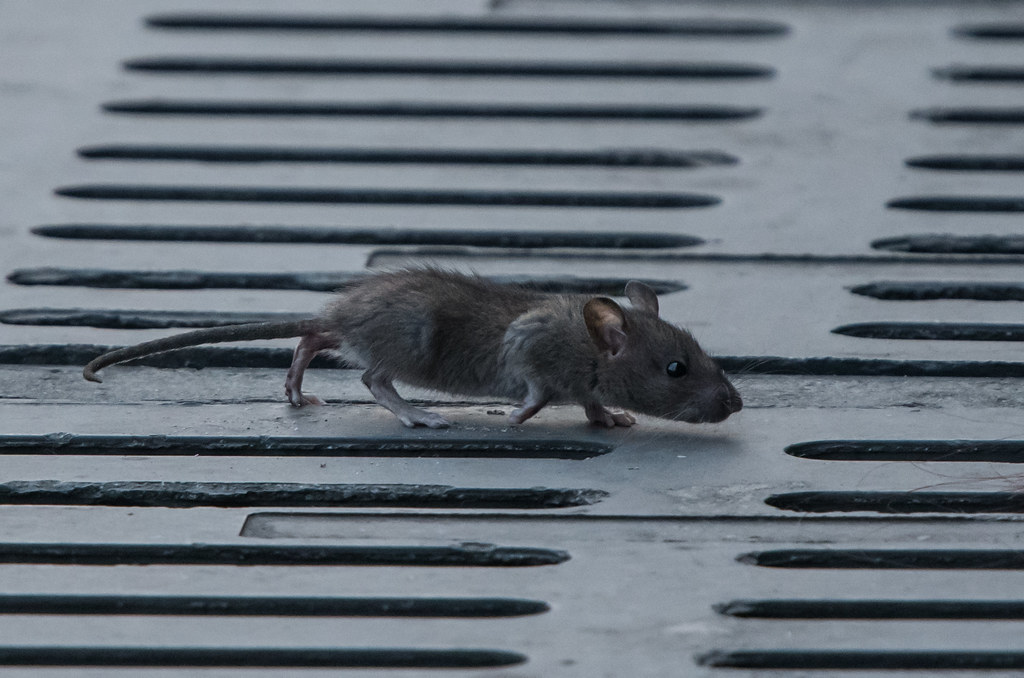
The last wild mammal we saw before leaving in Sichuan in November was a Black Rat (Rattus rattus). It was moving on a grating over a drain at a service station on a motorway near Chengdu. For some reason the overhead artificial lighting late on a winter’s afternoon played havoc with my video. However. Tim Melling took still photographs and this is one of them:


Black Rat (Rattus rattus)


Black Rats, originally from India and south-east Asia, arrived in Britain in Roman times. Of lighter build than the Brown Rat (Rattus norvegicus) which arrived in the 18th Century, they have a less shaggy coat, larger ears and a relatively longer and narrower tapering tail which has been described as semi-prehensile. They were once common and widespread in sea ports although the Brown Rat, once introduced, would fight and kill them. In and around ports, where arriving ships topped up the supply, they lived in buildings, usually in the roof where they could invade other buildings by climbing across cables or through attics. Black Rats were also known as Roof Rats. A building could be infested with Black Rats living in the roof and Brown rats living at or below ground level.

There was a massive decline in Black Rat numbers in Britain during the latter half of the 20th Century. Intensive reporting of infestations by local authority medical officers and the laying of poison baits coupled with statutory requirements for owners of buildings to free them of rats and for ships to be treated as buildings in that respect. The construction of rat-proof ships also helped but there were still reports twenty-five years ago of Black-Rat-infested ships turning up in British docks; in Hull in 1992 the Russian factory ships known as Klondikers were of particular concern.

By the 21st Century Black Rat in Britain were only being reported from the islands of Lundy in the Bristol Channel, the Shiant Islands in the Outer Hebrides and a small island in the Firth of Forth. Shipwrecks or visits by sailors in ships’ boats are thought to have been responsible for introducing the species and/or the Brown Rat to these islands. Because of the devastating effects on breeding seabirds, extermination programmes have wiped out the rats on Lundy, Ailsa Craig (although I do not know whether the rats there were Black or Brown, or both) to the enormous benefit of nesting seabirds. Now I read a similar programme on the Shiants in 2015-16 has been successful.

A black rat in Troon—a Black Rat or a black Brown Rat?

Rats have loomed large in my life recently. The well-spaced fairways and very rough and tough ‘rough’ of Royal Troon Golf Course make it a haven for local wildlife but also a killing field. The foxes, stoats and birds of prey ensure the course is littered with body parts of birds (mainly gulls) and rabbits. A couple of weeks ago I was surprised to find the partial remains of a rat on one of the fairways.  I, nor my playing partners, could remember having seen the remains of a dead rat before. But what was surprising was that the fur on the remaining skin was black and the tail in the light of what passes for dawn in January in Scotland seemed long. First I checked that the hair was not just wet and simply looked black; it was black. My thought was that this could either be a black (i.e. melanistic) Black Rat or that there was an outside chance this could be a Black Rat, especially since the port of Troon is at the other end of the town from the course. Fortunately, a fellow player in our two-ball foursome had his new phone with him and we managed a photograph in the very poor light.

The photograph suggested that the shape of the tail seemed more Brown-Rat like than Black. While experts on these non-native British rats had a look at the photograph and concluded that it was a black Brown Rat—probably—I found that Black Rats once did occur in Ayrshire with five or fewer than five infestations being reported for the old County of Ayr in 1951. Specifically excluded were the burghs of Ayr and Kilmarnock, which suggests the Black Rat, if not that common, was present in the seaports along the Ayrshire coast. In 1956 when numbers of Black Rats throughout Britain had declined markedly, there were still reports of individual Black Rats for the County of Ayr.


In the London docks, the incidence of black Brown Rats was 1.66 per cent in the 1940s. Is that still the case in present-day populations in Britain? The evidence I have read suggests that the population is dimorphic (rather than black ones appearing by frequent mutation) and that black form is not uncommon. However, a low proportion surely suggests a strong selection pressure against black. Are they more easily seen by predators if they are short of food and have to forage by day? Whatever the explanation, the remains of melanistic Brown Rat appeared at my feet as I approached my ball. What happened next—to my ball, that is? Politer not to ask.

Bentley EW. 1959. The distribution and status of Rattus rattus L in the United Kingdom in 1951 and 1956. Journal of Animal Ecology 28, 299-308.

Lock J. 2006. Eradication of brown rats Rattus norvegicus and black rats Rattus rattus to restore breeding seabird populations on Lundy Island, Devon, England. Conservation Evidence 3, 111-113.


Thursday, 18 January 2018

Black Death and Black Rats. Not Fake news just NOT news

Black Death 'spread by humans not rats’. BBC News 15 January 2018

Maybe Rats Aren't to Blame for the Black Death. National Geographic 15 January 2018

Black Death plague spread by dirty humans not rats, study suggests. Daily Telegraph 16 December 2018

The classic explanation for the Black Death plague is wrong, scientists say. Washington Post 16 January 2018


These are typical of the headlines appearing around the world as a result of a paper in PNAS*, and this is how the authors describe it under the subtitle, Significance.

Plague is infamous as the cause of the Black Death (1347–1353) and later Second Pandemic (14th to 19th centuries CE), when devastating epidemics occurred throughout Europe, the Middle East, and North Africa. Despite the historical significance of the disease, the mechanisms underlying the spread of plague in Europe are poorly understood. While it is commonly assumed that rats and their fleas spread plague during the Second Pandemic, there is little historical and archaeological support for such a claim. Here, we show that human ectoparasites, like body lice and human fleas, might be more likely than rats to have caused the rapidly developing epidemics in pre-Industrial Europe. Such an alternative transmission route explains many of the notable epidemiological differences between historical and modern plague epidemics.

Sadly, while the mathematical modelling by these authors supports the view that Black Rats (Rattus rattus) were not important in transmitting plague via fleas during its rapid spread through Europe the media reports do not point out that this is just more work on this theme. Equally sadly, neither the authors of the paper nor the journalists parroting the press release from the journal, mention the fact that the Black Rat theory for transmission in Europe was pretty well shot down by Graham Twigg, formerly of Royal Holloway College, University of London (and student of Eric Thomas Brazil Francis in Sheffield) in his book, The Black Death, A Biological Reappraisal (Batsford), published in Britain in 1984.

Graham Twigg based his claim that Black Rats could not have been involved in the transmission of plague in England (or northern Europe) on knowledge of the biology of the species, then the only species of rat in Britain. Black Rats, nor the Brown Rats (Rattus norvegicus) that came later, are native. The Black Rat, also known as the Ship Rat, arrived from the east, coming ashore from ships carrying them and infesting the buildings of ports. They need a warm environment and rarely leave the shelter of buildings or reach the countryside. They were not, therefore, sufficiently widely distributed across the country for their fleas to carry the infection.

Black Rats and other rodents, though, through the fleas they carry, have been implicated in the spread of plague in other parts of the world, including Hong Kong, where the bacterium Yersinia pestis was first isolated from plague victims in 1894.

Twigg also threw doubt on the infective agent that caused the Black Death but that is a different question I will not address here.

After the 1980s when Twigg’s book made the first headlines, the story emerges at irregular intervals in the popular press. For example, here is the headline from The Independent of 8 October 1994: Maybe the black rat didn't do it: the Black Death.

If present-day journalists had even looked at the Wikipedia article on the Black Death they may have been better informed on the research reported in PNAS. Indeed there are whole websites covering The Black Death and the theories on its cause and rapid spread. The same journalists may then have realised that PNAS paper is just a minor addition to the literature adding apparently quantitative verisimilitude to what has been qualitatively obvious. Worse still, the new ‘discovery’ has already been added to a Wikipedia article on Yersinia pestis as a novel idea!

So, we have even more evidence that the Public Understanding of Science has turned into the Public Misunderstanding of Science, with scientific journals and their publicists putting out hyped stories for gullible journalists to fill media space.

*Dean KR, Krauer F, Walløe L, Lingjærde OC, Bramanti B, Stenseth NC, Schmid BV. 2018. Human ectoparasites and the spread of plague in Europe during the Second Pandemic. Proceedings of the National Academy of Sciences of the USA. Published ahead of print January 16, 2018, doi:10.1073/pnas.1715640115

Tuesday, 16 January 2018

Chinese Serow in the Wild

Below is a link to my video of an immature male Chinese Serow in the wild taken during out trip to Sichuan in November. China has a number of strange, to our eyes, ruminants, and the Serow is one of them. It is short, the back legs are longer than the front and this species has a mane.

The older books often describe serows as ‘goat-antelopes’ but it is a term best avoided. They, along with the gorals (I also show a shot of the Chinese Goral), mountain goat and chamois, are included in one tribe of the subfamily Caprinae which includes all the sheep, goats and ibexes as well as the takins and musk-ox. The are all, of course, in that large family Bovidae.

At present the individual we saw is considered a Chinese Serow. One species that occurred over much of Asia was split into four in the 1980s but there is still much debate on the taxonomy. So the Chinese Serow now goes under the name of that Père David (1826-1900), the famous French missionary and explorer, gave it in 1869: Capricornis milnedwardsii, for, I presume Henri (1800-1885), rather than his son, Alphonse (1835-1900), Milne-Edwards, the famous French zoologist with the very English name (his father was British).

Chinese Serows inhabit steep mountain slopes where they eat leaves and shoots. They are nocturnal, solitary and shy, so they are rarely photographed in the wild.


We were surprised by the agility of the serows we saw. This one used its hooves and front legs to pull branches and leaves within reach of its mouth while it held the branches or saplings down with its own weight. We also saw one on the riverbank further downstream. Startled by traffic on the road it charged across the river and up the very steep opposite bank very quickly indeed. Those longer hind legs with powerful muscles soon had it away from the perceived danger.

The size of its back legs reminded us of what we were told in Japan where another species of serow occurs in the mountains. Japanese girls of not so longer ago had to use the squat lavatories so loathed by western visitors to Asia and, it was said, developed leg muscle accordingly, rather than the slim legs they longed for. So ‘having legs like a serow’ is most definitely not a compliment in Japan.

Later during the trip, at Tangjiahe, we found a dead immature serow by the side of the track. We were told it is not uncommon to find them dead and in the IUCN account of this species it is noted:  In 1962, a die-off caused by an unknown epizootic was reported in the Tangjiahe area. There are reports of similar occurrences in Japan with parapoxvirus  as the likely cause. In India, sarcoptic mange has been implicated in the die-off of Himalayan Serows.

The Chinese Serow is classified as Near Threatened by IUCN.

Another caprine we saw on the forested slopes was the Chinese Goral (Naemorhedus griseus). It is classified by IUCN as Vulnerable.

The was taken using spotlights at night in the forests of Labahe, Sichuan Province.

Sunday, 14 January 2018

Confessions of a Hong Kong Naturalist by G.T. Reels. A new book

A memoir of ten years surveying wildlife in the wetlands, forests and mountains of Hong Kong’s New Territories and offshore islands


When we reached Hong Kong in November, this book was waiting for us, having been spotted in a bookshop earlier in the year. I cannot recommend it too highly. It does what is says on the cover in that the author describes the survey work he undertook with colleagues in the University of Hong Kong, for the WWF (Hong Kong) and for Kadoorie Farm in the 1990s. Most of the work was instigated by his boss, David Dudgeon who really put the study of Hong Kong wildlife on the map, both in terms of research and public policy for conservation. Graham Reels first went to Hong Kong in 1975 as a schoolboy so he has seen the vast changes that have occurred there over the past 40 years.

His story of the wildlife observed, of the surveys for the wide biodiversity survey, of his colleagues (many of whom remain in Hong Kong engaged in conservation), of students and of his personal life is well worth reading if only to show how much more we know now, than, say, in 1968 when we left Hong Kong to return to the U.K.

There are also delightful waspish asides about: competitive bird ringers, birding organisations and their classification of native versus introduced species; some of the personalities of university, conservation organisations and government players; the herpetologists from the U.S.A. who visited Hong Kong regularly, discovered new species but then deposited their collections in an American museum. Reels also records the time of horizontal balkanization of the biological sciences in the University (which was later reversed).

Graham Reels was also one of the founders of the newsletter Porcupine! That hugely successful (and now greatly missed) venture from the University, which reported finds in the field, conservation issues and the latest research ran from 1992 until 2005. All the issues are available online here. I was delighted to read that my old friend and former colleague of 54 years, Daniel Chan, then head of zoology, provided the money for printing out of departmental funds.

The land habitats of Hong Kong have improved over the past 50 years, as I have stressed many times to those unfamiliar with the Hong Kong countryside. The author returned to do more work in 2014-2015 and very near the end of the book writes:


     I…was struck by how much the forests had grown and matured from the 1990s—and by how the rural landscape of Hong Kong had been transformed since I had first seen it in the 1970s, when forest cover was thin and most hill slopes and summits were either dominated by fire-maintained grassland or completely denuded. This progressive increase in woodland thickness and extent has pulled in a steady stream of forest-associated wildlife (mammals, birds, butterflies, dragonflies), recolonising from forested areas in Guangdong province, in recent decades, and will continue to do so as long as the Country Parks and Special Areas are respected. I say ‘recolonise’ because I am in no doubt that these arrivals were  here in the past, before human activities almost completely removed the original natural forest in the last few centuries.

One of the causes of deforestation, particularly on Hong Kong Island was, of course, the Japanese Occupation of late 1941 until 1945. Firewood for cooking was in such short supply that the hillsides were denuded of trees by a desperate local population concerned with survival.

Graham Reels ends:


     It was a fascinating experience and reminded me of how fortunate I had been in the job that had come my way in the past; how such a career of stumbling wide-eyed discovery seemed so unlikely now, when so much more is known about Hong Kong’s astonishingly rich and precious natural history. It lent impetus to the writing of this memoir.
     I hope it was a tale worth telling.
Yes, it was.

Although the book has been for sale in the book shops I have not been able to find it for sale in other parts of the world. I know that many former Hong Kong residents will want a copy so here are the details of the publisher, Graham Reels’s brother (who—spoiler alert—appears in the book): Atratothemis Books, PO Box 6, San Tin Post Office,1A Castle Peak Road, New Territories, Hong Kong. ISBN 978-988-78049-1-8.


Thursday, 11 January 2018

Red Pandas in the wild in Sichuan, China

In November, we had great success in Sichuan looking for mammals*. During the autumn and early winter Red Pandas climb during the daytime from the thick bamboo understorey of high-altitude forests into trees to gorge on red berries. At other times of year they stay in the bamboo to eat the shoots and are very rarely seen.

Would we see them in the two days we had at the site where they are known to be plentiful. We were above 2,500 metres (8,000 ft) and the first morning at dawn was cold, dank and misty with low cloud cover. Lots of berries. No pandas. We scanned trees near and far. Late in the day, one was spotted in a distant tree by our guide, the estimable Sid Francis, and some of our party keeping up with the advanced guard saw it through the telescope before it descended into the bamboo. Then one member walking down the road wondered what two local tourists were looking at. A panda had wandered across the road in front of them, climbed into a tree for a few minutes and then disappeared into the bamboo. They but not us were utterly delighted. Would we do better the next day?

The morning was brighter and doing exactly the same thing along the same route, a panda was spotted in a tree. The view was distant but all its markings could be seen as it moved around eating the red berries. Then, in a much closer tree, a panda appeared, and then another, and another. In 90 minutes we saw seven different pandas, with a final one being spotted a while later.

Here is the video I took which shows several different individuals:


Over the decades, the classification of the Red or Lesser Panda (Ailurus fulgens) has been the subject of much research and debate, as indeed has that of the Giant Panda (Ailuropoda melanoleuca). While the latter was established as a bear, for many years, the Red Panda was included with the raccoons and their ilk in the family Procyonidae. It is shown as such in my copy of the 4th edition of Walker’s Mammals of the World, published in 1983. However, evidence from molecular genetics since 2000 clearly indicates that it is a musteloid, requiring a family of its own (Ailuridae) within the superfamily Musteloidea that includes stoats, weasels, badgers, otters, raccoons and skunks.

The Red Panda has been classified as 'Endangered' by IUCN since 2015, up from 'Vulnerable' in 2008. I am not convinced that the present classification is warranted by the evidence cited though, especially as the Giant Panda has been moved in the opposite direction.  'Crying wolf' by relying on the precautionary principle is a distinct possibility with such a relatively large population. What is clear is that active measures to protect habitats and to clamp down on hunting are necessary.

The Red Pandas of China have thicker, darker fur than those from the northern Indian subcontinent and it is inevitable that the splitters have labelled them as sub-species and the phylogenetic species concept devotees as two species. But I am not going to be led into that discussion here. We were in Sichuan to see real Red Pandas in their natural habitat.

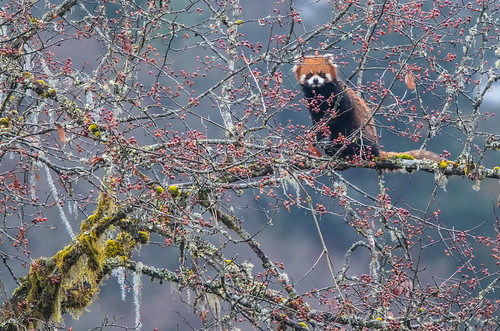
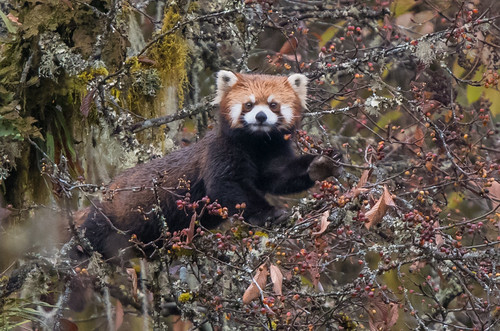
Tim Melling (Flickr site here) was taking still photographs of the pandas at the same time I was shooting video. Here are two of his superb pictures:


Red Panda in the wild.

Red Panda in the wild

*Naturetrek tour Wild China: Sichuan's Birds and Mammals

Wednesday, 10 January 2018

The Golgi War: 2. A possible casualty

A.J. ‘Jock’ Marshall (1911-1967), whose irreverence was remembered by his contemporaries with reverence, was J.R. Baker’s postgraduate student at Oxford. But they had worked together before that. In 1933, Baker recruited him to work on his expedition to Esperitu Santo in the New Hebrides (now Vanuatu) alongside and then to replace Tom Harrisson. After many adventures and jobs and countries, including New Guinea, London and Oxford, and getting a degree from Sydney—and serving in New Guinea in the Second World War (the title of his biography, One Armed Warrior, denoting his service in 'Jockforce' and the fact that he had shot his own arm off in an accident with a gun as a boy) in September 1946 he returned to Oxford aged 35 as a postgraduate student.

After his Oxford D.Phil (the Ph.D. abbreviation possibly unique to that institution), Marshall was appointed Reader and Head of Department at St. Bartholomew’s Hospital Medical School (Barts). He was around Baker when the latter was attacking the existence of the Golgi Apparatus and was aware of the cytological methods that Baker was promoting.

Marshall wrote a review for Science Progress entitled, The structure of the so-called Golgi body. It was published in 1952 and took the side of Baker in the controversy—with knobs on. Marshall began by describing the work of Parat, a Frenchman who threw doubt on the existence of the Golgi. He wrote:

There was a swift and vigorous—some have said violent—reaction to Parat’s conclusions (see, for example, Gatenby, 1931) and although others observed Parat’s bodies and failed to substantiate the net of Golgi, the new concept seems to have been more or less swamped by the positive views of the traditionalists.

After dealing with Hirsch’s non-support for the Golgi in Germany he turned to Baker:

A determined attempt to resolve the problem has now begun by Baker (1944) of Oxford…He failed to find any evidence that the classical net of Golgi existed as a living entity……The next and perhaps most crushing blow to the classical concept of Golgi, Cajal, Aoyama and Gatenby was dealt by Thomas (1947-51). A Beit Memorial Fellow who came to Baker’s laboratory from New Zealand, Thomas used his own modifications of Baker’s and others’ techniques, as well as phase-contrast microscopy, in the investigation of living and fixed nerve-cells of common animals. He too failed to find a Golgi net in the living cell and declared flatly that, in the cells studied, the net was “shown to be an artifact”.

In his conclusions, Marshall divided the world into ‘traditionalists’ and ‘modernists’ and it is not surprising that those he dubbed traditionalist were infuriated:

The modernists, though they are too polite even to breathe it, generally seem to feel that the traditional so-called Golgi techniques merely show something funny about a particular part of the animal cell. By an arbitrary method a great man, Golgi, accidentally showed a net; and his followers have messed about until they have found even more certain methods of showing nets. The modernists imply that this is good wholesome fun, but not science. They believe that the Golgi apparatus, if it should be called that at all, is a system of lipoidal spheroids which are demonstrably concerned with cell-secretion.

However, he then started to backtrack:

The present author does not take sides in the controversy…

But clearly the whole tone of the review was taking sides and the reader by now will expect Gatenby to have responded in some way. He was, after all, told that what he was doing, as a ‘traditionalist’, was ‘not science’.


Marshall’s biography (compiled by his widow from his own notes and records) reads:

…it [‘professional knifing’] involved views he had put forward in support of John Baker's work on the Golgi body. Owen Thomas who was also working on it had just come back from seeing Professor Gatenby in Dublin. [Marshall wrote:] Thomas was “as scared as hell that Gatenby will discredit both John and myself. He is going to sue John too - so he says.” This referred to an article Jock had written for Science Progress on this rather esoteric cytological subject - the Golgi body. His article supported the research John Baker and Owen Thomas were doing in Oxford which appeared to negate some of the findings of Professor Gatenby. Thomas reported Gatenby was furious - “He will see to it that I [Jock] never get a better job than I've got [now]. Actually I quite like him although he has added me to his list - a long list - of hates.”

However, Marshall could not count on Baker either in support of any advancement. At about the time the article in Science Progress appeared, he applied for, without expecting to get nor did get, the chair of zoology at Reading. Later and by accident, he saw the reference Baker had written, and was shocked to learn that although Baker had praised his research he brought up, quite remarkably to those of reading it 65 years later, Marshall’s divorce from his first wife and ‘an assessment of Jock's alleged shortcomings as a classical zoologist’.

Marshall’s friends and wife put it down to jealousy. Baker was not a professor, and at this time and in the Oxford grading system that differed from that in other universities, he was a university demonstrator—he was promoted to a readership in 1955, three years before his election to the Royal Society.

Application—and rejection—by Marshall for another chair (this time in Canberra to set up a new department) in 1958 brought the suspicion of Gatenby’s revenge:

…while camped near Kalgoorlie, he received a telegram telling him that the Committee had chosen Professor [J. Desmond] Smyth from Dublin University for the Canberra Chair. Smyth, a parasitologist, came from Professor Gatenby's Department. It transpired that Gatenby, the good hater, had been in Australia at this time. It was tempting to conjecture whether his threat of six years before to prevent Jock from ever getting 'a better job' than the one he then occupied had come home to roost; especially when reading part of a letter he sent to another zoologist in England (the first page is missing): “Marshall threw his weight about so much, they were determined not to have him.”

There is no doubt that Jock Marshall upset the easily upset Australian university establishment by his behaviour. I am not surprised. Of all the university administrative systems I have dealt with all over the world over the years as an external assessor for appointments to chairs and for internal promotions, Australia occupies bottom position. Rigid, po-faced, stuffed shirts are phrases that came to mind, quite the antithesis of what the world sees Australia as like and quite the antithesis of Jock Marshall.

After the quite disgraceful failure of the University of London (described in excruciating detail in his biography) to elevate his readership at Barts to a chair, he did return to Australia—to the then new Monash University in Melbourne in 1960.

As to his support for Baker’s ‘modernist’ views on the artifactual nature Golgi Apparatus, there is a twist. In 1954 and only shortly after the first electron micrographs of the Golgi were published, Dennis Lacy in Jock Marshall’s own department at Barts found the Golgi apparatus in the exocrine pancreas and other cells and followed that up by finding it for the first time by electron microscopy in nerve cells—where Golgi had first described his eponymous organelle.

Marshall Jane. 1998. Jock Marshall: One Armed Warrior, Australian Science Archives Project, Melbourne.

Marshall AJ. 1952. The structure of the so-called Golgi body. Science Progress 40, 71-77.

Lacy D. 1954. Recent studies on the Golgi apparatus of the exocrine and endocrine cells of the mammalian pancreas and the cytoplasmic inclusions of other cells. Journal of the Royal Microscopical Society 73, 226–240.

Lacy D. 1957. The Golgi apparatus in neurons and epithelial cells of the common limpet Patella vulgata. Journal of Biophysical and Biochemical Cytology 3, 779–796.

Lacy D, Challice CE. 1957. The structure of the Golgi apparatus in vertebrate cells examined by light and electron microscopy. Symposia of the Society for Experimental Biology 10, 62–89.

Lacy D, Rogers GE. 1955. Recent observations by light and electron microscopy on the cytoplasmic inclusions of the neurons of Patella vulgata. Journal of the Royal Microscopical Society 74, 172–175.