Thursday, 11 February 2016

It Won’t Be Long Now. The war diary of Hong Kong meteorologist and naturalist, Graham Heywood

Graham Scudamore Percival Heywood’s name appears as a regular contributor to, and as assistant editor of, The Hong Kong Naturalist, published from 1930 until the Japanese invasion in 1941.

Graham Heywood has appeared in print again recently with the publication of his diary as a prisoner of war from December1941 until the capitulation of Japan in August 1945 and his return to U.K.

Heywood was a meteorologist. From 1932 until 1941 he was Professional Assistant at the Royal Observatory, Hong Kong. Educated at Winchester and Oxford, he was awarded that rare Oxford degree, the B.Sc. No longer awarded, and unlike the B.Sc. from other universities, it was a postgraduate research degree, the equivalent of an M.Sc. It should be borne in mind that a Ph.D. or D.Phil. was then not a popular route to a higher degree and often derided as ‘the German degree’.
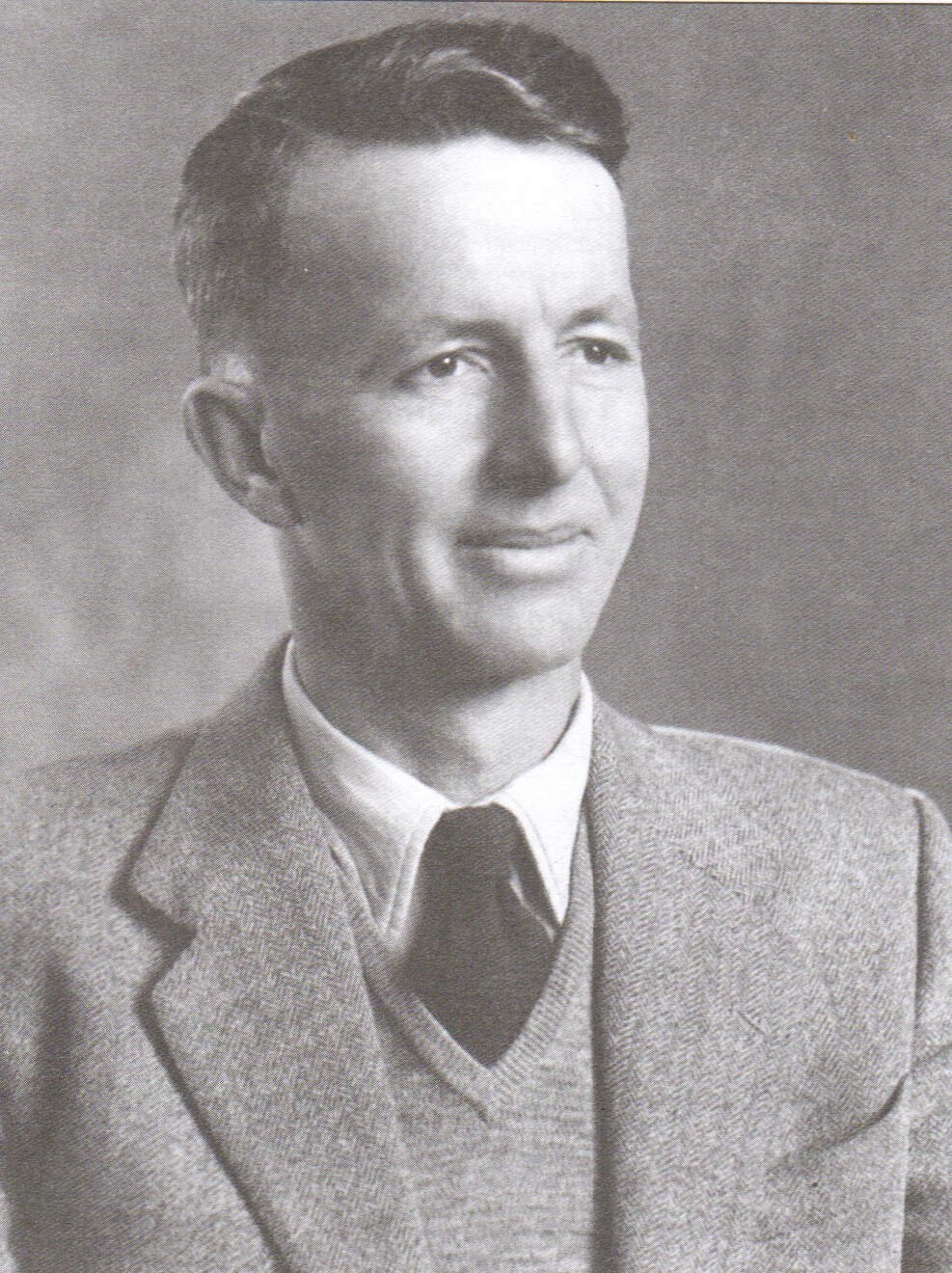
G.S.P. Heywood
Meteorology has played a vital part in the life of Hong Kong since 1883 when the Observatory was established by the Hong Kong Government in response to a proposal by the Royal Society “for the study of meteorology in general and typhoons in particular”. Its first job was to provide early warning of typhoons to local mariners. This was not meteorology for deciding whether tomorrow will be too wet for fair-weather golfers but as a matter of life and death. Gwulo, that excellent website on old Hong Kong, recently showed photographs and reproduced articles on the typhoon of September 1874. I count about 35 vessels sunk, wrecked, run aground or missing in the early press reports, with about 2000 people killed. Warnings of approaching typhoons have been and still are taken very seriously in Kong Kong.


Heywood’s articles in The Hong Kong Naturalist cover weather observations, meteorological and astronomical phenomena, as well as accounts of hill walks, geographical features and of birds seen. Describing the passage of a typhoon on 23 November 1939, the eye of which passed directly over the Observatory, he wrote:

The calm centre of “eye of the storm” lasted from 4.05 to 4.20 p.m. at the Observatory [then, as now, just along from the Peninsula Hotel at the tip of Kowloon]. Though most people would not consider it particularly pleasant to find themselves in the centre of a typhoon, for a meteorologist it is a chance of a lifetime. Some extremely interesting observations were made…

Earlier he wrote:

Just before sunset on November 30th [1934] the interesting phenomenon of a red rainbow was seen. Some drizzle was falling at the time, and the rainbow appeared as a reddish arc without any trace of the other colours of the spectrum. The sun was close to the horizon and red in colour, consequently the light which fell on the raindrops lacked the blue and violet part of the spectrum.

His book, Rambles in Hong Kong, was published in 1938.

The story of how the diary came to be published as It Won’t Be Long Now in 2015 by Blacksmith Books is told in a Foreword by the present Director of the Observatory, Shun Chi Ming, who was shown a copy of the manuscript by one of his predecessors, John Peacock, on a visit to U.K. Thanks to Heywood’s daughter, Veronica and the widower of his elder daughter, Susan, and then with the help of Geoffrey Emerson, author of a book on the civilian internment camp at Stanley, as editor, and a number of volunteers, photographs were gathered to illustrate a publication. Then in early February 2015, a meeting with Pete Spurrier of Blacksmith Books was held. He agreed there and then to publish the book and with the speed that so characterises the way things are done in Hong Kong it was published—within just a few months.

Secret orders were opened at the Observatory as the Japanese invasion began. The magnetic station at Au Tau, a village deep in the New Territories was to be dismantled and the equipment brought back to Kowloon. He and a colleague, Leonard Starbuck, set off in two cars, crossing the British defence positions, Gin Drinkers’ Line, to reach the northern New Territories. As they were preparing to leave after dismantling the equipment they were surprised and captured by Japanese soldiers who had crossed the Shum Chun (Shenzen) River. They were treated as Prisoners of War, i.e. military prisoners, rather than being interned as the civilians they were. The diary describes the years spent imprisonment in Sham Shui Po Camp, the effects of undernutrition and malnutrition, and the effects of incarceration on the inhabitants, as well as of the attitudes of the Japanese guards. It adds considerably to the history of the occupation of Hong Kong and the events between surrender and the arrival of Rear-Admiral Harcourt’s fleet (which Heywood saw as he travelled to see the civilian internees at Stanley) on 30 September 1945. When the war ended, Heywood, after suffering malaria and malnutrition, had been working as a batman to a blind officer in the military hospital housed in the Central British School, which post-war became the King George V School.

Within a few days, as Kowloon came under British control, he was back working at the Observatory, trying ,with his colleagues Starbuck and  B.D.Evans, the Director who had been interned at Stanley, to sort out the mess. Two weeks later, Heywood was on board HMS Glengyle, which had brought 3 Commando to Hong Kong, bound for Colombo and home.

Meanwhile, Mrs Heywood and daughters had been on the move. Under the threat of Japanese invasion, the Hong Kong Government arranged the evacuation of wives and children. Heywood escorted his wife and daughter to Australia and then returned to the Observatory. Hearing of the attack on Darwin in February 1942, Mrs Heywood decided she would be better returning to U.K. than facing a Japanese invasion of Australia. She was therefore there to meet her husband as he returned from Hong Kong. By then he was on board RMS Maloja. He received a cable at Port Said telling him to look out for a bunch of yellow chrysanthemums on the quay at Southampton. This brilliant signal enabled him to spot his wife as thousands of men crowded the rail on one side of the ship.

He remained an employee of the Observatory (his wife had received his pay throughout) and like many of those evacuated, he returned to Hong Kong in 1946, this time as Director. There he remained until he retired in 1955. His book, Hongkong Typhoons, was published in 19501.

The present book notes that he and his friend, G.A.C. Herklots, would lead plant-hunting and bird-watching expeditions into the hills. Herklots by that time was Secretary for Development, head of the predecessor office that became the Department of Agriculture, Fisheries and Forestry. Herklots also gets a mention in the diary, although not referred to by name. On his trip to Stanley, when he saw the fleet entering the harbour, he recounted:

     Accounts of life in the internment camp differed widely. One friend, an enthusiastic biologist, was full of his doings; he had grown champion vegetables, had seen all sorts of rare birds (including vultures, after the corpses) and had run a successful yeast brewery. Altogether he said, it had been a great experience … a bit long, perhaps, but not bad fun at all.
     Another ended up her account by saying “Oh Mr Heywood, it was hell on earth”.
     It all depended on their point of view.

Graham Heywood died, aged 81, on 23 January1985 in Hampshire.

Sketch by Heywood
———————

1 Heywood’s papers on meteorology in Hong Kong can be found here on the Observatory’s website.

Friday, 5 February 2016

Introduced Wall Lizards in England

In my post of 27 February 2015, I considered how introduced Wall Lizards (Podarcis muralis) in England have adapted to colder conditions. In this post I draw attention to the Wall Lizard Project. This website provides information on all the colonies, extinct as well as extant, that have been discovered. This is a screen grab showing where the colonies are or were.


Clicking on the boxes below the map provides a link to a description of all that is known about the introduction and its survival. If the introduction of alien species now seems odd, it is not many decades ago that some individuals considered it their duty to increase the number of species in the herpetologically impoverished British Isles.

You can find there, for example, the information that the 3rd Viscount Chaplin, released Wall Lizards into a walled garden in Devon in 1954; by the late 1970s the numbers had increased to several hundred; the garden overgrew and there are now thought to be none. Viscount Chaplin was the Secretary of the Zoological Society of London from 1952 to 1955.

Anthony Freskyn Charles Hamby Chaplin, 3rd Viscount Chaplin (1906-1981) was Secretary of the Zoological Society of London from 1952 to 1955. He had the job of sacking George Cansdale,as Superintendent of the Zoo in 1953. For an equivalent media furore over Cansdale’s removal, just think forward to Jeremy Clarkson’s removal from Top Gear. For those who cannot remember, Cansdale was a major television personality of the time. In the BBC’s television studios he showed animals from the Zoo on a large table with a concave rear barrier.  The animals were carried and positioned by uniformed keepers from the Zoo.

Tuesday, 2 February 2016

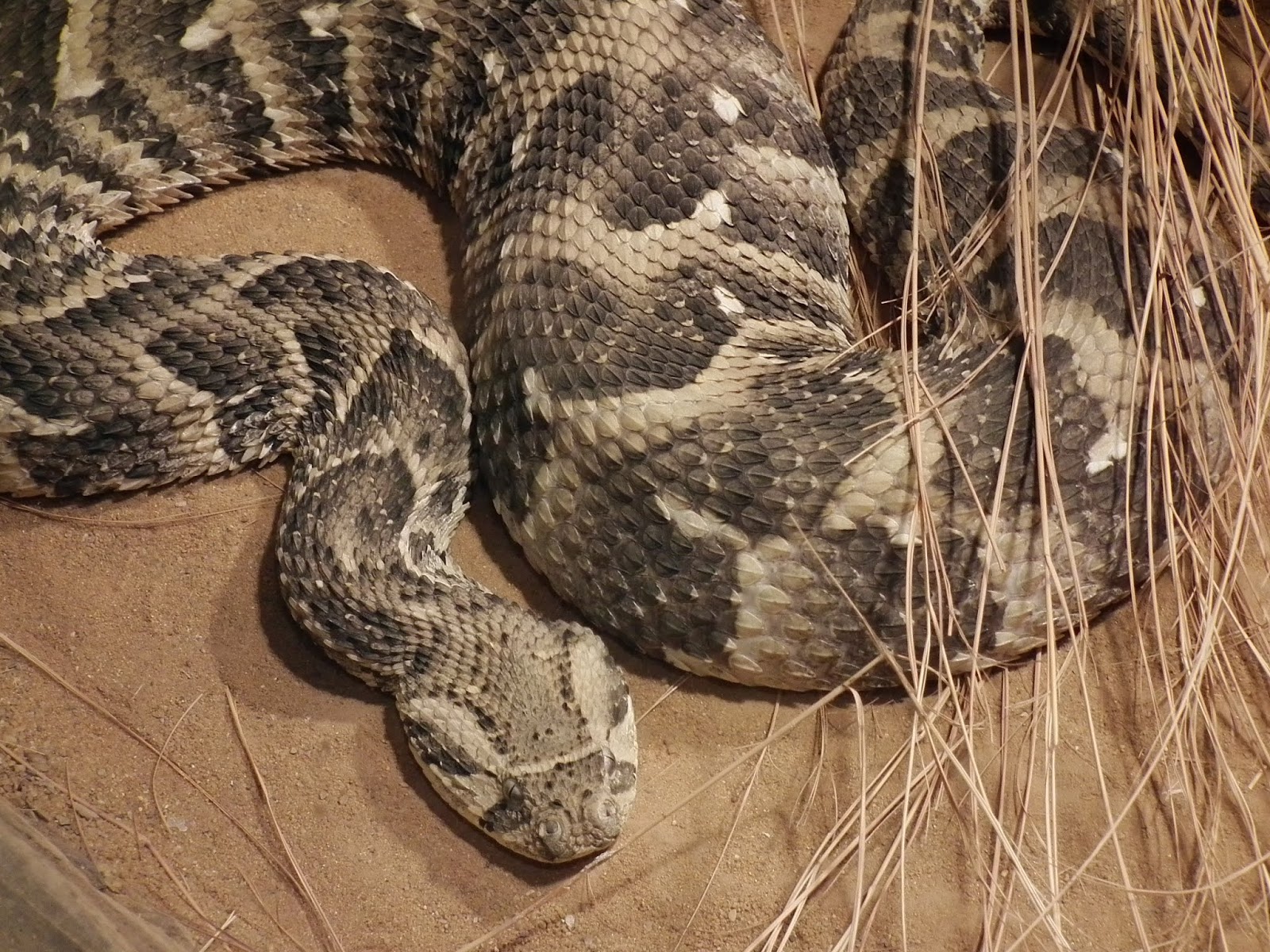
The Puff Adder is not a Phew Adder: The case of the odourless snake

Writing about olfaction in English is complicated by the fact that the verb smell is both transitive and intransitive. So, if we say a snake does not smell, the meaning can be either that the snake emits no odour or that the snake cannot detect odours. This post is entirely about the former sense, do particular snakes emit so little odour that they are undetectable by other animals.

Recent research1 in South Africa has shown that dogs and meerkats cannot be trained to detect the Puff Adder (Bitis arietans) by scent. By contrast, dogs and meerkats can be trained to recognise the scent of five other species of snake. The important difference between the snakes is that the Puff Adder is an ambush predator; the others tested are foraging predators.


Puff Adder
by 4028mdk09. Used by Wikipedia

So far, so good. The first question to consider how the Puff Adder achieves an odourless state, as judged by the scenting abilities of dogs. By contrast with the scent from live snakes, dogs could be trained to detect the odour of recently shed skin of the Puff Adder. The authors make the point that Puff Adders are known to move to a new ambush position after shedding their skin and that typically they defaecate at the site of shedding before moving. Questions that spring to mind are: are the outer layers of the skin impermeable to volatile compounds? Is there a period after shedding when Puff Adders are detectable by smell? What is happening in the respiratory tract; an obvious site for the emission of volatile compounds? In this connexion I am not sure I go for the authors’ suggestion that ambush predators may have a lower rate of metabolism and body temperature and, therefore, a lower rate of production of volatiles; I am not convinced that the difference would be sufficient to account for the experimental findings with trained dogs and meerkats as the detector system.

The second question is: given that foraging snakes can be detected by their scent, is there a metabolic cost to being odourless? Is energy needed to use metabolic pathways that do not produce, say, ketones, that appear in the breath of mammals?

The third question is what is the Puff Adder and, probably, the Gaboon Viper using chemical crypsis to hide from. The authors assume throughout that it is to hide from predators. They make the point that their own observational studies suggest that Puff Adders are not easily detected by their known predators: canids, mongooses and genets. In addition, animals from the study population have low (about 50%) annual survival rates. They argue the case for strong positive selection pressure for ‘adaptations that provide even minor reductions to the production of metabolic volatiles (either from the organism itself or its microbiota) or their persistence in the air plume’.

The fourth question I would have asked had I refereed the paper is whether we should also consider any advantages of chemical crypsis to the Puff Adder not as potential prey but as a predator. Does being odourless enable ambush predators an advantage in terms of getting their next meal? If a small rodent could detect a smelly snake in ambush mode might it not stay out of range of the venomous strike? Chemical crypsis could be highly advantageous to the snake lying in ambush. A clue presented but not commented on by the authors in this context is that observational studies indicated that Puff Adders are not easily detected by some rodent species, with rats (Rattus spp.), snake food by any other name, given as one example.

Whatever the proximate and ultimate mechanisms of this particular example of chemical crypsis, the authors have opened up a fascinating field in the evolution of deception.

---------------------------
1 Miller AK, Maritz B, McKay S, Glaudas X, Alexander GJ. 2015. An ambusher’s arsenal: chemical crypsis in the puff adder (Bitis arietans). Proceedings of the Royal Society B 282: 20152182. doi.org/10.1098/rspb.2015.2182 

Monday, 1 February 2016

Pigs: East meets West

I have never worked on or with pigs, other than trying to prepare tissue slices from a piece of fresh mammary tissue which was as tough as old boots. I do though recall the scheme in Hong Kong to cross the local Chinese breed with imported British breeds in order to eliminate the swayback condition and increase the rate of growth. I was, therefore, interested to see what lay behind the title of a paper in Proc. Roy. Soc, Artificial selection on introduced Asian haplotypes shaped the genetic architecture in European commercial pigs1, written by a group using genomics at Wageningen University in the the Netherlands, a famous centre for pig research.

I discovered from that paper that Chinese pigs had been imported into Europe about 1700 in order to cross them with the then existing European breeds. The introgressed genes of the Chinese pigs are still present because now as then, the improvements they introduced were desirable commercially. Artificial selection has ensured their survival because they are associated with more backfat.

A view of Macau with swayback pigs in front of the Sampan
George Chinnery (1774-1852)
The whole story of the domestication of the pig from the wild boar (Sus scrofa) is fascinating, linked as it is to the migration of human populations. To cut a long story short, pigs were domesticated independently about 10,000 years ago leading to two main genetic lines, one in Europe, the other in the Far East. In Europe, pigs were not kept in sties; they were fattened in woods on acorns and beechmast—the pannage system. As forests were felled and populations increased, the pig became a farm animal living in sties; a shift, in other words, from an extensive system to an intensive one. The change from pannage to intensive production occurred at different rates in different areas. An example given is that well into the 1600s, the best pigs were said to come from the best woods of oak and beech, notably the New Forest in southern England.

I read that the initial improvements to pigs by selective were made in the English midland counties of Leicestershire and Northamptonshire. As global trade increased, it was with these early breeds that the Chinese imports were crossed. There were, apparently, two separate introductions, each from a different Chinese breed, one being ancestral to the Large White and Berkshire; the other to the later Swedish Landrace, Duroc and Welsh. The historians have found reference as early as 1720 to the presence of small black pigs which appear to match the appearance of those described at the time by travellers in China and south-east Asia.

During the 18th Century, cross-breeding was in full swing, as this quote from Beilbys’s General History of Quadrupeds in 1800 illustrates:

By a mixture of the Chinese black Swine with others of the larger British breed, a kind has been produced which possesses many qualities superior to either of the original flocks. They are very prolific, are sooner made fat than the larger kind, upon less provisions, and cut up, when killed, to more useful and convenient portions.

I did find it interesting, in the light of later developments in Hong Kong, was that an increase in the rate of growth (and, therefore, age at which they could be slaughtered) was also ascribed by writers in the 19th Century as a character introduced by the Chinese pigs.

History, archaeology and genomics have all contributed to knowledge of how modern industrial pig production came about4. But the story is incomplete if the move in the opposite direction is not also considered. During the 1950s, In an effort to improve pig-farming in Hong Kong, the government’s Department of Agriculture and Fisheries acting in concert with the Kadoorie* brothers (Lawrence, Lord Kadoorie, 1899-9993, and Sir Horace Kadoorie, 1902-1995, founders of the Kadoorie Agricultural Aid Association) imported breeds from UK in order to cross them with the local Fa Yuen breed and thereby increase productivity as well as eliminate swayback, the inherited condition in which the spine is depressed to such an extent that the abdomen is dragged along the ground. The Kadoories initiated a major philanthropic scheme of self-help to the refugee farmers of the New Territories. Grants were made, interest-loans were made for the construction of proper sties, and pigs of the improved crosses were donated, co-operatives were organised while government extension and advisory services educated and informed. The story of all this effort is given in a recent article3. However, reading it does come with a health warning. As well as being written in social ‘science’-speak, the writers interpret the activity as a scheme to prevent the rise of communist sympathies in the farmers of the New Territories. While that may have been the case in isolated cases, and the ‘morale’ of the farmers was raised, the dual aim of increasing the efficiency and productivity of food production in Hong Kong to achieve a degree of self-sufficiency as mainland China was in political turmoil and food exports from China were controlled by a capricious regime, while at the same time helping the local and refugee farmers to raise their standard of living, seemed to those of us in Hong Kong while all this was going on the predominant purpose, and one that had begun with Geoffrey Herklots’s work in university and in government to improve the lot of the farmers and fisherfolk by setting up marketing schemes in the immediate aftermath of the liberation from Japanese occupation in 1945. It echoed, of course, successive British government’s policies—now abandoned—in the middle decades of the 20th Century to achieve a greater degree of self-sufficiency within Britain, as summed up by the title of a 1975 government White Paper, Food from our own resources.

Crossing the Fa Yuen pig with the standard British breeds eliminated the problem of swayback. Rate of growth and body weight were improved while the females were prolific. From the efforts of the Kadoories and the then new government department of agriculture, the industry grew to a level of about 400,000 locally-produced pigs per annum. That success itself brought the problem of pollution of water courses from the effluent, one that was tackled successfully by my old colleague and friend, Professor Daniel Chan of the Department of Zoology of the University of Hong Kong (who could range successfully from his major research interest in comparative endocrinology to the practical problems of ‘red tides’ and establishing a gene bank for local breeds of chicken);he instigated a dry sawdust litter system which also eliminated the powerful odour so characteristic of pig sties2. But the days of major production of pork production in Hong Kong were numbered. An agreement with China in 1978 for the import of fresh produce from the mainland, together with the construction of entire new cities on the flatter lands of the New Territories and the regulation of effluent production, have had a dramatic effect on pig farming. From 1114 pig farms in 1989, there were just 43 in 2014. In the meantime, successful pig breeds have spread throughout the world all carrying, as a result of incessant artificial selection, the results of those independent domestications of the wild boar.

——————————

*The Kadoorie family funded the Kadoorie Building at the University of Hong Kong which houses the School of Biological Sciences.

1 Bosse M, Lopes MS, Madsen O, Megens H-J, Crooijmans RPMA, Frantz LAF, Harlizius B, Bastiaansen JWM, Groenen MAM. 2016. Artificial selection on introduced haplotypes shaped the genetic architecture in European commercial pigs. Proceedings of the Royal Society B doi.org/10.1098/rspb.2015.2019 
2 Chan DKO, Chaw D, Lo CYY. 1994. Management of the sawdust litter in the “pig on litter” system of pig waste treatment. Resources, Conservation and Recycling 11, 51-72.
3 Chan, WC, Miller B. 2015. Capitalist pigs: Governability, subjectivities, and the regulation of pig farming on colonial Hong Kong (1950-70). Environment and Planning D: Society and Space DOI: 10.1177/0263775815598154 
4 White S. 2011. From globalized pig breeds to capitalist pigs: a study in animal cultures and evolutionary history. Environmental History 16, 94-120.

Tuesday, 26 January 2016

African Wild Dogs: an energetics spat

As we were watching a Tasmanian Devil working its way through piles of chicken meat placed along the length of the verandah of our cabin at Loongana Mountain Retreat, I could not help thinking of a spat I had read about on the nutritional requirements of African Wild Dogs, Lycaon pictus (or Cape Hunting Dogs, as they were commonly known) and the effects of kleptoparasitism, i.e. big boys like hyenas stealing their food.

The reason why I thought of that was that this particular Devil was so full of food that it looked as if it might burst. The skin was stretched tight but it kept eating and even carried off a chicken breast and sternum as it waddled down the steps and disappeared into the night. But more posts on Tasmanian Devils later.

African Wild Dog
 ByCharles J Sharp (Photograph used on Wikipedia)

The spat on African Wild Dogs began with a paper in Nature in 1998 by Gorbman, Mills, Raab and Speakman2. They used isotope turnover methodology to determine energy demands in the wild from energy expenditure. Using those data, they then showed that an increase in kleptoparasitism to 25% of kills would require more than 12 hours of hunting per day—an unsustainable burden that could make the dogs susceptible to local extinction in areas where kleptoparasites are abundant. That calculation has been quoted widely (but not in the IUCN account of this species) in considering the survival of this, classified as Endangered, species. There is known to be an inverse relation between wild dog and hyena numbers.

In 2014, that view was challenged by Jongeling and Koetsier, writing in the African Journal of Ecology3.One of their arguments to support their view that kleptoparasitism is of no importance to survival was that packs of wild dogs often have attendant pups and, therefore, the amount of food that needs to be captured is greater than that needed to match the energy requirements of the adults. In response5, the authors of the 1998 paper concede this point but then calculate that their curve relating hours per day hunting required to percentage of food lost by kleptoparasitism would be shifted to the right such that for the unsustainable 12 hours of hunting, the level of kleptoparasitism would be 32.5 rather than 25%.

Jongeling and Koetsier’s second argument was that the dogs consume much more energy than the measured energy demand, and modelled mathematically a scenario in which the dogs eat one and a half to three times more than they need. If such a situation obtained the required hunting time at 25% kleptoparasitism drops to 6 hours per day. However, these authors in making such a claim, scored what can only be described as an own goal. In their rejoinder John Speakman and his colleagues soon pointed out that the first law of thermodynamics demands that the excess energy would have to go somewhere and that in two months a dog would put on 50 kg of weight!
They also made the case that it is very difficult to estimate intake in the field in observational studies.

Jongeling and Koetsier also used different values for the assumed energy content of prey. They quote the figures used by the authors of a book, The African Wild Dog1, to estimate the energy content of meat from Impala and Wildebeest which were those reported by the U.S. Department of Agriculture for low-grade beef carcasses (11.6 MJ per kg of flesh; 6.19 MJ per kg for viscera and skin); the value used by the authors of the 1998 paper was 5.2 MJ (which Jongeling and Koetsier’s claim was introduced ‘out of the blue’) but In the rejoinder there is no comment on this difference. I have to admit that I allowed myself a wry smile when I saw the figures that Creel and Creel are said to have used. The USDA figures matches that for dressed beef carcasses given in the food tables of McCance and Widdowson4. However, dressed beef contains much more fat than wild animal carcasses and the figure for lean beef is the same as that used by Gorbman et al, 5.2 MJ per kg.

So, apart from the point about hunting to feed attendant pups, Jongeling and Koetsier do not appear to have dented the case made for the putative effects of kleptoparasitism. There appears to me to be a lack of distinction between the weight of prey killed, the amount consumed by the dogs, the average daily energy expenditure and the amount of food eaten in a particular day. It is entirely possible for an animal to eat three times its daily energy requirement in one sitting without getting fat in the long term—if it does not then eat for three days. So observational intakes after a kill could be a fair estimate but unless the frequency of feeding is also known, the information is worthless in considering the energetics.

Having seen lions in Africa and India—and Tasmanian Devils—with stomachs so full that they could hardly move, it seems to me that the stomach in carnivores is used as a portable cache. The strategy seems to be: eat as much as you can as fast as you can, digest slowly, replenish reserves and then hunt again when hungry, i.e. when digestion is complete and the reserves are being drawn on. And, I ask, is that the pattern in the African Wild Dog?

Finally, I cannot help but point out that what happens to the lactating alpha female must be crucial for the survival of a pack and its individual members. With her increased energy requirement during lactation, a shortfall in food intake could be catastrophic for a local population.

Gorbman et al laid the foundations in their 1998 study on energetics in the wild. The time could be ripe for some simple observations and measurements in the now successful captive populations. That approach might now be more successful at shedding further light on energetics, food intake and the importance of kleptoparasitism in the survival of African Wild Dogs than any number of indirect studies and mathematical models of what might happen in the wild. Ecological physiology needs more physiology.


--------------------------------

1 Creel S, Creel NM, 2002. The African Wild Dog: Behavior, Ecology, and Conservation. Princeton University Press.
2 Gorman ML, Mills MGL, Raath JP, Speakman JR, 1998. High hunting costs make African wild dogs vulnerable to kleptoparasitism by hyena. Nature 391, 479-481.
3 Jongeling TB, Koetsier T. 2014. The predicament of the African wild dog, Lycaon pictus, is less precarious than claimed. African Journal of Ecology 52 466-470.
4 Paul AA, Southgate DAT. 1978. McCance and Widdowson’s The Composition of Foods. Fourth revised and extended edition. London: HMSO.
5 Speakman JR, Gorman ML, Mills MGL, Raath JP. 2015. Wild dogs and kleptoparasitism: some misunderstandings. African Journal of Ecology. doi: 10.1111.aje.12258

Monday, 18 January 2016

Pardalote. Spots before the eyes

It should have been obvious as we flicked through the book on Australian birds for the first time in 17 years. But it wasn’t. ‘It’s back to the land of the pardalote and other animals with strange names’. Even when the group saw its first pardalote at the Waterworks Reserve in Hobart, we still did not catch on. ‘Why pardalote—is it a French word for something?’ was one question.

There is one excuse why we did not twig immediately the derivation of pardalote. On previous trips to Australia in the 1990s we had previously seen only the Striated Pardalote—the same species as the pair seen in Hobart. When we later saw two other species, it should have been obvious why pardalotes are called pardalotes.

The genus Pardalotus was erected by Louis Jean Pierre Vieillot (1748-1831) and just as in Panthera pardus, the leopard, Leopardus pardalis, the ocelot, Geochelone or Stigmochelys pardalis, the leopard tortoise and Furcifer pardalis, the panther chamaeleon, it simply means ‘spotted’ in Greek and the Latin derived from Greek. So to answer the question raised above; it is sort of French.

The names of two species, both of which we saw later in Tasmania, actually refer to the spots: the Spotted Pardalote and the Forty-spotted Pardalote, providing pedants with the opportunity to point out that we then have a tautology.

Pardalotes are small, hardly-ever-still birds that feed on small invertebrates, lerp (the sugary excretion of sap-sucking psyllids) and manna.

The pair of Striated Pardalotes (Pardalotus striatus) we saw in Hobart were nesting in a hole between rocks at the side of the road, carrying food gathered from the surrounding trees. Using my extremely long focal-length lens, one of them was still just long enough to get a photograph.

Striated Pardalote. Tasmania
The next species we saw was the Forty-spotted Pardalotus quadragintus. Classified by IUCN as endangered, it is confined to southern Tasmania and there are calculated to be only 1000-1500 living individuals. Bruny Island is a stronghold of the species and we saw them in South Bruny (not included, surely erroneously, in the range in the map shown on Birdlife International) where at Inala, a special viewing platform has been constructed to view the colony there. They live in White Gum trees (Eucalyptus viminalis) exclusively. We were told they were colonial but territorial, one pair holding a feeding territory in one direction, a second pair in another direction and the third pair covering a further sector. A number of factors have been suggested as contributing to the decline, especially it would seem, clearance of White Gum. Recently, I have seen reports that the parasitic maggots of a fly are killing 75% of nestlings (a similar situation to that obtaining in the Galapagos with an introduced fly) together with the suggestion that nest infestation might be the cause of the decline from around 4000 birds in the 1980s. If that were the case then one could, of course, make the testable prediction that existing tracts of White Gum are not carrying as many Forty-spotted Pardalotes as they could.

The Forty-spotted Pardalote is the dullest looking of the four species. I had great difficulty getting a photograph and had only fleeting side-on views. They were constantly on the move, gathering food and being chased off by Honeyeaters (who defend the sources of lerp).

Forty-spotted Pardalote. South Bruny, Tasmania
Much more clearly marked and colourful is the Spotted Pardalote (Pardalotus punctatus) from Eastern and Southern Australia. We also saw that species in Tasmania, and it is then easy to see why pardalotes came by their name.

Thursday, 14 January 2016

Sightings of Thylacines: a Tasmanian coincidence

‘Just keep an eye out for the odd thylacine’, I reminded my wife as we travelled through Tasmania in November, ‘You gained your spurs as a leopard spotter in Botswana, now really show what you can do’. Alas, I have to report, she failed.

As sleet and snow fell and after high winds had knocked out the electricity supply, we admired the collection of thylacine photographs, many of which I had not seen before, in the restaurant of the lodge at Lake St Clair, and wondered whether any of the reports that the thylacine is not extinct were reliable. ‘I really hope so’, was the general conclusion. The conversation turned to reports made by people who knew nothing of the thylacine but who reported sightings that were compatible with their having seen one. And then it was back to U.K. where in my pile of accumulated post was the latest volume of Biographical Memoirs of Fellows of the Royal Society. As I started to look through it my eyes fell on the word Tasmania. This is what I then read:

…They were driving in a wilderness area on the western side of Tasmania when they saw an animal they did not recognize cross the road. At the next township they asked a woman what it was. They said they should not have seen such an animal as it was a Tasmanian tiger (ot Tasmanian wolf) and they are extinct! There have been many alleged sightings of the Tasmanian wolf. What distinguishes this one is that neither Professor nor Mrs Whitham knew that such an animal existed before they saw it in Tasmania that day.

Professor Whitham was Gerald Beresford Whitham FRS (1927-2014). the applied mathematician, lately of CALTEC.

The Thylacine skeleton in the Grant Museum at UCL
-----------
Minzoni AA, Smyth NF. Gerald Beresford Whitham 13 December 1927—26 January 2014. 2015. Biographical Memoirs of Fellows of the Royal Society 61, 557-577.