Showing posts with label G.A.C. Herklots. Show all posts

Thursday, 2 April 2020

Frogs of China. Alice Boring’s Life and Work. 3. Herklots and Hong Kong Amphibians

As I mentioned in Parts 1 and 2 of this series Geoffrey Herklots sent specimens of Hong Kong amphibians to Peking for Alice Boring to identify. In the first of those papers all of which were published in Hong Kong Naturalist she wrote that the material was collected under the supervision of Dr Herklots for a period of a little over one year, from December 1930 to January 1932…Herklots had arrived at the University of Hong Kong in 1928 to teach biology, just like Boring in Peking, to medical students. Further specimens were sent in 1933 and possibly later but of these only one had not been represented previously. The specimens, number unknown, were collected on Hong Kong Island, on Lantau as well as in Kowloon and the New Territories.


Alice Boring identified 16 species (a 17th Herklots realised had been collected elsewhere and I have omitted any reference to it). To date 24 species of amphibians have been recorded in Hong Kong. Of the ones recorded before 1930 the Herklots collection missed only one.

The following is a checklist of Hong Kong amphibians, using the current scientific name. The ones marked § are those identified by Boring.


§Hong Kong Newt Paramesotriton hongkongensis
Leaf-litter Toad Leptolalax laui. First recorded in Hong Kong 1979
§Short-legged Toad Megophrys brachykolos (from tadpole as M. boettgeri and an adult tentatively as M. longipes )
§Asian Common Toad Duttaphrynus melanostictus
Hong Kong Cascade Frog Amolops hongkongensis. First recorded in Hong Kong 1950
South China Cascade Frog Amolops ricketti. First recorded in Hong Kong 2004
§Paddy Frog Fejervarya limnocharis
§Chinese Bullfrog Hoplobatrachus rugulosus
§Günther’s Frog Sylvirana (Hylarana) guentheri
Brown Wood Frog Hylarana latouchii. First recorded in Hong Kong 1984
§Three-striped Grass Frog Hylarana macrodactyla
§Two-striped Grass Frog Hylarana taipehensis
Big-headed Frog Limnonectes fujianensis (not recorded in Hong Kong between 1917 and 1987)
§Rough-skinned Floating Frog Occidozyga lima
§Green Cascade Frog Odorrana chloronata
§Lesser Spiny Frog Quasipaa exilispinosa (as Q. spinosa). Identified as species in 1975 (see below)
Giant Spiny Frog Quasipaa spinosa. Adults first discovered in Hong Kong 1978 (see below)
Romer’s Tree Frog Liuixalus romeri. Discovered in Hong Kong 1952
§Brown Tree Frog Polypedates megacephalus
§Spotted Narrow-mouthed Frog Kalophrynus interlineatus
§Asiatic Painted Frog Kaloula pulchra
Butler’s Pigmy Frog Microhyla butleri. First recorded in Hong Kong 1964
§Ornate Pigmy Frog Microhyla fissipes
§Marbled Pigmy Frog Microhyla pulchra


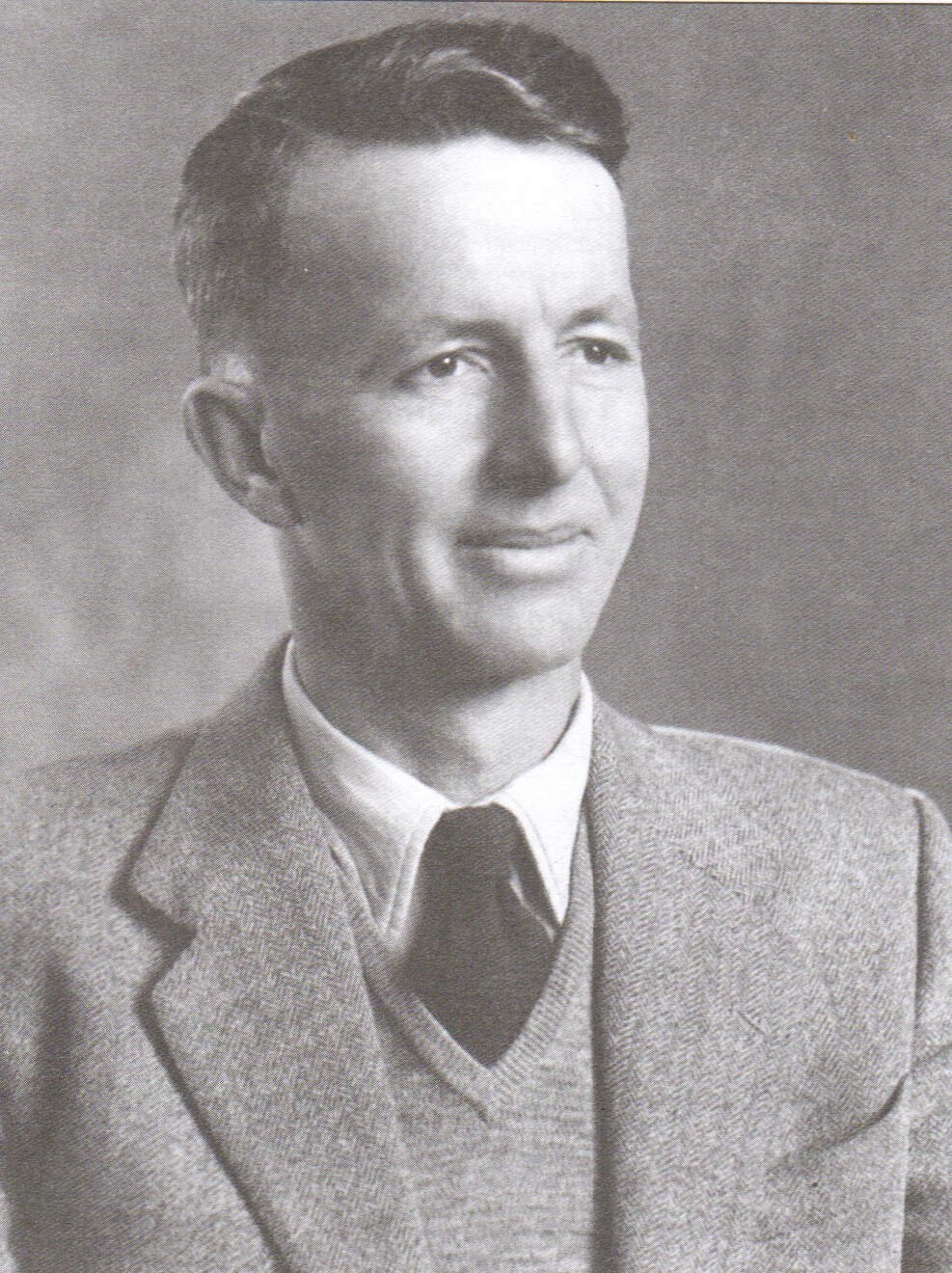
G.A.C. Herklots
As I read Boring’s papers I became intrigued about the two species of Quasipaa, exilispinosa and spinosa, now known to occur in hill and mountain streams. One, Q. spinosa is much larger than the other, reaching 14 cm—the largest anuran in Hong Kong. Although the drawing used to illustrate Boring’s paper is clearly of Q. exilispinosa (the webbing of the hind limbs does not reach the tip of the toes whereas in Q. spinosa it does) she wrote: ‘My material from Hong Kong includes two very large specimens and 7 medium-sized ones…’ Unfortunately, she provided no quantitative information but there remains the possibility that the collection sent by Herklots did contain the two species of spiny stream frogs rather than just the one.

This collaborative effort between Alice Boring and Geoffrey Herklots was the first organised survey of the amphibians of Hong Kong. It provided the basis on which others have built, starting, of course, with John Romer who began his activities soon after his arrival in the late 1940s.

I do not know if Boring and Herklots ever met. There was one opportunity in Hong Kong in 1937 when Boring, caught away from Yenching during the Japanese advance, made her way back to the university by first travelling south.


Paddy Frog (Fejervarya limnocharis)


Boring AM. 1934. The amphibia of Hong Kong Part I. Hong Kong Naturalist 5, 8-22

Boring AM. 1934. The amphibia of Hong Kong Part II. Hong Kong Naturalist 5, 95-107

Boring AM. 1936. The amphibia of Hong Kong Part III. Hong Kong Naturalist 7, 11-14

Karsen SJ, Lau M W-N, Bogadek A. 1998. Hong Kong Amphibians and Reptiles. Second Edition. Hong Kong: Provisional Urban Council


Monday, 3 June 2019

Animal and Zoo Magazine 1936-41. Part 3. Margaret Shaw interviewed F. Shaw Mayer on collecting birds-of-paradise in New Guinea

My eye was drawn to an article in the first issue because it described Fergusson, an island in the d’Entrecasteux group north west of New Guinea which we visited in 2014.


MARGARET SHAW worked on the magazine and in this, her first article, she interviewed Frederick Shaw Mayer (1889-1989), the Australlian collector, ornithologist and aviculturist
who has famous for his work with birds-of-paradise. Mayer supplied zoos and rich private
collectors in Britain with live birds and museum with dead ones (failures of the former making specimens for the latter) and he had arrived in London in 1936 with a Grey-breasted, now known as Goldie’s, Bird-of-Paradise (Paradisaea decora). Then known only from a skin collected in 1882 by Andrew Goldie, Mayer spent four months waiting for accessible trees to bear fruit on which these birds feed before getting his local assistants to set snares. The birds-of-paradise have been and still are killed for ceremonial dress, and the natives of Fergusson, Mayer reported, killed them with spears or set hand-pulled snares.


Mayer based himself at the village of Taibutu (later called Saibutu, on the southern slope of Mount Maybole) at a height of 1000 feet. The first adult male caught and brought to him was killed by a snake (its skin is in the Natural History Museum). It was the only other adult male caught that he brought to London.

He also collected the Curl-crested Manucode, Manucodia comrii (then called Comrie’s Manucode), the bird we saw and heard while walking back to the village from the hot springs during our morning in the lowlands of Fergusson.

Goldie's Bird-of-Paradise
Found only on Fergusson and Normanby
islands

From Fergusson, Mayer made further collections in the mountains of Papua New Guinea (including the Blue Bird-of-Paradise, Paradisaea rudolphi, Princess Stephanie’s Astrapia, Astrapia stephaniae), and one of the sicklebills. He travelled to London with his specimens by porter to the coast and then by ship. He left New Guinea with with over 70 live birds and he arrived in London with the same number. He also had specimens of birds and mammals for the British Museum. An attack of malaria left him so weak that he had to cable the Zoo for a keeper to be sent out to Port Said to help him care for the birds on the rest of the journey.

But then he was, as Margaret Shaw reported, off again.

Indeed, the South China Morning Post of 26 March 1937 had an article on Mayer. He and another collection of birds destined for London and Paignton zoos were occupying two rooms and verandahs at the Great Eastern Hotel in Hong Kong awaiting passage on P&O’s Soudan. This time he had been in New Guinea for six months and it was his ninth collecting trip there. G.A.C. Herklots was invited to see the birds while they were at the hotel.


Approaching Fergusson in 2014. The low clouds are steam from the
hot springs

Tuesday, 1 May 2018

Achatina Snail: An invasive species in Hong Kong 1. History

The first animals I saw on arriving in Hong Kong on a dark November night in 1965 were giant snails, Achatina or Lissachatina fulica. They were in the dank area around the entrance to the block of flats in what was then called the University Compound. Even after twenty hours (including refuelling stops at Athens, Tehran and Delhi) on a Qantas Boeing 707 and the first sight of Hong Hong harbour from the vehicular ferry, the snails registered. They were big.


by Alexander C Jenner (Wikimedia Commons)

I soon discovered that these East African snails had spread widely in the tropics and were a considerable pest to farmers and gardeners. They were first noticed in Hong Kong in 1941 shortly before the Japanese Invasion in December. Since adults were found it was estimated that introduction occurred around 1937. Laying thousands of eggs over a lifespan of 10 years it is not surprising that its population and range increased rapidly.

The photograph in Jarrett's article
Hong Kong Naturalist vol. 2, 1931
They were first noticed by Vincent Hubert Charles Jarrett (1895-1973), a journalist on the South China Morning Post who was also a naturalist. At the time of the Japanese invasion he was Assistant Editor. Gwulo has a photograph of Jarrett in the 1941 here. He wrote numerous articles, including nature notes, for the newspaper and also for the Hong Kong Naturalist. He described the spread  of Achatina through Malaya and Singapore (he was born in Malacca) where it seems to have been introduced as a food for ducks. He also noted that it had been found in China by Herklots while on a visit to Amoy (now Xiamen) in 1931. Before the snail’s arrival in Hong Kong he raised a vital question:

Latest information from Malaya is that the snails are now found in increasing numbers everywhere, and even wander over the golf courses, where the chagrin of a player whose ball is stopped by a giant mollusc in the grass may be imagined. It is not known whether the question has yet arisen about counting Achatina fulica a natural or artificial hazard. It may be hoped, as a conclusion to this note, that the question will never have to be debated on one of this Colony's courses!

After release from internment at Stanley, Jarrett travelled to Britain in October 1945. I do not know whether or not he returned to Hong Kong. In 1959 he was appointed OBE for his services as ‘Editor of Press Summary’ at the British Embassy in Oslo. He died in Norway in 1973.

Geoffrey Herklots, who remained in Hong Kong as a member of the government after internment, brought Hong Kong up to date with the Achatina pest in an article for the South China Morning Post on 22 May 1946. He reported the snail was now well established on Hong Kong Island. He proceeded to give advice on how it could be killed by gardeners. With characteristic energy he held snail hunts:

On May 19, 126 snails weighing 6-lbs. were collected at Sookunpo; on May 18 and 19 330 snails weighing 20-lbs. at the Protestant Cemetery, and on May 18, 94 weighing 4-lbs. at Government House.

He ended:

These snails are edible. There is a pile of hundreds of empty snail shells at Government House. The obvious inference is that the former Japanese Governor or his staff, regarded them as a delicacy…

It is now known that Achatina snails carry a whole host of human parasites. There will be survivors of the Japanese occupation and their families hoping that a few of the more nasty ones attached themselves to the intestinal walls of the then occupiers of Government House.

Sunday, 25 March 2018

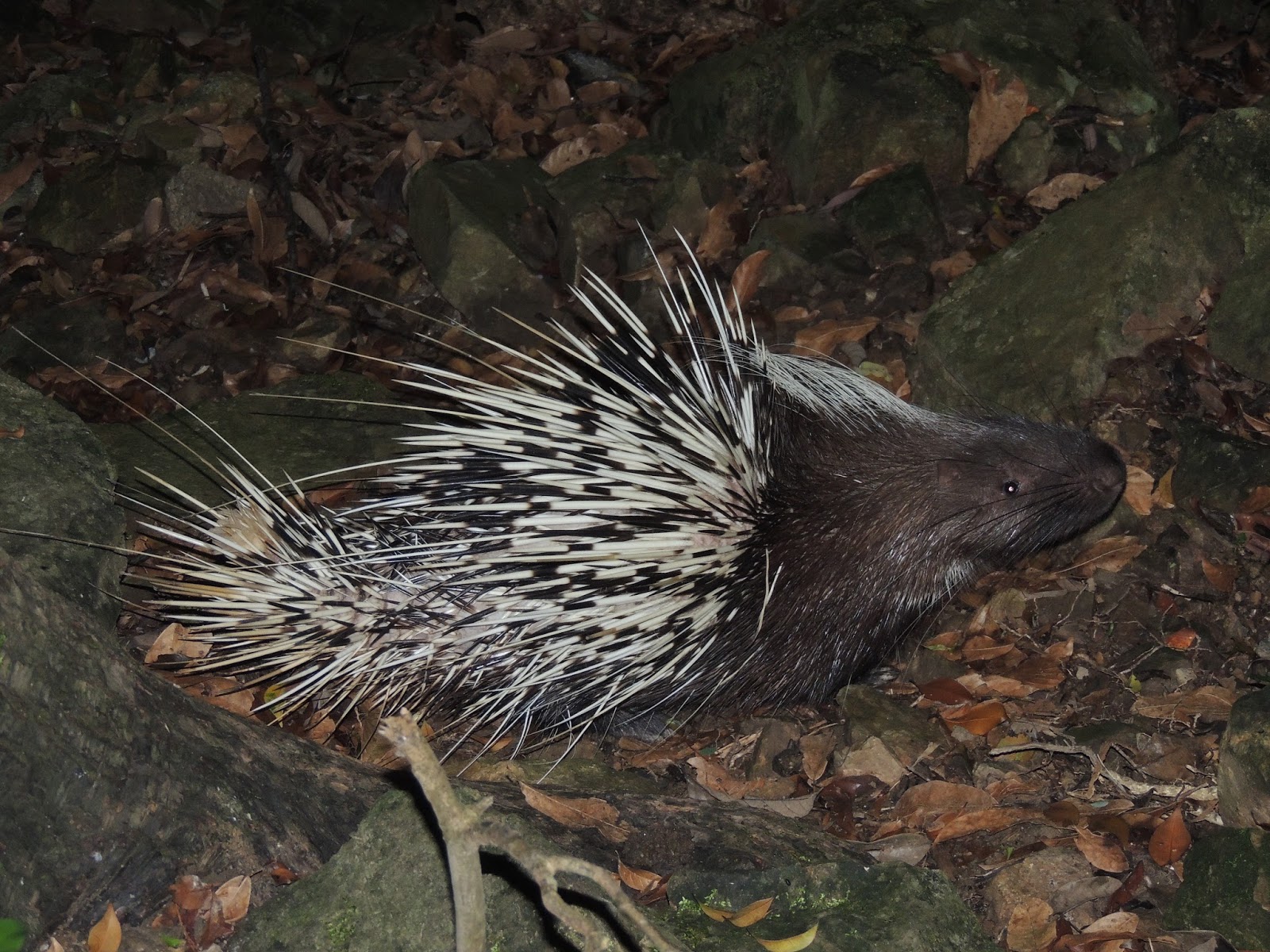
Porcupines in Hong Kong: Letters to the South China Morning Post in 1930

Further to my previous post on our night safari to see porcupines in Hong Kong, these are letters on the subject I found in the South China Morning Post of 21 November 1930.

Porcupines.
(To the Editor. S. C. M Post.) 
Sir,—In reply to the query by "A.B.". I hasten to assure him (or her) that porcupines are definitely among the native mammals of Hongkong island. Whether they are descendants of escaped animals brought from the mainland may be open to discussion but as long ago (or as recently) as 1927 it was established that they were breeding in the Shek-O neighbourhood, when one of them, in crossing the road, was run into by a motor-car.
     Late in 1928, while exploring the neighbourhood of the hillside above Tytam Tuk with a companion, we found definite traces of porcupines there.
V.

Sir,—In this morning's (Thursday's) issue of your paper "A.B.' mentions that he had seen, last week, a large porcupine on High West and asks whether these animals are natives of the Colony.
     Porcupines are native here and may occasionally be seen on the Peak, at Shekko, or in the New Territories.
     About 10 days ago, I purchased a porcupine which had been caught at Sha Tin; the animal had been raiding sweet-potato plantations and an all night watch had been set for it on three successive nights before its capture. This porcupine was a large healthy fellow but many of its quills had been shed, possibly during the excitement of its capture. Unfortunately, it escaped after only one night's sojourn in the University, and, after consuming various flowers and digging sundry holes, made off up the hillside.. Possibly, the fellow seen by “A.B.” is my porcupine.
     If anyone else sees "Fido," will they please treat the animal kindly, put some salt on his or her tail and lead him or her gently back to the University.
G. A. C. Herklots.
Herklots’s battles with porcupines raiding his garden in Pokfulam in 1947 were described in his The Hong Kong Countryside published in 1951, together with the problems caused by the quills removed from his garden raiders after their extermination:
The quills, distributed by my small daughter to her friends at school, proved popular at first but alas, the small boys finding from experience that they were very sharp used them with good effect on the small girls to their pain and discomfiture. Evidently porcupine quills should not be distributed in a co-educational school. D[epartment] of E[ducation] please note and instruct heads accordingly…

Malayan Porcupine in Hong Kong                                                                                                        [AJP Photo

Thursday, 11 February 2016

It Won’t Be Long Now. The war diary of Hong Kong meteorologist and naturalist, Graham Heywood

Graham Scudamore Percival Heywood’s name appears as a regular contributor to, and as assistant editor of, The Hong Kong Naturalist, published from 1930 until the Japanese invasion in 1941.

Graham Heywood has appeared in print again recently with the publication of his diary as a prisoner of war from December1941 until the capitulation of Japan in August 1945 and his return to U.K.

Heywood was a meteorologist. From 1932 until 1941 he was Professional Assistant at the Royal Observatory, Hong Kong. Educated at Winchester and Oxford, he was awarded that rare Oxford degree, the B.Sc. No longer awarded, and unlike the B.Sc. from other universities, it was a postgraduate research degree, the equivalent of an M.Sc. It should be borne in mind that a Ph.D. or D.Phil. was then not a popular route to a higher degree and often derided as ‘the German degree’.

G.S.P. Heywood
Meteorology has played a vital part in the life of Hong Kong since 1883 when the Observatory was established by the Hong Kong Government in response to a proposal by the Royal Society “for the study of meteorology in general and typhoons in particular”. Its first job was to provide early warning of typhoons to local mariners. This was not meteorology for deciding whether tomorrow will be too wet for fair-weather golfers but as a matter of life and death. Gwulo, that excellent website on old Hong Kong, recently showed photographs and reproduced articles on the typhoon of September 1874. I count about 35 vessels sunk, wrecked, run aground or missing in the early press reports, with about 2000 people killed. Warnings of approaching typhoons have been and still are taken very seriously in Kong Kong.


Heywood’s articles in The Hong Kong Naturalist cover weather observations, meteorological and astronomical phenomena, as well as accounts of hill walks, geographical features and of birds seen. Describing the passage of a typhoon on 23 November 1939, the eye of which passed directly over the Observatory, he wrote:

The calm centre of “eye of the storm” lasted from 4.05 to 4.20 p.m. at the Observatory [then, as now, just along from the Peninsula Hotel at the tip of Kowloon]. Though most people would not consider it particularly pleasant to find themselves in the centre of a typhoon, for a meteorologist it is a chance of a lifetime. Some extremely interesting observations were made…

Earlier he wrote:

Just before sunset on November 30th [1934] the interesting phenomenon of a red rainbow was seen. Some drizzle was falling at the time, and the rainbow appeared as a reddish arc without any trace of the other colours of the spectrum. The sun was close to the horizon and red in colour, consequently the light which fell on the raindrops lacked the blue and violet part of the spectrum.

His book, Rambles in Hong Kong, was published in 1938.

The story of how the diary came to be published as It Won’t Be Long Now in 2015 by Blacksmith Books is told in a Foreword by the present Director of the Observatory, Shun Chi Ming, who was shown a copy of the manuscript by one of his predecessors, John Peacock, on a visit to U.K. Thanks to Heywood’s daughter, Veronica and the widower of his elder daughter, Susan, and then with the help of Geoffrey Emerson, author of a book on the civilian internment camp at Stanley, as editor, and a number of volunteers, photographs were gathered to illustrate a publication. Then in early February 2015, a meeting with Pete Spurrier of Blacksmith Books was held. He agreed there and then to publish the book and with the speed that so characterises the way things are done in Hong Kong it was published—within just a few months.

Secret orders were opened at the Observatory as the Japanese invasion began. The magnetic station at Au Tau, a village deep in the New Territories was to be dismantled and the equipment brought back to Kowloon. He and a colleague, Leonard Starbuck, set off in two cars, crossing the British defence positions, Gin Drinkers’ Line, to reach the northern New Territories. As they were preparing to leave after dismantling the equipment they were surprised and captured by Japanese soldiers who had crossed the Shum Chun (Shenzen) River. They were treated as Prisoners of War, i.e. military prisoners, rather than being interned as the civilians they were. The diary describes the years spent imprisonment in Sham Shui Po Camp, the effects of undernutrition and malnutrition, and the effects of incarceration on the inhabitants, as well as of the attitudes of the Japanese guards. It adds considerably to the history of the occupation of Hong Kong and the events between surrender and the arrival of Rear-Admiral Harcourt’s fleet (which Heywood saw as he travelled to see the civilian internees at Stanley) on 30 September 1945. When the war ended, Heywood, after suffering malaria and malnutrition, had been working as a batman to a blind officer in the military hospital housed in the Central British School, which post-war became the King George V School.

Within a few days, as Kowloon came under British control, he was back working at the Observatory, trying ,with his colleagues Starbuck and  B.D.Evans, the Director who had been interned at Stanley, to sort out the mess. Two weeks later, Heywood was on board HMS Glengyle, which had brought 3 Commando to Hong Kong, bound for Colombo and home.

Meanwhile, Mrs Heywood and daughters had been on the move. Under the threat of Japanese invasion, the Hong Kong Government arranged the evacuation of wives and children. Heywood escorted his wife and daughter to Australia and then returned to the Observatory. Hearing of the attack on Darwin in February 1942, Mrs Heywood decided she would be better returning to U.K. than facing a Japanese invasion of Australia. She was therefore there to meet her husband as he returned from Hong Kong. By then he was on board RMS Maloja. He received a cable at Port Said telling him to look out for a bunch of yellow chrysanthemums on the quay at Southampton. This brilliant signal enabled him to spot his wife as thousands of men crowded the rail on one side of the ship.

He remained an employee of the Observatory (his wife had received his pay throughout) and like many of those evacuated, he returned to Hong Kong in 1946, this time as Director. There he remained until he retired in 1955. His book, Hongkong Typhoons, was published in 19501.

The present book notes that he and his friend, G.A.C. Herklots, would lead plant-hunting and bird-watching expeditions into the hills. Herklots by that time was Secretary for Development, head of the predecessor office that became the Department of Agriculture, Fisheries and Forestry. Herklots also gets a mention in the diary, although not referred to by name. On his trip to Stanley, when he saw the fleet entering the harbour, he recounted:

     Accounts of life in the internment camp differed widely. One friend, an enthusiastic biologist, was full of his doings; he had grown champion vegetables, had seen all sorts of rare birds (including vultures, after the corpses) and had run a successful yeast brewery. Altogether he said, it had been a great experience … a bit long, perhaps, but not bad fun at all.
     Another ended up her account by saying “Oh Mr Heywood, it was hell on earth”.
     It all depended on their point of view.

Graham Heywood died, aged 81, on 23 January1985 in Hampshire.

Sketch by Heywood
———————

1 Heywood’s papers on meteorology in Hong Kong can be found here on the Observatory’s website.

Monday, 21 September 2015

Hong Kong 70 Years Ago: Herklots the biologist; North the civil servant

The website Gwulo: Old Hong Kong is superb. Those who have followed the daily updates that show entries from the diaries written by internees in Hong Kong before, during and after the Japanese surrender, 70 years ago, will have noticed the name of Dr Geoffrey Alton Craig Herklots (1902-1986).

I hope to write more about Herklots later but at the time of the Japanese invasion in December 1941 he was Reader in Biology at the University of Hong Kong; he had joined the university in 1928 to start the teaching of biology. He later wrote the books, Hong Kong Birds and The Hong Kong Countryside. In addition to his job in the University, Herklots also became involved in Government work. In 1937, for example, he was appointed Superintendent of the Botanical and Forestry Department. He set up a Fisheries Research Station in the University and he founded, edited and contributed to The Hong Kong Naturalist.

Herklots was part of the group of underfed, ill and exhausted internees led by Franklin Gimson (who had himself sworn in as Acting Governor) out of Stanley to re-establish British rule immediately after the Japanese capitulation. The intense activity of those few days, before the arrival of the Royal Navy taskforce, is described in Philip Snow’s The Fall of Hong Kong (Yale University Press, 2003). Against a background in which U.S. army generals and Chiang Kai Shek’s Nationalists were trying to ensure that the latter took over Hong Kong, there were local deals to be done with the Japanese and with a local triad gang in order to maintain law and order as armed, looting gangs ran riot.


Camellia hongkongensis
from The Hong Kong Countryside
In the newly restored Government Herklots became Secretary for Development and had a particular responsibility for fisheries and agriculture. He became greatly involved in the business of survival both before and after the surrender to the Japanese in December 1941. Before the Japanese crossed the border, the Director of Medical Services, Selwyn Selwyn-Clarke, asked Herklots to devise a ‘siege biscuit’ that would provide the population with basic nutrition. With Thomas Edgar, a master baker, and after numerous trials, a successful product was launched. On the day before the Japanese attacked, a successful biscuit was produced that also contained calcium carbonate and shark liver oil.

In the Stanley internment camp, Herklots played closely involved with the welfare and education of its inhabitants who were malnourished, in terms both of quantity and quality, terrorised and short of medical supplies (even Red Cross parcels were held and not distributed by the Japanese). Herklots was a member of the organising Camp Temporary Committee, continued with running the University as far as was possible, gave general lectures ('Tropical Seas', for example) and continued work on trying to counter nutritional problems in the internees. This extract from Gwulo shows what he was involved in:

Thursday 1 July 1943
More than 18 months of poor nutrition are taking their toll. One of the most alarming developments is the occurrence of eye problems due to B vitamin deficiency. The camp's doctors are trying to tackle the problem, and today Dr Kenneth Uttley writes in his diary:
     Now that Lane Crawford’s baker Mr Edgar has been interned here, I have set Herklots and him on to the problem along with myself; we have cut down the amount of sugar required and are making more efficient use of the soya bean residue left after making the soya bean milk for the children and invalids. We have at last what appears to be a fairly active yeast and Geoffrey and I dispense it daily at 2pm to the eye cases and certain other B2 deficient cases.  Geoffrey and Edgar are busy most of each morning working on the yeast and are thoroughly enjoying themselves. We even entertain the idea of making yeast for the whole camp, but that will have to wait.
     Former Secretary to the Health Department J. I. Barnes reports that he was almost blind from vitamin deficiency but 'fully recovered' his sight after two doses of yeast - he got the second because he was a 'special worker' and most cases only got one dose. His job was looking after the camp stores - he slept there at night to prevent theft.

The internees in Stanley had also done a lot of thinking and planning. Before the arrival from London of a new civil administration to work under the temporary military administration, the ex-internees worked hard. At the speed that characterises the way things were done in Hong Kong, Herklots launched his new scheme for fish marketing on 12 September, less than a month after the Japanese capitulation, a week before the formal Japanese surrender and only 13 days after Harcourt’s ships and troops arrived in the harbour.

Herklots sketched his encounter with a large jellyfish
(The Hong Kong Countryside)
The other internee re-establishing British rule of interest here is Roland Arthur Charles North (1889-1961), Secretary for Chinese Affairs in the pre-war government and acting Colonial Secretary. I have written about him here*, since I have his complete run of The Hong Kong Naturalist on my bookshelves.

Herklots and North (a member of the old guard in the Colonial Service with whom Gimson disagreed on the way in which Hong Kong should be governed in the future) were members of the Hong Kong Government that seized the day and which issued its famous first communique since Christmas Day 1941 at 11.00 on 30 September 1945 The communique signalled loud and clear in thirteen words both immense relief and the carrying of a very big stick. Was it, I wonder, drafted by Duncan Sloss (1881-1964), temporary Director of Information and Vice-Chancellor of the University from 1937 until 1948?

Rear-Admiral Harcourt is lying outside Hong Kong with a very strong fleet…


The University of Hong Kong's building for biology in the 1930s
In the 1960s it housed the University Press. Before its conversion for biology  in 1928
it had been used for staff housing. After biology moved to the Northcote Building
it was briefly used as a women's hostel; Han Su-yin, under her university name of
Dr Elizabeth Tang was its sub-warden.
(from Bernard Mellor's The University of Hong Kong. An Informal History)


*I have made some recent additions to this post of 20 October 2013.