Showing posts with label chameleon. Show all posts

Tuesday, 5 May 2020

Why and how does an ‘annual’ chameleon die?

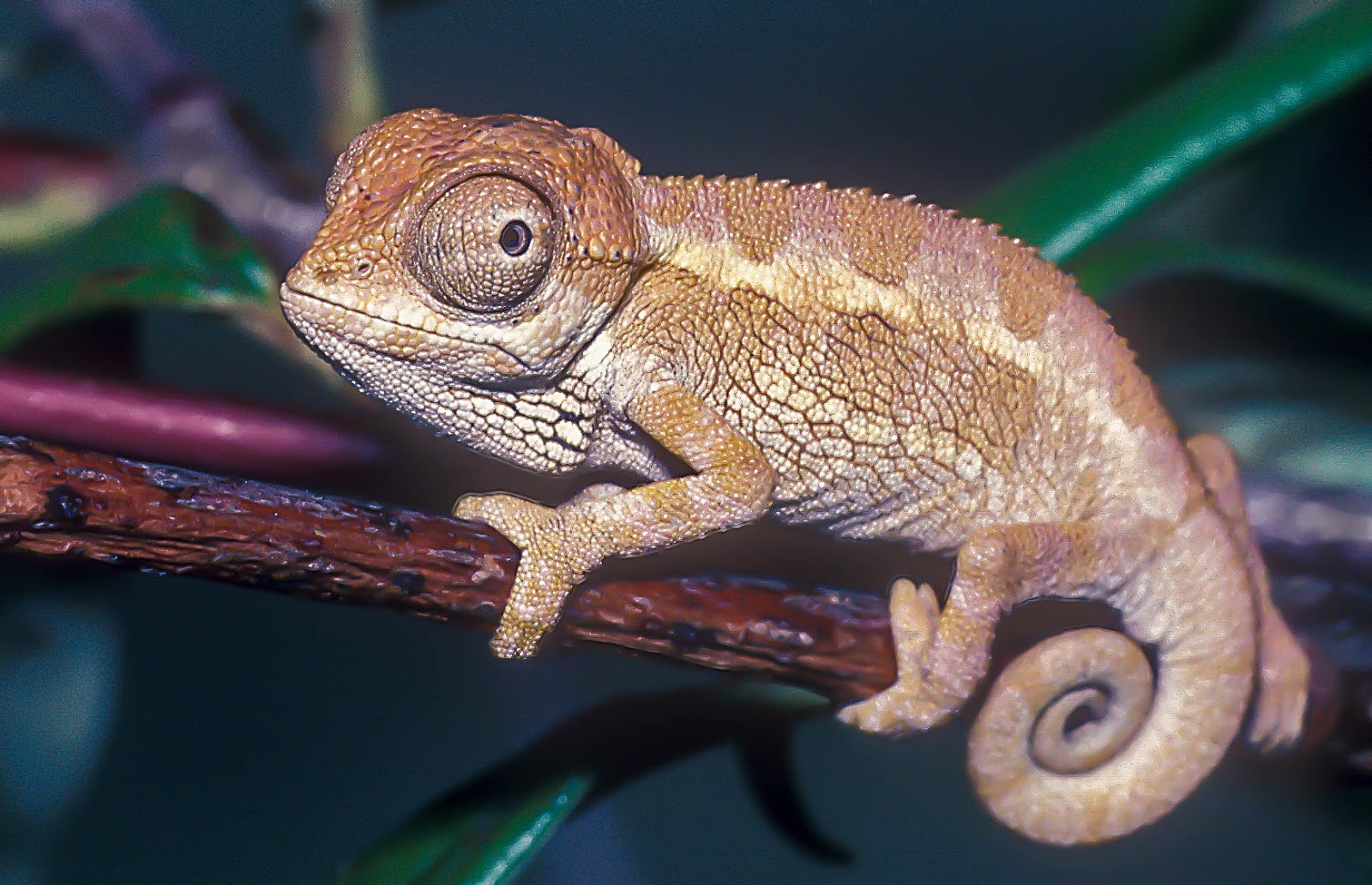
Laborde's Chameleon
Furcifer labordi
Christopher Raxworthy / Public domain
Twelve years ago came the news from Madagascar of an ‘annual’ chameleon—one that spent more time in the egg than as an adult.

In short, Laborde’s Chameleon, Furcifer labordi, was found to grow rapidly after hatching in November, to reach sexual maturity and breed by January-February and then to senesce and die. The adult lifespan was found to be 4-5 months. For the dry season of April to October there were no adults alive, just the eggs remained waiting to hatch at the start of the wet season in November.

The discovery excited a great deal of interest for all sorts of reasons. Not least was that among those studying the phenomenon and mechanisms of ageing, comparative life histories and longevity. Laborde’s Chameleon joined a few species of marsupials amongst tetrapods known to have a short lifespan and to die after a first breeding.

This is not the place to describe the large and controversial field of ageing. However, some of those involved may have been tempted to speculate that these short-lived chameleons might be exemplars of one theory of ageing which contends—erroneously in my view—that organisms have a built-in programme that, around a certain age, leads to death. However, what played on my mind, having once known a bit but never enough about chameleons, was what caused the chameleons to die after reproducing. Would they, for example, live longer if breeding did not take place? Was there something about the environment, a lack of food for example, that prevented their survival as adults?

A clue that Laborde’s Chameleon is not always strictly ‘annual’ came from a different location. Kirindy, where the warm, wet season is longer. There, females were found which had bred more than once and one survived into a second year after a particularly long rainy season. When these chameleons were kept in cages in the same region, some males were found to survive until the next season.

Still, I contend, the best way of looking at differences in lifespan between species is the Disposable Soma Hypothesis of Tom Kirkwood. In essence, because the availability of nutrients within the body is limited, animals balance the amount invested in reproduction and in repair. At one extreme, with Laborde’s Chameleon being an exemplar, the animal goes for rapid growth and reproduction at the expense of essential repairs to its cells, to its DNA, to fighting infection and infestation, to healing its wounds etc; as a result it dies when relatively young. At the other extreme, the slow-growing, slowly reproducing animal invests in keeping the adult in good condition for much longer; as a result it does not fall victim to tumours caused by errors in DNA copying or to infection and thus may live for a very long time; think elephant.

Thus, one might expect, with its defences down, Laborde’s Chameleon to fall victim to something in the environment that a longer-lived species which lives in the same habitat (like the Warty Chameleon, F. verrucosus, which aestivates during the dry season) would be expected to see off. I suggested some time ago to people in conversation that one of the factors that might be involved in the death of short-lived chameleons might be parasites. The reason I argued thus was that I had seen the incredible parasite loads of other species of chameleon after a short time in captivity: worms, protozoans and coccidial spores abounded. I was about to write this article when I came across a paper published in 2019 which examined that very idea—that a low resistance to parasites in Laborde’s Chameleon is what is the proximate cause of death of the adults.

The German group who reported the work from Kirindy joined forces with veterinary colleagues. They found that the parasite load in the alimentary canal increased dramatically during the last three months of life. Males had a greater parasite load internally and externally than females. Some animals were kept in cages—again in their habitat in Madagascar. Those individuals had a lower parasite burden and lived longer than their counterparts living in the wild. The authors concluded that the increased prevalence of gastrointestinal and blood parasites is entirely compatible with less investment in the immune system of these fast-growing, fast reproducing lizards—just as would be predicted from a trade-off between a rapid lifestyle and internal defence and repair.

Males might have been expected to be less affected than females producing eggs. However, it seems that males also put everything into reproduction. There is intense rivalry and bloody combat during the short breeding season as males guard their mates.

The indication of lower parasite loads in, and longer lifespan of, Laborde’s Chameleons kept in captivity in Madagascar suggests the need for further experiments. The animals were fed on invertebrates caught in the wild, some of which would presumably contain parasites. What would happen if, say, newly-hatched individuals were fed on parasite-free livefood? What would be their lifespan and what would they die of?

Finally, this article started off as one about a remarkable chameleon from a remarkable island fauna but it has to end as one about parasites and co-evolution with their hosts. In general, parasites evolve so as to be less lethal to their hosts. They have their own trade-off between going for growth and reproduction and killing the host by taking too much food and causing physical damage. So has co-evolution delivered a suite of parasites that like the chameleon itself go for broke and then in vast numbers lurk in an intermediate species for the onset of the next rainy season?

…and really finally. We did not see Laborde’s Chameleon when we were in southwest Madagascar in 2003. When I realised that was in October I now see why—the eggs were in the ground ready to start hatching in November.


Eckhardt F, Kappeler PM. Kraus C. 2017. Highly variable lifespan in an annual reptile, Labord’s chameleon (Furcifer labordi). Scientific Reports 7: 11397 doi:10.1038/s41598-017-11701-3 

Eckhardt F, Strube C, Mathes KA, Mutschmann F, Thiesler H, Kraus C, Kappeler PM. 2019.  Parasite burden in a short-lived chameleon, Furcifer labordi. International Journal for Parasitology: Parasites and Wildlife 10, 231-240. https://doi.org/10.1016/j.ijppaw.2019.09.010 

Karsten KB, Andriamandimbiarisoa LN, Fox SF, Raxworthy CJ. 2008. Proceedings of the National Academy of Sciences of the USA 105, 8980-8984. doi􏰊10.1073􏰊pnas.0802468105 

Friday, 28 February 2020

Chameleons I have kept and chameleons I have seen in the wild

This Jackson's Chameleon was the second chameleon I
kept ca 1960
I was writing something on chameleons for another purpose when I wondered how many species I had kept and how many I had seen in the wild. That thought sent me into old records and trip reports. The first chameleon I kept was the small Two-lined Chameleon, now known as Trioceros bitaeniatus, from East Africa. In the 1950s it was stated that the ‘dwarf’ species lived longer than the larger ones. Quite by chance the way I kept it turned out to be in many ways ideal. Over two winters it lived on a wrought-iron framed mirror in the sitting room, eating flies from hatched fishing-bait maggots and mealworms held in forceps. In summer it was in a vivarium but on some days it was parked in an apple tree, with a piece of meat or fruit hanging by a thread to attract insects. At all times, the temperature fell at night—no central heating then. Later I had a single Jackson’s Chameleon (Trioceros jacksoni) and large number of Von Höhnel’s Chameleon, better known these days as the Helmeted or High-casqued Chameleon, Trioceros hoehnelii.


Natal Midland Dward Chameleon (Bradypodion thamnobates)
The late Bob Davies had a friend (whose name I cannot remember) who
started a colony of these chameleons in UK in the late 1980s.
I had some of the offspring which in turn bred.

Natal Midland Dwarf Chameleon - young
These chameleons bear live young

Natal Midland Dwarf Chameleon - a few days old


For decades attempts at keeping most species of chameleon in captivity for any length of time seemed doomed to failure. Indeed, they were one of the few groups of animals in which longevity was shorter in captivity than in the wild. However, that was only partly true since some species, for their size, do not live that long, some have very short lives, whereas others, the Veiled or Yemen Chameleon (C. calyptratus), for example, which proved to be easy to keep and breed will live for up to 5 (females) to 8 (males) years.

As with many reptiles, once captive-breeding was achieved with many species, subsequent breeding proved easier. The stress of capture, storage and transport was one reason for the lack of success. Better environmental conditions and nutrition also played a large part. I was astounded when I took some faecal samples from wild-caught chameleons in the 1980s. The parasite load was staggering: worms, protozoans and coccidial spores abounded. I could have sold seats by the microscope to those wanting to see a parasite zoo. It is not surprising that chameleons in general proved ‘difficult’ animals.

During the 1980s there was concern that since many species of chameleon survived so poorly in captivity that there would not exist reliable methods of ex-situ conservation should that prove necessary for some Madagascan species where habitat loss has been so dramatic. So many species have now been kept and bred successfully over a number of generations that such a concern has not been realised.


Carpet Chameleon (Furcifer lateralis)
This Madagascan species (sitting on the hand of the late Bob Davies)
is an egg-laying species. We both tried to breed this species but the
eggs were infertile. ca 1991

Flap-necked Chameleon (C. dilepis) ca 1991

Oustalet's Chameleon (Furcifer oustaleti)
Madagascar 2003


As much as I did learn about chameleons (and here I echo a former colleague who argued that if we learn how to keep and breed and animal in captivity then we know an awful lot—not everything but an awful lot—about how that animal works) there is nothing like seeing and observing animals in the wild. From Kenya in 1991, Madagascar (three weeks in 2003 and two days in 2006) and the Republic of Congo in 2014 we saw and watched chameleons in the wild. The fauna of Madagascar is of course amazing and for chameleon aficionado, who can see easily the radiation that has occurred there ranging from the tiny Brookesia to the huge Oustalet’s, one of the great wonders of the natural world.


Spectral Pygmy Chameleon (Rampholeon spectrum)
Republic of Congo 2014

And here are the lists I compiled, firstly of the ones I kept between 1959 and 1994:


Common NameScientific Name
Helmeted ChameleonTrioceros hoehnelii
Two‑lined ChameleonTrioceros bitaeniatus
Elliot's ChameleonTrioceros ellioti
Jackson's ChameleonTrioceros jacksoni
Johnston's ChameleonTrioceros johnstoni
Flap-necked ChameleonChamaeleo dilepis
Senegal ChameleonChamaeleo senegalensis
Carpet ChameleonFurcifer lateralis
Natal Midlands Dwarf ChameleonBradypodion thamnobates


...and secondly, chameleons I have seen in the wild from 1991 onwards:


Common NameScientific NameCountry
Stump-tailed ChameleonBrookesia superciliarisMadagascar
Spectral Pygmy ChameleonRampholeon spectrumRepublic of Congo
Short-horned ChameleonCalumma brevicorneMadagascar
Parson's ChameleonCalumma parsoniMadagascar
Nose-Horned ChameleonCalumma nasutumMadagascar
Malthe ChameleonCalumma maltheMadagascar
Oustalet's ChameleonFurcifer oustaletiMadagascar
Rhinoceros ChameleonFurcifer rhinoceratusMadagascar
Spiny ChameleonFurcifer verrucosusMadagascar
Jewel or Carpet ChameleonFurcifer lateralisMadagascar
Wills's or Canopy ChameleonFurcifer willsiiMadagascar
Panther ChameleonFurcifer pardalisMadagascar
Helmeted ChameleonTrioceros hoehneliiKenya
Flap-necked ChameleonChamaeleo dilepisKenya


Wednesday, 17 April 2019

How Chameleons Work: The Tongue. Alexander Sand’s Legacy

Alec Sand, under the name before he changed it by deed poll, Zoond, determined the mechanism by which the chameleon’s tongue is projected at its prey. There has been an additional and very important twist in the story that has come only recently but the essence of where the force is applied and by which muscle was all down to Sand 85 years ago.

There had been several attempts to explain the working of the tongue before the 1930s. Sand began his paper:

The projection of the chameleon's tongue constitutes a unique problem in muscular organisation. It has frequently been recorded that a chameleon can project its tongue to a distance as great, or slightly greater than the length of the animal's body from nose to anus, and that projection takes place with instantaneous rapidity. Various theories have been advanced to explain this remarkable mechanism, yet still it remains imperfectly understood. The variety of the explanations offered is clearly due to the fact that investigation of this problem has been entirely anatomical, and that no attempt has hitherto been made to apply the test of experiment to it Such an experimental investigation forms the subject of this paper. The experiments here described deal with the tongue, the hyoid apparatus and the accessory muscles, and permit of the formulation of a complete account of this highly complicated and highly perfected response. 

Sand was able to dismiss some of the earlier ideas from the 19th Century very easily, as had others before him. Inflation of the tubular tongue by air from the lungs was impossible because there was no pathway for air to reach the lumen of the tongue. The idea that a penile-like engorgement with blood was responsible, suggested in 1828, was shot down in flames by Duvernoy in 1836. Things happened too fast for it to be other than a highly specialised muscular mechanism.

In a series of experiments, Sand determined which muscle was responsible and how it worked. In essence the knob of the tongue throws itself off a long bony projection aimed at the prey. It does so by squeezing that projection (the entoglossal process). As the muscle tightens it spreads so that it starts to slip off the tapered end of the entoglossal process and, still contracting, close down the lumen of the tongue completely. That squeezing force then becomes a force acting against the end of the entoglossal process and the tongue is projected forwards, carrying the corrugated neck of the tongue behind. The sticky tongue plus prey is hauled back into the mouth by the weak muscles in the extended neck of the tongue.

There has sometimes been confusion as to how the basic mechanism works, not helped by inadequate or no explanation in textbooks. For example, Angus Bellairs in his book, Reptiles, from 1957, did not describe the mechanism in the text, despite it being characteristic of chameleons, but just showed a tiny diagram drawn from Sand’s description with a misleading arrow for the direction of force.

More recent research, as I said above, has added to that story because high-speed photography couple with physiological knowledge has demonstrated that the muscle, aptly called the accelerator muscle, just cannot do the amount of work needed in the time it takes for the tongue to reach its prey. There is an additional, elastic, process that accounts for the projection of the tongue. The accelerator muscle squeezing inwards act to compress layers of connective tissue, the intralingual sheaths, that lie between the muscle and the entoglossal process. The collagen fibres within those sheaths are arranged such that when compressed by the muscle, strain within the fibres increases. Thus the intralingual sheaths build up a store of energy that is released suddenly as the muscle and sheaths themselves slide off the end of the entoglossal process. It also seems that the thickened tip of the entoglossal process provides a passive block allowing the accelerator muscle to generate considerable pressure on the intralingual sheaths before the forward edges of the sheath and overlying muscle can move forward over the tip to initiate the sudden release of energy from the sheaths and the continued contraction of the muscle. Although other muscles help in the process, their role is minor compared to that of the accelerator muscle.

The presence of the intralingual sheaths, which are in layers and extend like a telescope, Star Wars Light Sabres or the tubes of a photographic tripod, were of course described by the 19th Century anatomists. Any function, though, except for providing lubrication or mechanical protection, was not considered.


Diagram modified from Martin & Wolfe (Chameleons, London: Blandford, 1992) to show the direction of contraction by the accelerator or ring muscle on the intralingual sheaths and the bony entoglossal process

Elasticity to generate rapid motion is known from other cases in animals. There is still though nothing quite like seeing the speed of the ballistic mechanism of the chameleon’s tongue. It is not surprising that it has excited such interest in the world of biomechanics. Experiments have been done on it, mathematical models have been built of it and manipulators designed and constructed on the principles attributed to it. But while Sand may not have foreseen the importance of the elastic component, the whole process is driven, as he said, by that ‘massive sphincter-like ring muscle’ of the tongue knob.

A great advantage to a ballistic mechanism (with the stored energy built up from muscle power) compared with one relying on muscle contraction acting in real time, is not only the velocity of the movement but its relative resistance to a lowering of temperature. Since first keeping chameleons in the early 1960s I have had an interest (plus an unsuccessful grant application in 1968 over which I sometimes occasionally rant) in what happens to reptiles as their temperature changes during the day. Yes, they can by behavioural thermoregulation achieve a preferred body temperature which is optimal for their metabolism (chameleons are often desperate to flatten their bodies in the first rays of the morning sun and absorb heat) but may be operating sub-optimally for much of the time. In that respect it is particular interest that ballistic tongue projection works at high performance over a 20°C range. By comparing, projection (elastic) with retraction (simply muscle-powered) of the tongued in the Veiled Chameleon (Chamaeleo calyptratus) at different environmental temperatures, Christopher Anderson and Stephen Deban found that peak velocity and power declined by 10-19% with a 10°C drop in temperature for projection of the tongue compared with a greater than 42% decline for retraction. That finding means that chameleons may be slower in the cold of early morning but that they can feed and take advantage of prey whose movements may be affected by the cold.

Chameleons come in different sizes, from Brookesia micra at 2.9 cm long to what is thought to be the largest, Parson’s Chameleon (Calumma parsonii)  at 68 cm. By comparing the performance of the tongue of 20 species over a five-fold difference in length Christopher Anderson found that small species ‘project their tongues proportionately further than large species, achieving projection distances of 2.5 body lengths’. The small chameleons achieved the highest accelerations and outputs of power ever recorded in any movement of a reptile, bird or mammal. The whole arrangement of the jaws and tongue is such that small chameleons can capture eat relatively large prey items compared with large chameleons.

Finally, Sand’s observations on the chameleons in his laboratory discovered the trick that has been used to get chameleons in captivity to feed when the supply of live insects has dried up.

They were kept indoors on a small privet bush planted in a tub, and most of the original stock have now survived in this situation for over three months. Every day a batch of house-flies is released in the room, and the tree is sprayed with water, of which the chameleons require a regular supply, as Gadow has pointed out It is generally stated that the chameleons will only take live food. I have found that they have extraordinarily poor discrimination. Not only will they take dead, even mouldy flies, but also such miscellaneous objects as a dried up piece of chameleon embryo, raw or cooked liver, a small piece of twig, the head of a burnt match and a piece of putty have been repeatedly taken. The three latter were never swallowed, but were always rejected soon after being drawn into the mouth. But the object, whatever it be, must be kept in motion, which can be done by presenting it on the end of a dissecting needle. These observations are of interest in that they show that neither auditory nor olfactory stimuli play any part in attracting a chameleon to its food. The stimulus is purely visual, and apparently any oscillating object of appropriate size, indefinite colour, and irregular shape will induce a chameleon to shoot out its tongue and seize it.

Middle Dwarf Chameleon (Bradypodion thamnobates)
Photographed in my office in the late 1980s when I had a breeding group.

Below I have just shown a few of the key papers. Those interested can find references to other and earlier work there.

Anderson CV. 2016 Off like a shot: scaling of ballistic tongue projection reveals extremely high performance in small chameleons. Scientific Reports Reports 6, 18625 doi:10.1038/srep18625

Anderson CV, Deban SM. 2010 Ballistic tongue projection in chameleons maintains high performance at low temperature. Proceedings of the National Academy of Science of the USA 107, 5495–5499. doi:10.1073/pnas.0910778107

Anderson CV, Deban SM. 2012. Scaling of the ballistic tongue apparatus in chameleons. Journal of Morphology 273,1214–1226 doi: 10.1002/jmor.20053 

Debray A. 2011 Manipulators inspired by the tongue of the chameleon. Bioinspiration & Biomimetics 6, 1–15. doi:10.1088/1748-3182/6/2/026002

de Groot JH, van Leeuwen JL. 2004 Evidence for an elastic projection mechanism in the chameleon tongue. Proceedings of the Royal Society B 271, 761–770. doi:10.1098/rspb.2003.2637 

Moulton DE, Lessinnes T, O’Keeffe S, Dorfmann L, Goriely A. 2016 The elastic secrets of the chameleon tongue. Proceedings of the Royal Society A 472, 20160030. http://dx.doi.org/10.1098/rspa.2016.0030 

Zoond, A. 1933. The mechanism of projection of the chameleon’s tongue. Journal of Experimental Biology 10, 174-185.


Tuesday, 16 April 2019

How Chameleons Work: Great discoveries in the 1930s by Alexander Zoond aka Alexander or Alec Sand (1901-1945)

SPLAT. KERPOW. The words of a schoolboy comic hardly do justice to the chameleon launching its tongue to capture its prey. That whole process, from moving the eyes into stereoscopic mode, preparing the tongue for launch, the explosion of the tongue from the mouth, to the prey being dragged into the mouth and chewed must surely rank as one of the great sights in the living world. Equally the colour-changing abilities of these lizards has to be seen in real time to be appreciated.


Sadly, and the story even ends on a very sad note, the name of the man who made the most important discoveries in how the chameleon tongue works and of how colour changes are controlled has been largely forgotten. Partly, this is because he changed his name and partly it is because he died young and in tragic circumstances.

The name of the author that appears in list of references to the work on chameleons in the early 1930s is A. Zoond. The only reason I knew that he changed his name is that ETB Francis told me so; he did that while we were talking about his work on chameleons I had supplied him with. Zoond, he said, changed his name to Sand. In fact both names appeared on the extensive reading list ETBF handed out to honours zoology students for his course on vertebrates, a list so extensive a modern student would have an apoplexy, a. from shock over the quantity, and b., from having to work out whole fields of research for themselves.

Alexander Sand
In the tropical, white, uniform of a
Lieutenant, R.N.V.R.
Photograph used in his Royal Society
Obituary Notice
Alexander Zoond or Alexander Sand and, sometimes, Alec Sand is one of my scientific heroes from the then new world of experimental biology. He is sometimes labelled as a comparative physiologists but what he did was excellent physiology; there is nothing to be gained by adding ‘comparative’ or demeaning its fundamental importance because it was not done on mammals. Only fairly recently have I got to know more about him and only last week discovered his tragic end.

Information on him comes mainly from his obituary notice for the Royal Society and a family tree (without much detail) on ancestry.com. F. S. Russell FRS (later Sir Frederick) wrote that Sand was ‘of Jewish-Russian extraction’ and was born in Warsaw on 28 December 1901. The unrest in Poland (his father was a Menshevik) saw the arrival of the family in London when Alec was six. Before Zoond the family name had been Zundelevich or, in South Africa, Zoondevitch.

His schooling in London was entirely on the arts side. After a year at Reading university college came a strange and unexplained move. Reading then was the place for degrees in agriculture but Zoond left for the University of British Columbia in Canada to study dairy bacteriology with the intention of a farming career. After graduating with an agriculture degree, he tried a job in farming in the U.S.A. for a year but found it unrewarding. In 1924 he headed back to Canada, this time to McGill University, for an MSc in bacteriology (his thesis from October 1925, The influence of green manures upon the growth and physiological efficiency of Azotobacter chroococcum, can be found in full online). Appointed to a Demonstratorship in 1926 he had a chance meeting with Lancelot Hogben FRS who was then Assistant Professor of Medical Zoology. Hogben was only at McGill for 18 months and when he was offered the chair of zoology at the University of Cape Town, he took it. With him went Zoond, having turned down a fellowship at Yale, as lecturer.

Lancelot Hogben
Photograph used in his Royal Society
Biographical Memoir
Zoond, in other words, changed field entirely, an attitude entirely in keeping with Hogben’s iconoclasm and loathing of classical zoology and classical zoologists. Hogben wrote:

…I must here explain that the sacred cow of first-year biology in those days was a whimsy of Thomas Henry Huxley known to posterity as the “type system”. This involved the detailed anatomical study of about a dozen species chosen from different groups of the Animal Kingdom, less because they were typical of their phyla or classes than because it was at one time relatively easy to place orders for them with pet shop dealers in London. When I entered my department on the day after arrival, I found the shelves lined with dozens of bottles of Huxleyan types imported in formalin from the seat of the empire. On enquiry, I learned that no living creatures had ever desecrated these hallowed precincts. The same day, I therefore instructed my laboratory steward to empty all the contents of the pickle jars in the yard behind the laboratory ready for the incinerator when the sun had dried them. Henceforth, the motto was to be only the living pass these portals…

Zoond clearly thrived in Cape Town. He published with Hogben on the pH of surface water, with David Slome1 on the effect of electrolytes on cardiac rhythm and with Enid Charles, (the first wife of Hogben) on respiration in crabs.

In his memoir Hogben did not mention Zoond by name. However, it is clear who is being referred to in the following passage:

When I was not dealing face to face with the student body, Boer-backlashed mentality could make matters disagreeable. The lecturer whom I imported from McGill to replace the relict of my predecessor formed an attachment to one of the only two coloured medical graduates then practising in the Dominion, the other one being her brother-in-law, a leading light in the Moslem Community. Both held the Glasgow degree. When our young colleague confided in us that he was bringing his lady-friend to the University annual dance, both Enid and I scented embarrassment for both. Accordingly, we asked the pair to dine with us so that the lady could come as our own guest. My Jewish students clustered round and saw to it that she was never without a partner. Next day, the more rabid nationalist students held an open air campus meeting of protest.

It was after Hogben, with apartheid in the offing, had left Cape Town in 1930 that Zoond, who had stayed on, completed his work on chameleons, that on the tongue with Joyce Eyre2, that on pigmentation with Eyre and with Naomi Adeline Helen Bokenham (later Millard) (1914-1997). The papers were published between 1933 and 1935, as he was leaving or after he had left South Africa.

Cape Dwarf Chameleon (Bradypodion pumilum, in the 1930s known as
Lophosaura pumila and then Microsaura pumila).
All of Zoond's (Sand's) research was on this species.
Photo: JonRicfield from here.

Sand (still Zoond then) left Cape Town in 1933; before doing so he took a Ph.D. from that university. He then went to Cambridge to work with James Gray FRS (later Sir James) then Reader in Experimental Zoology who was just beginning his famous work on animal locomotion. It was their joint work on the locomotory rhythm of the dogfish published in 1936 that was on ETBF’s reading list.

Alexander Zoond changed his name by deed poll on 9 March 1935 to Alexander Sand. The notice in the London Gazette gave his address as 9 Storey’s Way, Cambridge, his occupation as ‘biologist’ and stated that he was a naturalised British subject. I have not been able to work out in what capacity Sand was working with Gray. His second, this time Cambridge, Ph.D. was awarded in 1938. He must have been in statu pupillari to have been awarded a Ph.D. since those paid by the university were (and I think still are) disbarred. Did he have some form of external fellowship or did he fund himself?

In early 1935 he joined the staff of the Marine Biological Association’s famous laboratory at Plymouth as Physiologist. There he worked on the sensory physiology of fish including the lateral line, stretch receptors in the muscles and the ampullae of Lorenzini. The research on the auditory labyrinth he did with Otto Löwenstein (1906-1999, FRS 1955) was—and still is—of relevance in all vertebrates and clinical conditions. What happens in the semicircular canals during movement of the head was sorted out for the first time in experiments that would have been impossible in mammals.

Although I am not going to describe here the work on sense organs in fish, I thought it worth quoting the following paragraph that indicates the sensitivity of the lateral line and why Sand worked in the cellar of the Plymouth laboratory ‘which is hewn out of solid Devonian limestone’:

To demonstrate the delicacy of the response he formed a light hammer of a rubber stopper which was allowed to fall through a distance of 8 cm. on to a rubber sponge lying on the edge of the table about 3 feet away from the prepara­tion, the shocks imparted to the table being quite imperceptible to the human touch. 

There are a few traces in the newspapers of Sand’s time at Plymouth. The Western Morning News of 28 December 1936 reported that a fire had been discovered in Fardel Manor on the Cornwood-Ivybridge road which was occupied by Sand at the time. Large beams underneath a hearth in one of the upstairs rooms were smouldering. One of Sand’s children was due to sleep in the room. The fire brigade had to cut away the floorboards before extinguishing the fire ‘with the aid of patent extinguishers’. The medieval house, now Grade I listed and about 9 miles from the MBA laboratory, was once the seat of the Raleigh family.

By the time of the special census in 1939, the Sand family had moved a couple of miles to Gerston, Harford, now part of Ivybridge. Sand is shown there (as a research biologist) with his wife, Edith G Sand (born 19 April 1909), two children (records still closed) and Elizabeth B Reidy, born 1914, described as ‘paid companion help’. Russell wrote that he had two sons.

Motorists in Britain lived for decades in fear and dread of leaving their car without lights at night. Bored policemen pounding their beats were always on the lookout. Sand was fined ten shillings (50p) at Totnes Petty Sessions for ‘leaving a motor car without lights’ at Redworth Terrace, Totnes on 7 January 1940. How being fined for leaving a car without lights tied in with the wartime blackout regulations which demanded no lights, I do not know. Normal for Devon, maybe.

Russell then notes that Sand did all he could to get into the armed forces as quickly as possible after the outbreak of war.  He was commissioned on 1 May 1940 in Special Branch of the Royal Navy Volunteer Reserve. Promotion to Lieutenant followed in October 1940. He, like many biologists in the war, was involved in radar. Russell wrote:

After a time on the mainland in the north of Scotland he was posted as Officer in Charge of the station on the Shetlands. In 1941 Sand came south to lecture on radar for some months before being posted to a cruiser in which he was in the Indian Ocean. He contracted malaria in the Persian Gulf and when recovered went on leave to South Africa where his wife and two sons were living for the war years. He was then posted to a monitor and was present at the Sicilian and Salerno landings, his ship being hit. After a period of unemployment he was seconded for research at the Naval Department in the Medical Research Council’s Laboratory at Hampstead.

Russell went on to say that the research at Hampstead was on the physiology of diving and that in the course of his duties he received training in diving himself. It was, said, Russell, likely to remain confidential. G. L. Brown (FRS 1946, knighted 1957) was in charge of the research. The Physiological Society always maintained the tradition of using just initials and surnames in its internal communications, never honours or titles, so Sir George Lindor Brown FRS was always G.L. Brown. His biographical memoir contains more details of the research and includes Sand, along with a while string of well-known physiologists and naval officers, as members of the laboratory:

Brown discovered at the Lister Institute, and commandeered, the long-disused chamber that J. S. Haldane, the father of J. B. S., had used a generation earlier in the research that gave divers their first reliable decom­pression tables. The chamber was transported to the garden of the Institute at Hampstead, a hut was built around it, a new compressor was installed, and Brown and his associates began to acquire the somewhat esoteric expertise needed for doing human experiments under pressure. It was Brown’s first opportunity to recruit a research team of his own. H. P. Marks, Macintosh and Collison of the Hampstead staff were already available; they were joined by F. Dickens, C. B. B. Downman and 20-year-old H. B. Barlow; A. Sand and W. D. M. Paton arrived a little later. S. Gay French, H. M. Balfour and other naval medical officers, along with Ellis, were occasional members of the group; others who sometimes took part included Haldane, D. Williams and R. G. Bickford.

Sand was elected to the Royal Society on 16 March 1944.

But then came tragedy. on 11 July 1945 at 58 West End Lane, Hampstead, Alexander Sand shot himself in the heart with a pistol. The famous coroner, Sir Bentley Purchase recorded the verdict of the inquest on the death certificate, ‘dec[ease]’d did kill himself not being of sound mind’. I have been unable to find any press reports that might shed more light on the events leading to his death. There is no mention on the death certificate of service in the navy (occupation shown as .F.R.S. and Doctor of Science’). However he is listed as having died while still serving in the RNVR. His nominal ‘ship’ (all sailors are attached to a ship, even if that ship is a shore establishment) was H.M.S. Victory, the shore establishment at Portsmouth.

Russell concluded his obituary notice:

The whole Plymouth staff were anxiously looking forward to the day when they would once more be reunited at the laboratory and the blow was bitter when it was known that Alec Sand would not be numbered among those returning. Having reached the height of his research powers it was anticipated that he would open up new avenues in the little explored field of the sensory environment of marine animals. All alike felt keenly the loss of a friendly and inspiring colleague, and a gap has been created in the ranks of physiologists that it will be hard to fill. 

Thomas Alan Stephenson (1898-1961, FRS 1951), Lancelot Hogben’s successor in Cape Town until returning to Britain in 1940 as professor of zoology at Aberyswyth, introduced his obituary of Sand in Nature as follows:

In the completely unforeseen death of Alexander Sand at the age of forty-three, comparative physiology suffered a very severe loss. Not only was his later work distinguished in a remarkable degree, but so much more of the same calibre might have been expected from him in the next twenty years. 
UPDATED 11 October 2020


*Hogben claimed he had forgotten the name of his predecessor, ‘a dedicated necrophilist’. It was John Dow Fisher Gilchrist (1866-1926), a marine biologist born in Scotland, who, in his time, seems to have been far more modern in research, but not in teaching perhaps, than Hogben indicates.

1. David Slome (1906-1995). Details here.

2. I can find no further information on Joyce Eyre.

Alexander RMcN. 2001. Otto Egon Lowenstein. 24 October 1906 - 31 January 1999: Elected F.R.S. 1955. Biographical Memoirs of Fellows of the Royal Society 47, 357-368.

Hogben, LT. 1998. Lancelot Hogben. Scientific Humanist. Woodbridge, Suffolk: Merlin Press.

MacIntosh FC, Paton WDM. 1974. George Lindor Brown 1903-1971. Biographical Memoirs of Fellows of the Royal Society 20, 41-73.

Stephenson TA. 1945. Dr Alexander Sand. Nature 156, 383-384.

Russell FS. 1948. Alexander Sand 1901-1945. Obituary Notices of Fellows of the Royal Society 5, 803-815.

Wells GP. 1978. Lancelot Thomas Hogben 9 December 1895 - 22 August 1975. Elected F.R.S. 1936. Biographical Memoirs of Fellows of the Royal Society 24, 183-221.

Zoond, A. 1933. The mechanism of projection of the chameleon’s tongue. Journal of Experimental Biology 10, 174-185. 

Zoond A, Bokenham NAH. 1935. Studies in reptilian colour response. II. The role of retinal and dermal photoreceptors in the pigmentary activity of the chameleon. Journal of Experimental Biology 12, 39-43.

Zoond A, Eyre J. 1934. Studies in reptilian colour response. I. The bionomics and physiology of the pigmentary activity of the chameleon. Philosophical Transactions of the Royal Society B. 223, 27-55.