Sunday, 4 November 2018

Joan Procter. Her Reptile House at London Zoo and Reptilian Thermoregulation

It is only when one reads the detail of Joan Procter’s Reptile House at London Zoo that one realises she was decades ahead of her time in terms of knowledge of the thermal requirements of reptiles. The Reptile House opened in June 1927. Apart from its ‘aquarium-principle’ lighting, crowd circulation and safe-handling area for venomous snakes, the spectra of both natural and artificial lighting were specified while additional heat was supplied to different places of the cages thus creating a temperature gradient which allowed the animals to bask and raise their body temperature above that of their surroundings.

In Joan Procter’s own words when describing how the Komodo Dragons were housed and how they had lived in the new Reptile House for 18 months:

They live in a large enclosure of natural shingle and soil, planted with living palm-trees, and provided with a cave, rocks, and a swimming-pool. A great deal of care has been exercised to provide proper climatic conditions. The roof is of Vita-glass, transparent to ultra-violet light, and Vita-lamps for artificial sunlight are installed together with two large flood-light lamps. Dull-heat radiators of the beam type are also fixed, and all this apparatus, which is invisible to the public. is protected by massive steel bars. Further, the rocks themselves are electrically heated with a type of black-heat radiator let into the actual rock, and controlled, together with the air-heaters by a thermostat, which in turn is governed by a fool-proof warning system. The light and heat are chiefly focussed on a large rock in the centre of the enclosure, and, as the dragons immediately discovered this, they are usually to be seen sunning themselves upon it.

Those who know anything about reptiles will recognise this as a throughly modern way of keeping lizards. As I pointed out in a previous article the Vita glass was to let ultraviolet rays in sunlight reach the animals. Her ‘Vita-lamps’ were actually ultraviolet-emitting lamps with Vita glass filters to block just the very short wavelengths which experiments had determined were deleterious.

Previously, reptiles kept in temperate climates were kept in accommodation heated to the temperature of a tropical shade environment. Most had no opportunity to bask and raise their temperature above the ambient. The science of thermoregulation in reptiles really only took off in the 1940s and the concepts like ‘preferred body temperature’ and  ‘behavioural thermoregulation’ developed. Thus while reptiles are indeed cold-blooded they were found able to maintain body temperatures above that of their surroundings during the hours of daylight by shuttling between the heat of the sun and the relative cool of the shade. Komodo Dragons have been shown, comparatively recently, to follow that pattern.

The preferred body temperature was later shown to be that which is optimal for biochemical processes within the body. Reptiles not allowed to achieve their preferred body temperature, even though kept in warm ‘tropical’ daytime air temperatures, were function sub-optimally. It is not surprising that such animals are lethargic, their immune system left unable to cope with infection and infestation, do not breed—and do not survive for very long. Reptiles, particularly larger ones, take a long time to die.

Joan Procter was aware that she had designed accommodation for Komodo Dragons that was superior to that elsewhere. She quoted from William Douglas Burden’s book Dragon Lizards of Komodo (see my article on the Burden expedition to Komodo here):

     …We hear of specimens taken to New York* that “it was painful to see the broken spirited beasts that barely had strength to drag themselves from one end of their cage to the other.”     ‘’"SureIy it is not all a matter of diet and change of climate... Perhaps…Varanus komodoensis, in order to survive, demands the freedom of his rugged mountains.” ...,but our specimens are perfectly happy in captivity, are attached to their keepers and their friends, and are putting on a great deal of weight.

I think we can take that as London 2: New York 0, 1928 style.

This photograph of a small boy and a Komodo Dragon may have been
taken in the original accommodation in the Reptile House in London
Zoo in 1932. Joan Procter and the keepers always seemed keen
to demonstrate how tame the Dragons had become

The heating and lighting equipment was not ‘off the shelf’. The General Electric Company Ltd (not to be confused with the American company of the same name) had research and development labs at Wembley. The Times (15 June 1927) in describing the new house reported:

The very elaborate electrical installation devised by the Research Department of the General Electric Company to meet the special requirements forms an achievement in electrical installation which is unique, and cannot be described in detail here. It may be said, however, that the installation has approximately 20 miles of electric cable for the heating system and 12 miles for the indicators and tell-tales, and that some of the compartments have up to 200 electrical connexions. The wiring for lighting is almost equally elaborate.

Miss Procter wanted material for the walls that could be cleaned. She therefore had the theatrical scenic artist, John Bull, use car enamel that would be resistant to scrubbing. I cannot find a photograph of any of the scenes painted on the walls of the cages—perhaps a good job since I utterly loathe naturalistic painted backgrounds.

It is clear from contemporary diagrams that the Komodo Dragons were kept in the large enclosures at the southern end of the Reptile House, used, ever since I first went to the Zoo in the 1950s, to house crocodilians. Their glass roofs can be seen in Google Earth—just a short distance away from the new housing for Komodo Dragons.
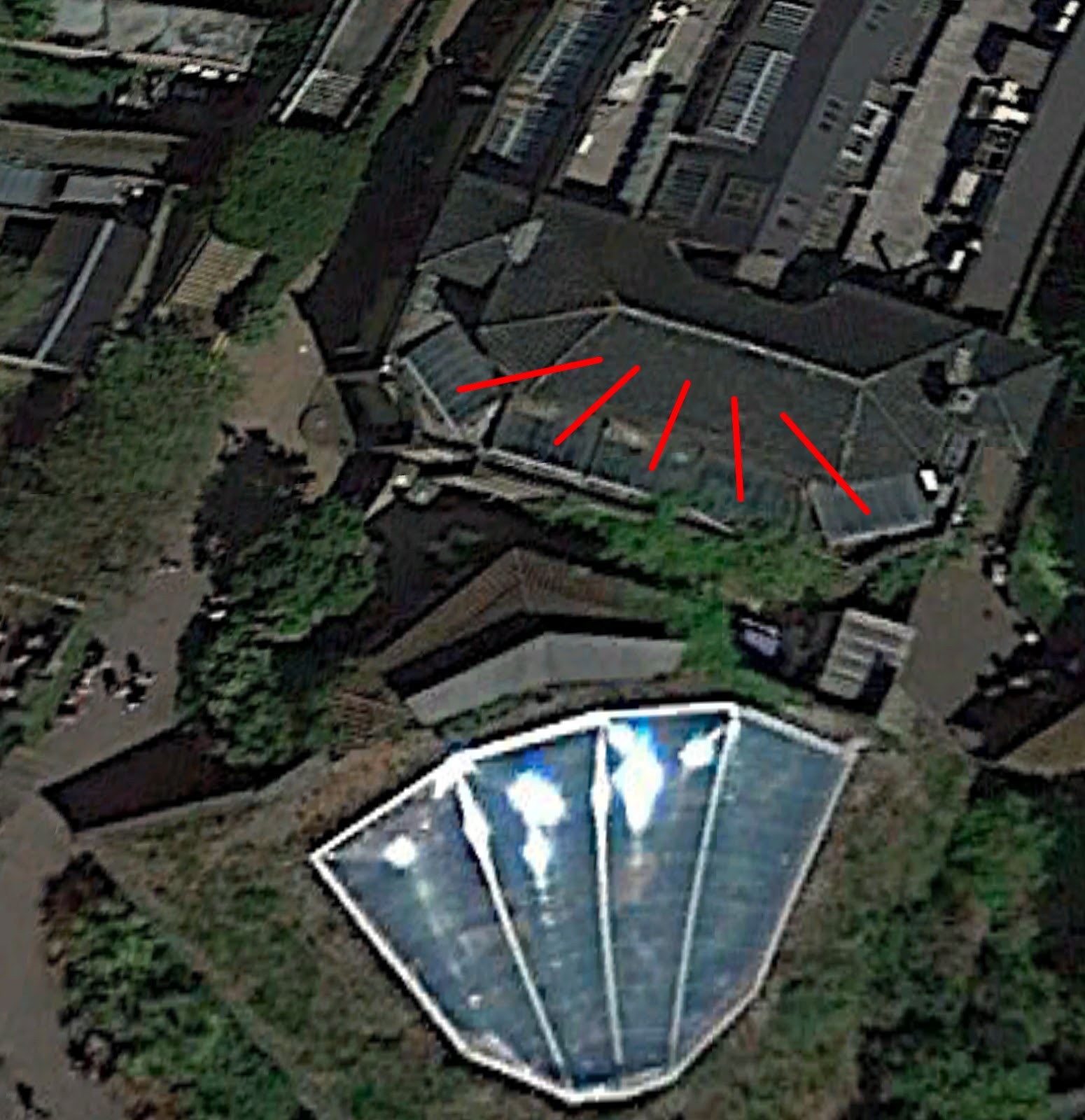
This Google Earth View of the Reptile House shows the windows
above the cages where the Komodo Dragons were housed. Vita
glass was installed originally. Has it survived?
The new enclosure covered in plastic is the current housing
for Komodo Dragons

It is easy to criticise—ninety years after it opened—aspects of the Reptile House. The compartments for large snakes seem of the wrong proportions, for example. The domestic architect but President of RIBA, Guy (later Sir) Dawber (1861-1938), who took Joan Procter’s very detailed plans, made them buildable and added the external features seems to have missed a few tricks. The sides, especially the western elevation which forms one side of the alley between the equally depressing edge of the Mappin Terraces, are devoid of life. Guillery suggests the outward-facing cage on the eastern side (which often used to house interesting chelonians and is the only relief from the drabness) was inserted later. Dawber also designed—again from a detailed layout by Joan Procter and Chalmers Mitchell—the exterior of the nearby main entrance to the Zoo in the same Italianate style used by earlier architects. I sometimes wonder if Dawber took umbrage at the minor role he was accorded by the Chalmers Mitchell publicity machine; he did not attend the opening of the Reptile House.

But Joan Procter’s house was clearly a great leap forward for the Zoo. But there was still much to learn since reptiles and amphibians died in large numbers after importation. Even the best conditions will not reverse the effects of the stress of capture, storage in unsuitable accommodation and then long sea journeys at temperatures below the optimum together with under- and/or mal-nutrition. Real advances, other than air transport, in how to keep reptiles, other than the ‘easy’ species, would not come for another four or five decades.

I can't resist showing one of my photographs of these wild Komodo Dragons
taken in 2016


*These Komodo Dragons in New York seem to have been forgotten by historians. Their arrival in USA is usually given as 1934, Washington.

Guillery P. 1993. The Buildings of London Zoo. London: Royal Commission on the Historical Monuments of England.

Peaker M. 1969. Some aspects of the thermal requirements of reptiles in captivity. International Zoo Yearbook 9, 3-8. Zoological Society of London. London: Academic Press. 

Procter JB. 1928. On a living Komodo dragon Varanus komodoensis Ouwens, exhibited at the Scientific Meeting, 23 October 1928. Proceedings of the Zoological Society of London 1928, 1017–1019.

Thursday, 1 November 2018

What to do with unproductive scientists. John Postgate’s solution from the 1980s

Assortative sitting was the name of the game. I soon discovered there was nothing quite so deadly as attending a meeting of Directors of Institutes and Units of the Agricultural Research Council (ARC) (which morphed first by adding Food to its name (AFRC) and then into appallingly-named Biotechnology and Biological Sciences Research Council (BBSRC)). The first trick was to sit somewhere near the back. The second was not to sit opposite certain gentlemen whose facial expressions could induce an uncontrollable laughing fit. The third was to sit next to somebody of like mind so that you could mutter comments heavily laden with sarcasm to one another through clenched teeth. On several occasions I was both skilful enough and lucky to land next to the late John Postgate FRS who was Director of the ARC’s Nitrogen Fixation Unit.

With a father, Raymond, who founded The Good Food Guide and a brother, Oliver, who wrote, produced and appeared in the classic children’s television programmes Bagpuss and Clangers John Postgate was part of a well-known family in the second half of the 20th Century.

One topic which all Directors agreed on was what to do about those scientists who became unproductive, usually in middle age. Some went on churning the same old handle of unexciting research, others slowed down completely. In the research institutes and universities it was virtually impossible to get rid of anybody other than by a quiet word in their ear suggesting they might find more satisfaction elsewhere. If they did not take the hint, you were stuck with them. Because most of those involved had reached a certain grade in the institutes, Principal Scientific Officer, the problem became known as what to do about the clapped-out PSO. Sub-committees were set up and reported but very little happened until a financial crisis led, in England and Wales, to redundancies and the careful inclusion of the ‘clapped-out’ in an area of research to be cut—a very nasty and unfair process.

In our mutterings on the back row, John Postgate and I had very similar views. Scientists would be given a long but fixed term contract until, say, the age of 45 or a fixed time after completing their PhD. If they could then be promoted on merit they would be retained for another, say 10 year contract; if not they would be given long notice (2-3 years) that their contract would not be renewed and provided assistance in fitting themselves for employment elsewhere. Again those staying on would be subjected to a final ‘up or out’ promotion assessment.

The system we suggested would have been similar in a number of ways to that operating in the armed services to ensure the flow of young recruits into the system while retaining the highly capable scientists in the system. I had quite forgotten until I read John’s Biographical Memoir that he had published his proposed system after he retired, based on the army analogue, in a 1991 issue in New Scientist:

There is an old adage to the effect that scientists run out of steam in middle life. One would like to deny its truth, but regrettably it has substance. Most working scientists (among whom I include technologists) are familiar with the older researcher or teacher who has lost momentum. Typically he or she shows low motivation towards keeping up to date with background knowledge, a resistance to solving new problems, a reluctance to adopt new techniques and approaches.
     Scientists such as these are content to coast along as before, painting the odd lily, often quite effectively, and not getting in anyone’s way.These characteristics tend to appear early on if the science has a substantial mathematical or physical component. Sadly, scientists whose output has become lower than it ought to be in quality (not necessarily in quantity) are,on the whole, more prevalent among older age groups.
     Before I am accused of rampant ageism (by the way, I am immensely old myself), let me amplify that ‘on the whole’ proviso. Of course there is that invaluable minority of scientists who do not run out of steam with age; those who, appropriately talented and dedicated, sustain momentum and remain acknowledged leaders in their fields to a ripe old age, setting an example to everyone and achieving well-deserved rewards and honours. There are also a few young scientists who lack steam from the outset; equally there are a few late developers. But in all, the exceptions represent a very small percentage of our scientific workforce.
     In the expansive years of the third quarter of the century, institutes or departments could carry coasters along by group momentum, but those days are over for good. Even if science funding in Britain were to rise to match the norm among other developed countries, the heady days of 1950s-type expansion will not return. Today such people are a source of anxiety to scientific directors and departmental heads, because they are numerous in both the R and D sides of R&D. They unwittingly deny opportunities to young and innovative scientists, to the detriment both of their establishments’ programmes and of the country’s scientific and technical progress.
     Yet as our society becomes ever more science-based, we need an expanding scientific workforce, and it must be one capable of seeing, exploiting and developing innovations almost as soon as they appear. And we need to retain all the innovators we can get, be they old or young.
     How to do this? For reasons which stem as much from specialisation as from age, retraining and redeployment are not the answer: they rarely work among scientists, as Britain’s research councils have so painfully learnt.
     The military solved an analogous problem well over a century ago. Soldiers are recruited to fight and, above a certain mean age, they cease to be useful for that purpose. Therefore they are recruited for a fixed term only and then retired, usually with promotion and a reasonable, if modest, pension. A few who show special talents in appropriate directions are retained for non-combatant duties, but most professional military personnel return to civilian life in early middle age, to make second careers or to relax, as the case may be.
     The careers of scientists ought to follow a similar course. It would be greatly to the advantage of all concerned if they, like the military, were normally taken on for a career-length term, say 25 years, with something like the present civil service pay and promotion prospects. At age 45 they would, subject to performance, normally be promoted by one grade and retired immediately on half pay.
     A minority who retained their usefulness might or might not be promoted, but they would be invited to continue in their posts and pursue their careers normally for another decade. Then another screening would take place. A few outstanding scientists would come through the second screening and work for yet another decade; quite exceptional ones would come through again and again, and carry on well past our present cut-off age of 60 to 65.
     Professional scientists’ contracts would have to be long-term. A succession of short-term contracts would be a disaster – as today’s postdoc trap has shown. The cost of pensions for scientists leaving ought to be balanced out by lower salaries for the young scientists who fill their posts. In effect, however, a career prospect based on single long-term contracts, exceptionally renewable, would render the whole scientific work-force more alert and productive, would ease promotion of young high-fliers, and would avoid the premature rejection of outstanding achievers.
     Being the rule, early retirement would be no stigma, and it would provide society with a reserve of talent, intellectually disciplined and far from elderly, for all sorts of useful purposes – in new employment (helping with the shortage of science teachers, for example), self-employment or, if wealthy enough, in voluntary work.
     After all, the microchip revolution is on the way to making lifelong employment the exception rather than the rule in most walks of life, if only because the alternative is lifelong unemployment for too many of us. Career scientists would, as usual, simply be pointing the way ahead.
Letters followed supporting the Postgate plan but, sadly, the ensuing and  increasingly complex employment legislation prevented the adoption of any such humane scheme—and the ‘postdoc trap’ has been well and truly fallen into. But let’s not go down that road in this post and leave on the the note that John Postgate was one of the good guys. It is also worth noting that he kept lizards, fish and small mammals in his younger days, the first requirement for a biologist to fall into that category.

Postgate J. 1991. Bring in the long-service commission – Science should follow the army’s example. New Scientist 129, 65-66.
Robson R, Smith B, Dixon R. 2016. John Raymond Postgate FIBiol 24 June 1922-22 October 2014. Biographical Memoirs of Fellows of the Royal Society 62, 485-504.

Wednesday, 31 October 2018

Gouldian Finches and Guillemots. H.N. 'Mick' Southern

Sometimes when you are reading up on a subject a surprise awaits. You find that somebody you associate with another field has published in the field you have become interested in. One such recent case was my post on recent research that pinpoints the genetic difference in head colour of the Gouldian Finch. I did not know that the ecologist H.N. ‘Mick’ Southern had worked on that problem but there it was, a paper in the Journal of Genetics in 1945, Polymorphism in Poephila gouldiae Gould. I then learned from his obituaries that he was interested in polymorphism in birds, especially that in the Common Guillemot (Uria aalge) where the ‘bridled’ morph exists alongside the ‘normal’ morph but in increasing frequency the further north in the geographical range of this species.

Henry Neville Southern (1908-1986) was a member of Charles Elton’s Bureau of Animal Population at Oxford. He graduated twice, first in classics, then after a spell in publishing in zoology. As an undergraduate the first time round he had a book published on bird photography. An ecologist who was claimed by the ornithologists as one of their own and by mammalogists as of their tribe he was particularly well known for his long-term studies on wood-mice and on one of their major predators, the Tawny Owl. He edited and wrote a great deal of The Handbook of British Mammals published in 1964 by Blackwells.


Never having moved in ecological or Oxford zoology circles (‘a place best avoided’ was the advice of my PhD supervisor) I did meet ‘Mick’ Southern once. He, John Perry and I were at an old Zoological Club dinner in the 1970s. ‘Mick’ and John were wartime colleagues at the Bureau of Animal Population, when the emphasis was on the control of mammalian (rats, mice, rabbits) and avian (Wood Pigeon, House Sparrow, Rook) pests which were endangering British food supplies and the crews of additional ships needed to bring food by sea through U-boat infested waters.

Photographs of Bridled and 'Ordinary' Common Guillemots

Embed from Getty Images Embed from Getty Images

and the red-headed morph of the Gouldian Finch

Embed from Getty Images

Friday, 26 October 2018

The Kimberley, Australia: A Robert Mertens Day

In the early 1960s, the name Robert Mertens (1894-1975) was well-known to anybody in Britain keen on reptiles because the translation of his book, The World of Amphibians and Reptiles*, hit the bookshops and libraries in 1960. The publication of books on reptiles and amphibians was a pretty unusual event and it joined the other popular survey by Schmidt † and Inger. Living Reptiles of the World, published in 1957 but taking a very different approach.

These books though were expensive. Mertens sold for £3-3s-0d. The equivalent price today is £63 if calculated on the increase in retail prices, £136 if calculated on the increase in pay. I had Schmidt and Inger (the same price) but had to make do with Mertens renewed countless times from the local library. As a result I did not have a copy until I bought one for a few pence several years ago.

Mertens, although a museum man through and through, kept a large collection of animals at work and at home. His survey included what was known of behaviour, ecology and physiology rather than just a review of the kinds of living animals and their taxonomy.

Robert Mertens
from
Contributions to the History of Herpetology
Gradually, I found other work that Mertens had done, for example, on the European lizards and his checklist of European reptiles. I also heard of how he died (see later). However, only when I read the biography in Contributions to the History of Herpetology, did I become fully aware of his work.

In brief, Mertens was born in Russia to German parents—his father was a fur trader. Because of the social unrest that eventually exploded as the Russian Revolution he went to a German university, Leipzig to study medicine and biology. He served a short time in the German army and then joined the Senckenberg Museum in Frankfurt in 1919 where he stayed for the until his retirement in 1960. From 1947, he was Director of the Museum. From 1930 he was also a professor at the University of Frankfurt.

During the Second World War, he spread the collection around Germany and operated a scheme to receive specimens collected by keen soldiers by using the army’s field post system. Imagine the scene on either side of the front line in North Africa as German herpetologists studied and collected the fauna while British and Commonwealth herpetologists, like John Cloudsley-Thompson (1921-2013) of the 7th Armoured Division (Desert Rats), beavered away on the other.

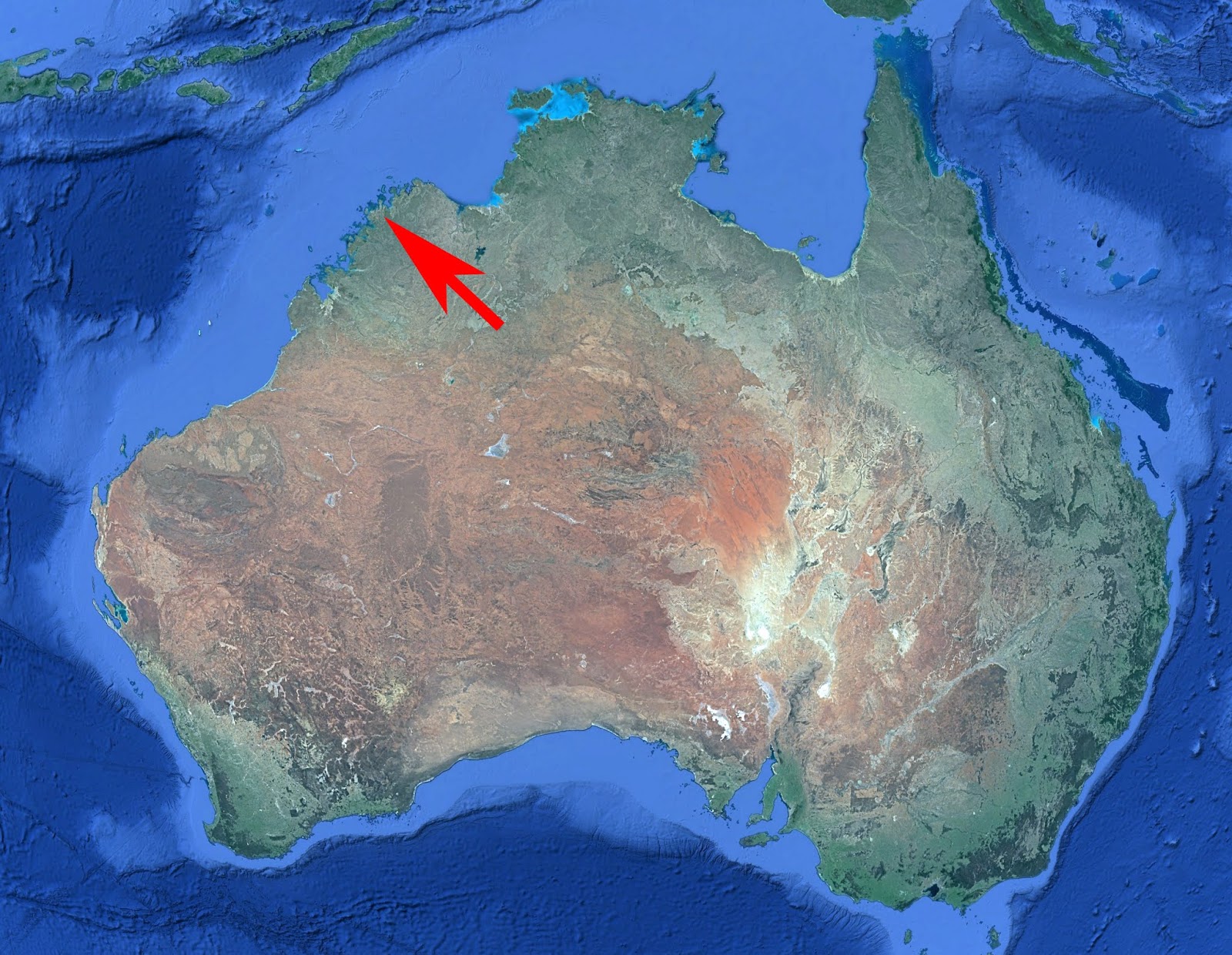
On the Mitchell Plateau in the Kimberley of Western Australia, Mertens is commemorated geographically as well as zoologically. This is because he travelled, collected and explored  extensively in tropical regions including northern Australia and the Indonesian islands. In May, as we walked to Mitchell Falls we passed Little Mertens Falls, waded across the top of Big Mertens Falls and some us saw (I just got the end of the tail) Mertens’s Water Monitor (Varanus mertensi). The newly-described monitor was named in Mertens’s honour by Ludwig Glauert in 1951 (more on Glauert of the Western Australian Museum, Sheffield born and a Sheffield graduate in another post). The naming was highly appropriate—Mertens was the world expert on varanid lizards.

Arrow shows the location of Mertens Falls

Little Mertens Falls
From the cave behind Little Mertens Falls
Big Mertens Falls

Embed from Getty Images
Merten's Water Monitor above Little Mertens Falls


Beyond finding that the two sets of water falls on the Mitchell Plateau were named for him, I have been able to find nothing on when this was done nor by whom it was done. Those who walk or are flown by helicopter over his falls to the Mitchell Falls have no idea who Mertens was or of his role as one of the leading herpetologists of the 20th Century.

There is very little information on Robert Mertens in English and I do not know when he travelled in the northern part of Western Australia. From a list of some of his publications, I would assume the 1920s or 30s. What is known is his sad end. He had kept for a long time a rear-fanged vine or twig snake. When I read about this at the time it was Kirtland’s Vine Snake (Thelotornis kirtlandii) and that identification still appears in some publications including Manson's Tropical Diseases. More recently it is shown as T. capensis from further south in Africa. Whatever the species, it bit him on 5 August 1975. Mertens was 90. No antivenin had been made for this species and eighteen painful days later he died. Throughout that period he kept a diary and ended it with the famous line, ‘a singularly appropriate end for a herpetologist’.

†Karl Patterson Schmidt (1890-1957) of the Field Museum in Chicago, and with similar wide interests to Mertens, died as a result from the bite of another African rear-fanged snake, the Boomslang, Dispholidus typus, in 1957. A single fang of a small specimen caught him and after declining any treatment recorded its effects on him. He died the next day.

*The book first appeared as La Vie des Amphibiens et Reptiles in 1959 with the English, Italian and Spanish editions following. There seems to have been no publication in German. One of the reasons why it was so good is that it was translated into English by Hampton Wildman Parker (1897-1968), retired Keeper of Zoology at the Natural History Museum in London and before that, head of herpetology.

Anon. Mertens, Robert (1894-1975). 2014. In, Contributions to the History of Herpetology, Volume 1, revised and expanded. Edited by Kraig Adler, pp 98-99. (Contributions to Herpetology 30, Society for the Study of Amphibians and Reptiles).

Glauert L 1951. A New Varanus from East Kimberley, Varanus mertensi sp.n. Western Australian Naturalist 3 (1, July 20, 1951), 14-16.

Mertens R. 1960. The World of Amphibians and Reptiles. London: Harrap.

Schmidt KP, Inger RF. 1957. Living Reptiles of the World. London: Hamish Hamilton.

Monday, 22 October 2018

Red-heads and Black-heads. New research finds the gene controlling head colour in the Gouldian Finch


The Gouldian Finch (Chloebia or Erythrura gouldiae) is famous for a number of reasons. The first is a sad one. It has become rare in its habitat of tropical northern Australia because of agricultural practice (burning grassland at the wrong time of year and the introduction of domestic livestock in areas which reason indicates should actually be left wild). The second is that it occurs in three colour morphs in the wild. The third is that because of its beauty it has always been a popular bird with aviculturists in Europe, North America and Japan.

The third reason (i.e. its popularity in aviculture) is responsible for the generation of so much knowledge about this species which has been put to good use in devising conservation measures  in the wild by halting, apparently, the precipitous decline in the size of the population and, even though only a few thousand birds of this small seed-eating bird remain, the possibly unwise lifting of its status from ‘Endangered’ to ‘Nearly Threatened’.

The breeding and maintenance of stocks of the Gouldian Finch in aviaries has also facilitated the recent discovery of the genetic mechanism responsible for the difference in head coloration of the morphs. For this article I am going to ignore the orange-headed morph which occurs at very low frequency (less than one in a thousand individuals). In the wild, the ratio of black-headed to red-headed individuals is 7:3.


From Toomey et al. 2018

Thanks to breeding records in captivity, it has been known for many years that the genetics of head colour can be explained by simple sex-linked Mendelian inheritance with the allele for red being dominant and black recessive. In 2016 this Red gene was located on the Z chromosome. In birds, the sex determination is not the same as in mammals. Male birds have two Z chromosomes, females one Z and one W.

Before going on to describe the very recent genomic work, I should point out that there are differences, discovered, again, by research on birds in captivity between the two colour morphs, in addition to the differences in head colour. Red heads are more aggressive and dominate in encounters with black heads. In competitive social environments, red heads show increased concentrations of testosterone and corticosterone in their blood whereas black heads do not. There is also assortative mating, red heads prefer red heads, blacks black. Clearly, whatever the genetic mechanism it is pleiotropic, i.e. affects a number of traits within the body.

A group of authors from U.S.A. and Portugal have now tracked down the locus of Red gene to a small region on the Z chromosome. The gene itself is on part of the chromosome that does not encode a protein that can be responsible for its actions in the body. However, it is in a position to control a nearby gene that encodes for the protein, Follistatin, and indeed the group provides evidence that it is the production of Follistatin which controls head colour as well as the other physiological traits. There is also evidence that Follistatin could be involved in controlling the differences in plumage colour between other species of bird.

There is still much work to be done on the ‘how’ or mechanistic questions as well as the ‘why’ questions such as why, given the stroppiness and dominance of the red-head over the black, the overall ratio of 3:7 has remained unchanged.

Finally, since you ask, have I ever seen in Gouldian Finch in the wild? No. Even though I have been to northern Australia several times and passed through their known range, I have not had the chance to go to one of the known hot-spots of the remaining population.


Toomey MB, Marques CI, Andrade P, Araújo PM, Sabatino S, Gazda MA, Afonso S, Lopes RJ, Corbo JC, Carneiro M. 2018 A non-coding region near Follistatin controls head colour polymorphism in the Gouldian finch. Proceedings of the Royal Society B 285, 20181788. http://dx.doi.org/10.1098/rspb.2018.1788

Legge S, Garnett S, Maute K, Heathcote J, Murphy S, Woinarski JCZ, Astheimer L. 2015. A landscape-scale, applied fire management experiment promotes recovery of a population of the threatened Gouldian Finch, Erythrura gouldiae, in Australia’s Tropical Savannas. PLoS ONE 10(10): e0137997. doi:10.1371/journal.pone.0137997

Classic Reads:

Mike Fidler (who has made enormous financial and practical contributions to the conservation and study of the Gouldian Finch in Australia an UK) and Stewart Evans (1936-2010) late of the University of Newcastle, UK. The Gouldian Finch. 1986. Blandford Press.

Derek Goodwin (1920-2008). 1982. Estrildid Finches of the World. London: British Museum (Natural History) and Oxford University Press.


Gouldian Finches have been kept and bred since the 1870s. This drawing
illustrates an article on cage-bird traffic of the U.S.A. by Henry Oldys
published in the Yearbook of the U.S. Department of Agriculture 1906


Monday, 15 October 2018

Joan Procter and Chalmers Mitchell: ‘Vita’ Glass at London Zoo in the 1920s

If you stand close to the small vivaria lining the western outer wall of London Zoo’s Reptile House and look upwards you will see daylight. Natural light was admitted as part of the design not because of any wish to save electricity but for the good of the inhabitants. The glass in the roof of the house and the vivaria was not ordinary glass but Vita, a glass of special composition to allow the transmission of rays at the ultraviolet end of the spectrum.


Entrance to the Reptile House, 2011
Photograph by William Hook via Wikimedia

Joan Procter’s inclusion of Vita glass was just one manifestation of the Zoo’s pioneering efforts, through Sir Peter Chalmers Mitchell FRS, to improve the health of zoo animals. In fact, he was riding the crest of a scientific and populist wave sweeping across the world in the inter-war years that can be summed up as: fresh air, sunshine and vitamins. The architect, John Stanislav Sadar has put the whole development of Vita glass in that context. In short, because ultraviolet rays were known to kill bacteria, and their importance in the synthesis of vitamin D was emerging, sunlight must be good for you. Put into the context of the industrial urban environment: poor housing; enormously high levels of air pollution, and the consequent human diseases of rickets, tuberculosis and chronic respiratory morbidity, it is hardly surprising that scientific, clinical,  social and commercial efforts combined to promote the outdoor life, sunshine and patent medicines.

In the 1920s it was known that ordinary glass blocked the transmission of ultraviolet rays in sunlight. Ergo, glass that would transmit ultraviolet would be healthier. To solve this problem, Francis Edward Everard Lamplough (1881-1975) appeared on the scene.


Whether Lamplough thought of the idea himself or was urged to try by scientists or others in the sunshine movement is not clear. This is what he had to say in his lecture to the Royal Society of Arts in 1929:

The scientific research involved was carried out with much encouragement from Professor Leonard Hill, and also from the authorities of the London Zoological Gardens, Dr Saleeby [Caleb Williams Saleeby, 1878-1940] and others, and early in 1925 the first full scale melting was made of window glass (designated “Vita”) pervious to the health rays.

Professor (later Sir) Leonard Erskine Hill FRS (1866-1952) was the scientific leader of the fresh air and sunshine movement. He was Director of Applied Physiology at the National Institute of Medical Research. Hill’s main interest was in using lamps that emitted in the ultraviolet or infrared to mimic the effect of sunlight on the body for therapy and prevention of rickets, for example. The Times (22 May 1928) carried the story of how Hill came to be involved:

Early in 1925 the Council of the Zoological Society of London had under consideration the construction of a new Monkey House. The existing house, built in 1864, provided no open-air cages and was arranged on the theory that artificial heat was the primary requirement for the health of these animals. Dr. Chalmers Mitchell, Secretary of the Society, had shown in 1911 by an elaborate study of the mortality statistics in the Zoo for a period of over 30 years, that health was better and the duration of life longer in monkeys (and most other warm-blooded creatures) kept with free access to the open air in all weathers and without artificial heat. Later observations showed that, although cold air was better than warm, stale air, good hygiene required also radiant heat and sunlight.
     It was decided before going to the expense of constructing a large new Monkey House to erect a small-scale experimental house in which the theoretically best conditions might be tried out during at least one winter. Fresh air and heat were easy to provide, and Dr. Leonard Hill, F.R.S., who had been working out proper, conditions for sickly children at the National Institute of Medical Research, Mount Vernon, Hampstead, and who had studied the conditions in the houses in the Gardens, described to Dr. Chalmers Mitchell the part played by ultra-violet rays. He advised the provision of electric light in globes of fused quartz which was almost, completely transparent to the health-giving rays. He also, informed him of certain laboratory experiments with a new form of glass, called “Vita” glass, which had not then been made on a commercial scale, but which was transparent to the ultra-violet rays of sunlight which were cut off by ordinary window glass. Dr. Mitchell, on behalf of the Zoological Society, commissioned the inventor of “Vita” glass to make a sufficient quantity to glaze the experimental house.
     The usual difficulties in the change from laboratory to manufacturing scale arose, but were surmounted, and the Zoo's experimental house was the first building to be provided with “Vita" glass. Spectroscopic examination showed the transparence of the new material to ultra-violet rays, and the effect on the animals was so good that the Lion House and the new Reptile House, and, later, the full-size new Monkey House, were all lighted with “Vita” glass with complete success in every case, as shown by the better health and better spirits of the animals.
Sir Leonard Erskine Hill (1866-1952) in 1934
Bassano Ltd. National Portrait Gallery


I have been able to find surprisingly little about Lamplough. Educated at Oundle and Cambridge he was awarded a First in Natural Sciences in 1904. Elected a Fellow of Trinity College in 1906, he also served as Additional Demonstrator in Chemistry between 1914 and 1917. He married Augusta Gertrude Stewart in 1907. At the start of the Second World War, he was working at the Royal Aircraft Establishment, Farnborough. He died in 1975 at Woodchester, Stroud, Gloucestershire. During the work on Vita glass he is described as Late Fellow of Trinity College, Cambridge. My impression is that he was working for Chance Brothers, the famous makers of glass and lighthouses (he had patents for a gas valve used in lighthouses in 1920-21), throughout this period though perhaps not as an employee but as an independent inventor or consultant. He was also the inventor (The Times 22 May 1928) of the artificial daylight ‘Daylamp’ and a glare filter for Chance.

Lamplough’s development of a low iron content glass that transmits in the ultraviolet range depended on the findings of Sir William Crookes that oxidised ferric iron absorbs, whereas ferrous iron transmits, ultraviolet. The Chance works would have been highly familiar with Crookes’s work since they were responsible for developing and manufacturing special ultraviolet-blocking glass. 


Spectrographs showing the transmission through Vita compared with
ordinary window glass. From Lamplough's RSA paper


The Times 22 May 1928


After the installation of Vita glass at the Zoo, the New Health Society (i.e. Hill et al.) and Saleeby’s Sunlight League promoted its use in hospitals, schools, farms and greenhouses. The Times (25 April 1933) reported that Vita glass had been installed at Clifton College in Bristol and (3rd October 1929) on a veranda roof at a hospital.


Advertisements in The Times in 1928 and 1932


When Marlborough House was being prepared for occupation by the then Prince of Wales The Times (8 November 1927) reported that his ‘business room’ was glazed with Vita. Perhaps that’s why he had the energy to pursue Mrs Simpson. Domestic houses were also targeted for sales. Indeed, those involved saw it capturing the entire market for window glass. But that optimism was not justified. Production ceased in the 1930s and stocks were gradually sold off. What went wrong?

The reasons for the rapid decline in sales of Vita glass are a mixture of doubts over efficacy, errors made in the commercial arrangements for manufacturing and marketing, price and competition. Although Lamplough dealt with the technical problems in his lecture in 1929, namely, the early, rapid but partial loss of transmission of ultraviolet when Vita glass was exposed to sunlight and the problems of dirt and grime settling on the glass, doubts remained, apparently, on its efficacy under natural conditions on buildings.

The manufacture and marketing arrangements, described by Sadar, must be an object lesson in how not to do it for business students. Chance Brothers sub-licensed* Vita plate-glass manufacture to Pilkingtons; marketing for both companies was done jointly by the ‘Vita’ Glass Marketing Board which not only caused problems for the marketing departments of the two companies but also inadvertently advanced the cause of rival and better products appearing on the world market. Tests in the U.S.A. showed that Corning’s Corex glass allowed much greater transmission of ultraviolet than Vita. I do not know if Lamplough, or the two British glass manufacturers, tried to improve his glass as better glasses appeared. Finally, there was the price which Sadar estimates as six times more expensive than ordinary window glass. In the relatively affluent 1920s installing Vita might have been seen as ‘the’ thing to have by the worried unwell (like the silly ‘health’ foods of the 2010s) or public bodies trying to improve the health of schoolchildren but by the economically depressed 1930s specifying or choosing an expensive window glass would have been a different matter. A few minutes’ exposure to natural sunlight was of course more effective in synthesising vitamin D  than hours spent behind a Vita glass window.

All the promotion of the health-promoting properties of ultraviolet ignored the growing evidence of the dangers of excessive exposure of the skin and eyes, much of it provided by Hill!. But by the 1930s such actual or possible deleterious effects of the more extreme examples of therapy by sunlight were being recognised and the medical craze of the 1920s began to fade away, to be replaced by vitamin supplementation and the careful use of high-intensity sunray lamps. In most domestic and public spaces we can only be thankful that ordinary window glass is impermeable to the ultraviolet end of the spectrum unless, of course, we fancy a getting a suntan behind the privacy of our french windows.

Two questions remain on Joan Procter’s Reptile House. The first is whether or not sufficient ultraviolet rays reached the inhabitants for the synthesis of Vitamin D. Looking at the technological solutions now applied to vivaria to supply sufficient ultraviolet to many reptiles in captivity I doubt it. The second is whether any of the Vita glass on and in the Reptile House has survived (the less than successful Monkey House was fortunately demolished in 1970 as was the Lion House). If it has, then there is a solution to the first question since the natural ultraviolet irradiance in the vivaria can be measured. However, also installed in the Reptile House were some of Hill’s ultraviolet and infrared lamps. Vita glass was also used in a very different role to that in the windows—as a cover the quartz (ultraviolet emitting lamps) lamps to shield out the short wavelengths which had proved fatal to lizards.


Original layout of the Reptile House. Only at the two ends of the building have there been changes
in inhabitants. The Times 15 June 1927


Successful in the Reptile House or not, the installation of Vita glass shows the determination of Chalmers Mitchell and Joan Procter to make London Zoo part of the movement to improve living conditions for all inhabitants of industrial Britain in the early decades of the 20th Century and to bring scientific advances to bear on problems of wild animal husbandry. As far as the Zoological Society is concerned the culmination of the fresh air and sunlight school was the opening of Whipsnade Zoo in Bedfordshire on 23 May 1931, four months before Joan Procter’s death.

*I have been unable to find any patent by Lamplough on Vita glass. Chance probably relied on protection by know-how rather than releasing the formula in a patent.

†Those aware of Chalmers Mitchell’s other jobs will realise that the reports ON him for The Times were probably written BY him as science correspondent for that newspaper.

Sadar JS. 2012. ‘Vita’ glass and the discourse of modern culture. In, Writing Design, edited by G Lees-Maffei, pp103-117. London: Berg.

Lamplough FE [he often omitted the second E). 1929. The properties and applications of “Vita” glass. Journal of the Royal Society of Arts 77, 799-811.