Showing posts with label Herpetology. Show all posts

Friday, 21 August 2020

Rovinj: The Sheffield Zoology Field Trip in 1964. Part Three. Reptiles and Amphibians

Algyroides nigropunctatus
from Hellmich
In writing about Sheffield Zoology’s first field course in Rovinj now in Croatia and then part of Yugoslavia at Easter 1964, my mind wandered into the difficulties we encountered in identifying the reptiles and amphibians from the surrounding countryside and town. With the wealth of information now available both in print and online it must be difficult to appreciate that nearly 60 years ago the only source on European species in English was a book by Walter Hellmich1 published in 1962. I took that with me.

Some specimens were easy to identify from the limited number of illustrations and descriptions. But a juvenile snake (later identified as the Balkan Whip Snake) and what seemed to be one, but possibly two, species of lizard was more problematical. They ended up, and I cannot remember how, with a GP in Wolverhampton, Dr John V. Tranter2 who was very active in amateur herpetological circles in the West Midlands. He got hold of a copy of the standard German checklist3 of the time by Robert Mertens and Heinz Wermuth as well as consulting Boulenger’s catalogues of specimens in the British Museum. He found all the unknowns, including those I suspected from the descriptions in Hellmich were the Dalmatian Wall Lizard. That species, originally Lacerta melissellensis4 but now Podarcis melissellensis, is now well-known to be polymorphic. In short there were two forms of this species around Rovinj, with one more common than the other. The least common bore a striking resemblance in terms of coloration to the Italian Wall Lizards seen and collected in the area but of lighter build and with smaller, less-pointed jaws.

We finally identified all the species (with current scientific names shown):

Bufo bufo. Common Toad
Bufotes viridis. Green Toad
Hyla arborea. Common Tree Frog
Lissotriton vulgaris. Smooth or Common Newt
Algyroides nigropunctatus. Dalmatian Algyroides, Keeled Lizard
Podarcis muralis. Common Wall Lizard
Podarcis siculus. Italian Wall Lizard
Podarcis melissellensis. Dalmatian Wall Lizard
Pseudopus apodus. Glass Lizard. Glass ‘Snake’, Scheltopusik
Hierophis gemonensis. Balkan Whip Snake

Podarcis sicula campestris
from Hellmich
In our meanderings through the countryside during the late afternoons until, on some days, dusk, we encountered almost nobody. On the edges of the town, the local human inhabitants were at first wary but after establishing that we were not Germans were friendly and helpful. Sons and daughters learning english at school were summoned to translate as best they could and their fathers and grandfathers became even friendlier when I told them that my father had not only been stationed on the island of Vis and had met Tito and his partisans but that he had been through Croatia in the back of an army lorry as far south as Pula in 1945. Eventually the conversation turned to reptiles and they explained to me that in late March only the small lizards and snakes appear from hibernation. In April-May, they said, we could have expected to see larger lizards and snakes as well.

As a matter of interest, I wondered recently what other reptiles are known to occur in the area around Rovinj. I looked at the distribution maps in the 2016 Field Guide5 and came up with the following list in addition to those shown above:

Salamandra salamandra. Fire Salamander
Triturus carnifex. Italian Crested Newt
Bombina variegata. Yellow-bellied Toad
Rana dalmatina. Agile Frog
Pelophylax kl. esculenta. Edible Frog
Pelophylax ribibundus. Marsh Frog
Testudo hermanni. Hermann’s Tortoise
Emys orbicularis. European Pond Terrapin
Tarentola mauritanica. Moorish Gecko
Hemidactylus turcicus. Turkish Gecko
Lacerta viridis, Eastern Green Lizard
Zootoca vivipara. Viviparous Lizard
Slow Worm. Anguis fragilis
Hierophis viridiflavus. Western Whip Snake
Elaphe quatuorlineata. Four-lined Snake
Zamensis longissimus. Aesculapian Snake
Coronella austriaca. Smooth Snake
Telescopus fallax. Cat Snake
Natrix natrix. Grass Snake
Natrix tessellata. Dice Snake
Malpolon insignitus. Eastern Montpelier Snake
Vipera ammodytes. Nose-horned Viper

There are a number of reports, mainly from amateur German and Austrian herpetologists, on field trips made to the same area. The nomenclature varies a little because there has been argument over whether, for example, it is the Eastern or Western Green Lizard (L.bilineata) that occurs there while the status of pool frogs, Pelophylax, remains problematical.

We have never been back to Rovinj. Looking at the area on Google Earth there seems to have been considerable expansion of the town. The countryside looks to have been tidied up and I wonder how many areas of scrub with large boulders inhabited by Algyroides have survived. I shall never forget walking along a country lane and hearing a noise which sounded like a huge flock of geese. Only as we got nearer and found no geese did we realise the sound was coming from the bushes and small trees surrounding a pond. The noise was being emitted by male tree frogs, gathered in the early spring waiting for females (a few were around the edges of the pond) to arrive.


European Tree Frog
Green Toad
Common Toad

The above photographs were taken with my Rolleiflex 4 x 4 on Agfacolor CT18 reversal film. Lighting was from a flashbulb. A more unsuitable camera for close-ups would be hard to imagine because of the nature of a twin-lens reflex. The camera was focused through the viewing lens and then raised by the distance between the viewing and taking lens to remove the effect of parallax. Animals could and did absent themselves from the scene while that shift was being made, resulting in a wasted frame.


1 Walter Hellmich (1906-1974) was Chief Keeper of the Zoological Collection of the State Museum in Munich. His book was originally published in German in 1956 (Die Lurche Und Kriechtiere Europas. Heidelberg: Carl Winter). The English version is: Hellmich W. 1962. Reptiles and Amphibians of Europe. (English Editor Alfred Leutscher). London: Blandford.

2 Died 2 November 2014, aged 79

3 Mertens R, Wermuth H. 1960. Die Amphibien und Reptilien Europas. Frankfurt: Kramer. Robert Mertens (1894-1975) and Heinz Wermuth (1918-2002) had revised an earlier checklist by Mertens and Lorenz Müller (1868-1953) (the latter was Hellmich’s mentor in Munich). There was at the time an inordinate fondness for describing subspecies, an enthusiasm I do not share.

4 Named for Melisello, now called Brusnik, an islet near Vis.

5 Speybroeck J, Beukema W, Bok B, Voort J van der, Velikov I. 2016. Field Guide to the Amphibians and Reptiles of Britain and Europe. London: Bloomsbury.

Peaker M, Peaker SJ. 1968. Spring herpetofauna of the Rovinj area (Istria, Yugoslavia). British Journal of Herpetology 4, 36‑37.

Lilge D, Wicker R. 1972. Bemerkungen zu den Eidechsen der Umgebung von Rovinj (lstrien). Salamandra 8, 128-136.

Sunday, 29 March 2020

Frogs of China. Alice Boring’s Life and Work. 1. Biography

As we explored the Hong Kong University Compound after our arrival in November 1965 we came across the lily pond. Seeing the occasional plop as a frog jumped into the water, we decided to continue the exploration in the evening. As well as collecting two nightwatchmen as spectators, several frogs were caught. We had no idea what they were so the next day tried to identify them. Fortunately, there was a tiny collection of offprints in the old zoology department’s office. Some were the checklists given by John Romer but others were from the Hong Kong Naturalist series of the 1930s. How those offprints had survived or had been obtained later we had no idea since the then newly-opened science building had been stripped of everything during the Japanese Occupation. However, they were there and as well as identifying the frogs as Günther's frog, Sylvirana (formerly Rana and Hylarana) guentheri, we became acquainted with the name of the author of the key paper, Alice M. Boring.

Alice Middleton Boring*
Only a couple of years ago when I read her short biography in Contributions to the History of Herpetology did I realise that she was the doyenne of amphibians in China. I also found a book on her life had been published in 1999, A Dame Full of Vim and Vigor. That provides a highly detailed account of her entire life together with background on political and military events unfolding in China during the 20th century. After reading it I see why the authors chose that title.

Alice Boring, as well as living in China in interesting times—very interesting times—was, in the early decades of the 20th century, part of the cutting edge of biological research in the U.S.A. Then, in China, she realised that it would be impossible to pursue such studies and turned to describing and cataloguing the amphibians of China. It is for these latter works of scholarship that she is still remembered today, rather than for the original research on cytogenetics with world leaders in their fields of her earlier years.

From a school in Philadelphia and part of a largely Quaker family, Alice Middleton Boring, gained admission to the Quaker-founded women’s college Bryn Mawr in Pennsylvania. Teaching at the college were Nettie Stevens (1861-1912) who amongst some confusion about credit at the time appears to have discovered sex chromosomes. There was also Thomas Hunt Morgan (1866-1945) who went on to win a Nobel Prize for his work on genetics. After a Ph.D. under Stevens she worked in Würzburg (with Stevens) where they annoyed Theodor Boveri as “the purest blood suckers” (i.e. visiting scientists who visit for a very short time, take up the host’s time and resources and emerge with only superficial findings) and then in Naples.

Returning to the U.S.A. in 1910, Boring got her first job in the agricultural college of the University of Maine where her boss was Raymond Pearl (1879-1940). It would take a book to describe Pearl’s life and career, his many wrong-headed ideas as well as some better ones. Suffice it to say that Boring collaborated with Pearl on reproduction and the plumage pattern of domestic chickens. She advanced rapidly through the ranks to be Associate Professor by 1913. Then, in 1918 at the age of 35, she upped sticks for China on a two-year appointment.

The job she went to was a new one. Rockefeller money had bought out the old Union Medical College in Peking from the joint control of British and American missionary societies and renamed it the Peking Union Medical College. There was though pretty open warfare between the missionaries and Rockefeller employees even though in the end the board that ran the college had input from both. Boring arrived at the time of expansion into a new pre-clinical school. She was fiercely anti-missionary, taught there for two years and at the end of her contract returned to the U.S.A. as professor of zoology at Wellesley College.

Boring was apparently frustrated by Wellesley. Zoology was treated as a poor relation. She entered into negotiations to return to China. It was intended that a new university organised on American lines, Yenching, formed by merging various colleges in Peking (I will stick to the Wade-Giles transliteration instead of the Pinyin ‘Beijing’) should act as a pre-clinical feeder to the Peking Union Medical College, and should take over that function entirely from the College. The university itself was eager not to give Boring a long-term position since they had somebody else lined up for the permanent job. Eventually, she was reassured about her many concerns by the head of the university, John Leighton Stuart (1876-1962) and after making sure she would not be on a missionary’s salary, and that the position at Wellesley would be kept open for her return, she was all set to go: “It would seem like a bit of real contribution to civilization as opposed to teaching in America”. She did not return to Wellesley, preferring Chinese students eager to learn to American young ladies keener to acquire a Mrs as a pre-nominal than a bachelor’s degree after it.

Alice Boring arrived at Yenching University in 1923. She  landed at a time of considerable political and military turmoil which continued until and after her final departure 27 years later. Like her boss, Stuart, Boring took an anti-Western stance. Anti-missionary initially, her position became more nuanced when she argued that the christian groups were also opposed to imperialism and capitalism. She—and Stuart who was born in China, the son of American missionaries—supported the political aspirations of the students, as anti-Western and anti-Japanese rioting flared up and as battles raged between warlords.


Yenching University ca 1937*

Boring was remembered as an austere and tough but kindly task-mistress in preparing students for admission to the medical school. Reading the accounts of her student laboratory sessions with regular tests, my impression is one of overteaching and more like a school class than what would have been expected at the time in an English university. She certainly demanded high standards but also ensured the students were looked after and became proficient in the couth and culture required to move in Western circles and to spend time in the U.S.A. for postgraduate studies. Students who succeeded clearly thought highly of her, both for her knowledge and as a mentor even though she was known by students of both sexes to favour the men. That she was prim, proper, fierce and opinionated there is no doubt. But beneath the prim exterior was something very kind and a little more wild. On a camping trip in Mongolia soon after her arrival in China she wrote: ‘…we take shower baths in the morning by rolling naked in the long wet grass’. Her brother wrote of her as enthusiasm as a ‘menace to society’.

Teaching clearly occupied a great deal of her time (she was in her green lab coat and spectacles nicknamed the ‘Green Grasshopper’ by her students) in Peking. Research was a different matter. She decided that it would be impossible to continue her interest in what was then seen as modern biology. Instead she turned towards the description and taxonomy of the amphibians and reptiles of China. During a long leave at the University of Pennsylvania in 1928-1929 she was in contact with the leading herpetologists of the day to learn all she could about the field and what she needed to do in order to become proficient. At the same time she avoided most of her old acquaintances in cytology and genetics who would undoubtedly have looked down their noses at a move to the world of dead frogs and museums. Pearl though, with whom she was in contact, was supportive. She had already met and helped Clifford H. Pope (1899-1974) on one of his numerous expeditions to China. Further assistance and support was obtained from G.K. Noble (1894-1940) and Albert Hazen Wright (1879-1970).

Boring returned to Yenching to enjoy the new laboratory she had designed and the formal opening of the university. However all was not sweetness and light. First there was the need to raise cash after the Wall Street Crash of 1929; Boring helped but reluctantly. Second there was Stuart, a widower since 1926, who attracted a coterie of female fans. Boring emerged as top dog after what can only be described as a cat-fight with her former friend and house-mate Grace Boynton who taught English. While Boynton was on leave, Boring began to have Sunday dinner with Stuart. When Boynton returned she joined them. Boring asked her to leave. The resultant mutual loathing lasted for many years even though in the end they came to some form of accommodation if not renewed friendship. Students saw Boring and Stuart walking hand in hand over the bridge on campus and tongues began to wag. One staff member noted that Boring became, in effect, social secretary and hostess to Leighton Stuart. She rode with him and travelled with him to make up a foursome on a camping trip. Members of the English department wrote a poem about her ‘something about the power behind the power behind the power behind the throne’. Whatever happened between them though, Stuart avoided permanent commitment. Indeed, during the Japanese occupation he brought one Alice Gregg to the campus. Gregg described herself as “just Stuart’s Shanghai Sweetie”. Grace Boynton described Boring as “frantic” but that Stuart “never seemed aware that AMB was green with jealousy”.


Leighton Stuart's house, Yenching University*

External political forces continued to have major effects on the university campus and student body. After Chiang Kai-shek became established as top warlord in 1930 to head a Nationalist government, Japanese encroachment and occupation of Manchuria was not met by firm action. Student protests demanding action against Japan erupted. Some faculty members backed the students; others Chiang Kai-shek. Boring met Madame Chiang (a former Wellesley student) and was impressed. Time after time, some incident sparked off protests and strikes. Eager to ensure the students did not waste all their time on patriotic protests, Boring once found herself on the wrong side of them when she attempted to hold a lecture during a demonstration.

1937 saw a major shift. Japanese forces pushed into China and occupied Peking. At the time Boring and other staff members of Yenching were on local leave 70 miles south of Peking. They made their way back via Canton and Hong Hong and the university carried on operating with the Japanese in occupation while to the south were the Nationalists and the Communists. Students from the south crossed the lines to and from Yenching, eager to get the best education in Yenching while becoming open to accusations of being unpatriotic. There was a degree of rapprochement between Boring and Boynton with the latter becoming the conduit for information from Yenching to Boring’s family in the U.S.A. since she chose to be evacuated (until returning to unoccupied China) while Boring was insistent on staying on.

After the attacks on Pearl Harbour and on Hong Kong, the foreigners in Yenching were interned, first on campus and then into houses left empty by American diplomats. Finally on 25 March 1943 they were moved to a camp—foul it goes without saying—in Shandong. However, she was not there that long because Alice Boring was down for repatriation in exchange for Japanese internees. She sailed with other Yenching staff on 24 August on board Teia Maru (crowded, dirty and short of food and water) for Goa, then belonging to neutral Portugal. A neutral ship, the Swedish M.S. Gripsholm then carried the 1,440 Americans and Canadians to Jersey City.

Alice Boring clearly felt it hard to be back in the U.S.A at the age of 60. Nobody, least of all her family, was really interested in her life in China and like so many long-term expatriates she remained wrapped up in Chinese affairs. She was a supporter of Chiang Kai-shek, even while recognising the shortcomings of his regime. A couple of temporary teaching jobs occupied some of her time. It is not surprising that she headed back to Yenching as soon as it was possible to do so.

Returning to Yenching in September 1946, exactly one year after VJ-Day, she set about gathering equipment for her course. But the civil war was close. Stuart was made U.S. Ambassador to the Chinese government—an episode that did not end well. The end of 1948 brought Nationalist forces retreating through the campus followed by very polite Communist soldiers who got on well with both staff and students. The initial soft approach of the new regime to Western interests hardened. Political events and family tragedies beckoned Boring home. She left Yenching in August 1950 and died on 18 September 1955, aged 72. Grace Boynton, Alice Boring’s rival for Leighton Stuart’s attention, was given the job best described as ‘historical executor’, sorting her letters and papers on her life at Yenching for archiving.

In Part 2 I will cover Alice Boring’s contributions to herpetology and her lasting legacy in China.

*Photographs from International Mission Photography Archive, University of Southern California

Ogilvie MB, Choquette CJ, 1999. A Dame Full of Vim and Vigor: a Biography of Alice Middleton Boring: biologist in China. Amsterdam: Harwood.

Anon. 2014. Boring, Alice M. In Contributions to the History of Herpetology (Volume 1, revised and expanded), Edite by Kraig Adler, pp 107-108. Society for the Study of Reptiles and Amphibians.

Friday, 26 October 2018

The Kimberley, Australia: A Robert Mertens Day

In the early 1960s, the name Robert Mertens (1894-1975) was well-known to anybody in Britain keen on reptiles because the translation of his book, The World of Amphibians and Reptiles*, hit the bookshops and libraries in 1960. The publication of books on reptiles and amphibians was a pretty unusual event and it joined the other popular survey by Schmidt † and Inger. Living Reptiles of the World, published in 1957 but taking a very different approach.

These books though were expensive. Mertens sold for £3-3s-0d. The equivalent price today is £63 if calculated on the increase in retail prices, £136 if calculated on the increase in pay. I had Schmidt and Inger (the same price) but had to make do with Mertens renewed countless times from the local library. As a result I did not have a copy until I bought one for a few pence several years ago.

Mertens, although a museum man through and through, kept a large collection of animals at work and at home. His survey included what was known of behaviour, ecology and physiology rather than just a review of the kinds of living animals and their taxonomy.

Robert Mertens
from
Contributions to the History of Herpetology
Gradually, I found other work that Mertens had done, for example, on the European lizards and his checklist of European reptiles. I also heard of how he died (see later). However, only when I read the biography in Contributions to the History of Herpetology, did I become fully aware of his work.

In brief, Mertens was born in Russia to German parents—his father was a fur trader. Because of the social unrest that eventually exploded as the Russian Revolution he went to a German university, Leipzig to study medicine and biology. He served a short time in the German army and then joined the Senckenberg Museum in Frankfurt in 1919 where he stayed for the until his retirement in 1960. From 1947, he was Director of the Museum. From 1930 he was also a professor at the University of Frankfurt.

During the Second World War, he spread the collection around Germany and operated a scheme to receive specimens collected by keen soldiers by using the army’s field post system. Imagine the scene on either side of the front line in North Africa as German herpetologists studied and collected the fauna while British and Commonwealth herpetologists, like John Cloudsley-Thompson (1921-2013) of the 7th Armoured Division (Desert Rats), beavered away on the other.

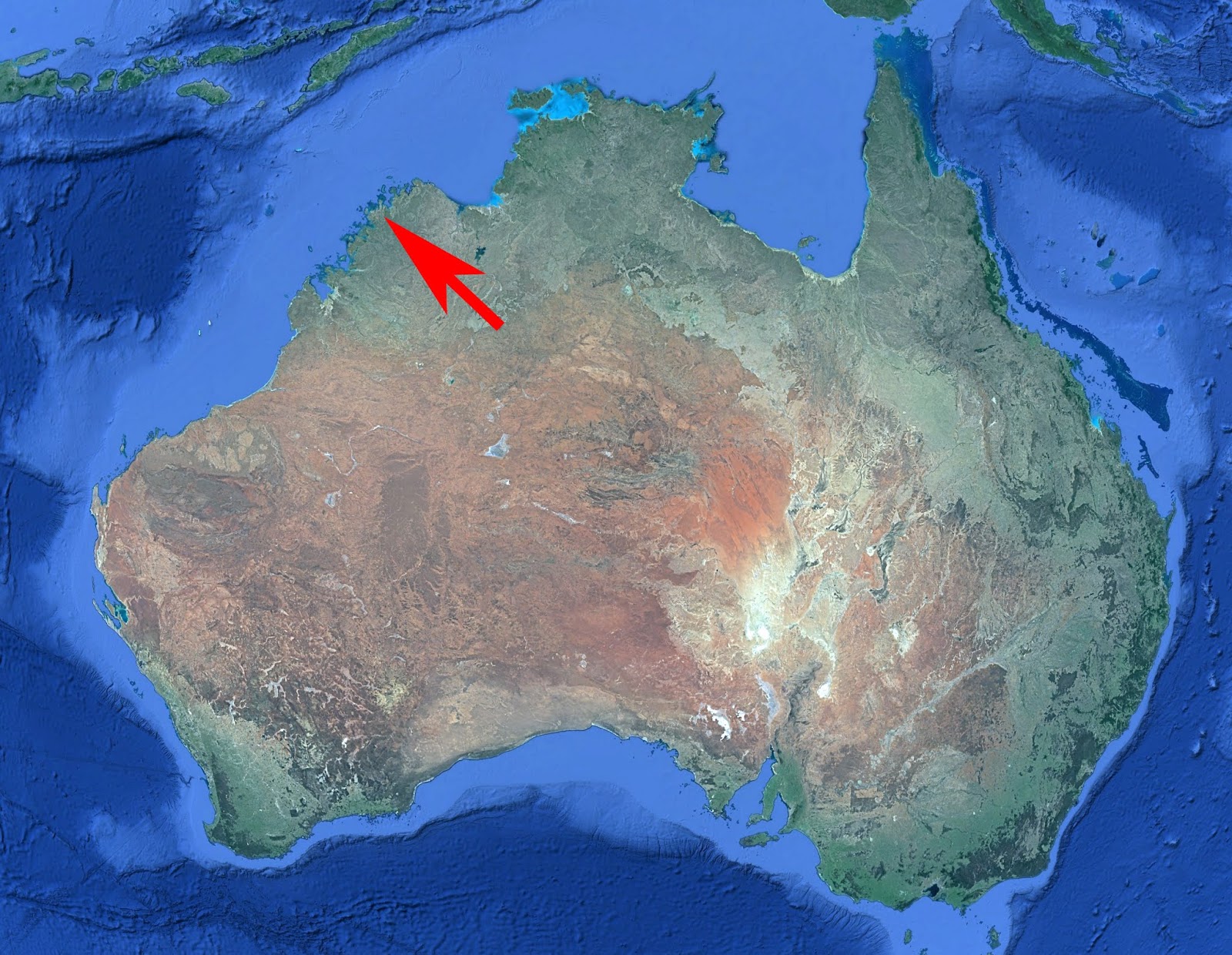
On the Mitchell Plateau in the Kimberley of Western Australia, Mertens is commemorated geographically as well as zoologically. This is because he travelled, collected and explored  extensively in tropical regions including northern Australia and the Indonesian islands. In May, as we walked to Mitchell Falls we passed Little Mertens Falls, waded across the top of Big Mertens Falls and some us saw (I just got the end of the tail) Mertens’s Water Monitor (Varanus mertensi). The newly-described monitor was named in Mertens’s honour by Ludwig Glauert in 1951 (more on Glauert of the Western Australian Museum, Sheffield born and a Sheffield graduate in another post). The naming was highly appropriate—Mertens was the world expert on varanid lizards.

Arrow shows the location of Mertens Falls

Little Mertens Falls
From the cave behind Little Mertens Falls
Big Mertens Falls

Embed from Getty Images
Merten's Water Monitor above Little Mertens Falls


Beyond finding that the two sets of water falls on the Mitchell Plateau were named for him, I have been able to find nothing on when this was done nor by whom it was done. Those who walk or are flown by helicopter over his falls to the Mitchell Falls have no idea who Mertens was or of his role as one of the leading herpetologists of the 20th Century.

There is very little information on Robert Mertens in English and I do not know when he travelled in the northern part of Western Australia. From a list of some of his publications, I would assume the 1920s or 30s. What is known is his sad end. He had kept for a long time a rear-fanged vine or twig snake. When I read about this at the time it was Kirtland’s Vine Snake (Thelotornis kirtlandii) and that identification still appears in some publications including Manson's Tropical Diseases. More recently it is shown as T. capensis from further south in Africa. Whatever the species, it bit him on 5 August 1975. Mertens was 90. No antivenin had been made for this species and eighteen painful days later he died. Throughout that period he kept a diary and ended it with the famous line, ‘a singularly appropriate end for a herpetologist’.

†Karl Patterson Schmidt (1890-1957) of the Field Museum in Chicago, and with similar wide interests to Mertens, died as a result from the bite of another African rear-fanged snake, the Boomslang, Dispholidus typus, in 1957. A single fang of a small specimen caught him and after declining any treatment recorded its effects on him. He died the next day.

*The book first appeared as La Vie des Amphibiens et Reptiles in 1959 with the English, Italian and Spanish editions following. There seems to have been no publication in German. One of the reasons why it was so good is that it was translated into English by Hampton Wildman Parker (1897-1968), retired Keeper of Zoology at the Natural History Museum in London and before that, head of herpetology.

Anon. Mertens, Robert (1894-1975). 2014. In, Contributions to the History of Herpetology, Volume 1, revised and expanded. Edited by Kraig Adler, pp 98-99. (Contributions to Herpetology 30, Society for the Study of Amphibians and Reptiles).

Glauert L 1951. A New Varanus from East Kimberley, Varanus mertensi sp.n. Western Australian Naturalist 3 (1, July 20, 1951), 14-16.

Mertens R. 1960. The World of Amphibians and Reptiles. London: Harrap.

Schmidt KP, Inger RF. 1957. Living Reptiles of the World. London: Hamish Hamilton.

Saturday, 3 March 2018

J.D. Romer, Hong Kong herpetologist, in 1940s London and then Hong Kong

Recently I found a few popular articles by John Romer (1920-82). Two were written in the months before he left U.K. for Hong Kong in August 1947.


The first was an article on monitors for the Aquarist magazine of June 1947 while the second was a letter on the longevity of the Natterjack Toad, also in the Aquarist, written in reply to an article by Eric Hardy. Romer reported that he had kept an adult for ten years and that it ‘died an unnatural’ death.

Then, from Hong Kong, he wrote an article on geckos for the Aquarist. That included his observations on what happens to the common house gecko of Hong Kong in winter together with notes on the importation of the Tokay into Hong Kong during the winter for human consumption.


Although, I lack a few copies of the Aquarist of the late 1940s and early 1950s, the final article, as far as I have information, appeared in 1951. This was an account of his visit to the snake temple in Penang in September 1950 while the ship taking him on long leave to U.K. was briefly in the port. 


You can read these articles on the Downloads page of my other blog site here.

I met John Romer a few times. The first time, early 1966 I think, we went to see him in his office in the Central Government Office, West Wing, through the entrance on Queen’s Road Central. The office, with its dark furniture, was immaculate with not a loose sheet of paper to be seen. On one side desk was a lighted tall cabinet. It was vivarium and in it was a superb White-lipped Pit Viper.

We had been warned by colleagues in the zoology department that John could seem diffident and unsure of himself with people from the university. I suspect that in his past he may have suffered from the condescending attitude then all too common of those who had university degrees to those who did not. I also saw him at the Hong Kong Natural History Society when I gave a talk in 1967. I think the last time I saw him was in the corridor of the old Zoology Department of HKU as he was heading out of the building.

John Romer died shortly after his retirement, before he could write a comprehensive book. His papers are in ZSL's Library. But what happened to all the preserved specimens he collected over the years, some of which are referred to in his published work?

Romer JD. 1947. Notes on the monitors. Aquarist 12 (3, June 1947), 70-71.
Romer JD. 1947. Longevity of Natterjack toads. Aquarist 12 (5, August 1947), 137.
Romer JD. 1948. Notes on the geckos. Aquarist 13 (3, June 1948), 86-87.

Romer JD. 1951. A temple of snakes. Aquarist 16 (7, October 1951), 150.


Saturday, 12 September 2015

George Boyce (1920-95) of South Western Aquarists. Herpetologist

Some people have an influence far wider than their formal qualifications or occupation would suggest. In the world of herpetology in Britain of the 1950s and 60s, George Boyce, a pet-shop owner had a great influence on young people with an interest in reptiles and amphibians. Yes, he would sell you the animals but he was also a great enthusiast and advocate not only for reptiles but also for instilling a life’s interest in something worthwhile. This is a slightly modified version of this post on my other blog that deals with the history of the advances in keeping reptiles and amphibians.

In mid-1950s Britain dealers in reptiles and amphibians were rare for the simple reason that the market was small. Some larger dealers had gone out of business. Palmers of Camden Town was the really big one but did not specialise in reptiles. There were wholesale dealers selling to small pet shops but the main ones catering for enthusiasts and zoos were Robert Jackson in Cheshire and George Boyce in London. For a few years they were the only regular source.

George Boyce owned South Western Aquarists, a tiny shop at 2 Glenburnie Road, Tooting. It was a place where people, amateurs and professionals went to talk about and occasionally buy reptiles and amphibians. It was somewhat unusual because the reptiles and amphibians were not usually kept on the premises. From his lists which could be had by post, you could either get them delivered by rail to all parts of the country or you could write or phone to ask to look at something on the list; he would then bring the animals with him from home on the appointed day. Impulse buying was impossible. In the times I visited the shop over the years (1959 until 1982) I only ever saw a few lizards in one tank once. There were a few tanks of tropical fish and the then usual supplies of pet food. Conversations were frequently interrupted by the arrival of a little old lady to buy a pound of budgerigar seed or some dog or cat food. This local trade received the benefit of a level of attentive service verging on the obsequious before the owner returned to the subject of the conversation.

There is virtually no information on George Boyce or South Western Aquarists on the internet. However, I was delighted that he does make an appearance in the autobiography of Ken Livingstone, You Can’t Say That published in 2011 (London: Faber and Faber). For those readers not in UK I should explain that Ken Livingstone is a politician of the left and was Mayor of London from 2000 until 2008. He was a Member of Parliament from 1987 until 2001. He is also well-known as a keeper of reptiles and amphibians with the press usually referring disparagingly to ‘his newts’.

In describing his early life, he wrote:

Saturday afternoons were often spent at a pet shop on Tooting, chatting to the owner George Boyce about his imported reptiles, his Rotary Club activities and his Tory beliefs…

He goes on:

…Sadly, any chance of romance was dramatically reduced by my herpetological hobby. In all the Saturday afternoons I spent chatting to other reptile enthusiasts in George Boyce’s pet shop, only one young woman ever came in and she was dating another collector.

Ken Livingstone also reproduced a letter he had from George Boyce while backpacking to and from West Africa in 1966 which ends:

All the ‘lads’ and ‘lasses’ at the shop have asked me to convey to you their best wishes for your continued success in the termination of your journey. To these felicitations, Ken, I would add those of my own and of course Doris. Yours as ever, George.

I never went to Tooting on a Saturday on my rare visits to London. There was only ever George, me and his local customers. I remember him describing: visiting Jack Lester, Curator of Reptiles at London Zoo until he died in 1956, and Margaret Southwick, his assistant, on evenings when consignments of reptiles had arrived at the Zoo and were being unpacked; fishing at Frensham Ponds after the Second World War and catching large European Terrapins that had obviously been released there; the difficulties of dealing with exporters who would send what they had rather what was ordered; exporting imported animals to zoos in the U.S.A.

A frequent visitor to the shop and one who had just left when I got there was Dr Ian Wesley Whimster (1924-1979), Reader in Pathology at St Thomas’s Hospital Medical School. Part of his research was on the pigment cells in the skin of lizards; to that end he established a captive colony of Leopard Geckos.

He was a regular at meetings of the British Herpetological Society and wrote an article for the Journal on keeping crocodilians. He was there at the first meeting I attended (Summer 1961, I think) in the rooms of the Linnean Society in Burlington House. At that meeting everybody sat around a large mahogany table as live reptiles were passed around. I remember an impressive Leopard Tortoise and some superb Australian skinks owned by a woman sitting next to me. I asked how she had got so many and in such good condition. She explained that her husband was a pilot with B.O.A.C., the long-haul British airline that was merged with B.E.A. into British Airways, and he simply picked them off the taxiways and surrounding scrub at Sydney airport as he walked to his plane.

We also know from an article in Fishkeeping & Water Life that in 1958 he appeared on BBC Children’s Television describing Fish and How to Keep Them. In the BBC Genome project documenting BBC programmes the programme is there (20 January 1958) but he does not get a credit.

I have had some difficulty in finding more about George Boyce. However, thanks to his being in 1966 the executor of his father’s will (where he was described as aquarist and herpetologist) which was traced through a family history search website, I now have more information. George Frederick Boyce was born on 7 October 1920 in the Dorking Registration District of Surrey; in 1947 he married Doris L. Harrison in Croydon, Surrey. He died in 1995 in the Wandsworth Registration District of London.

I do not know when his shop closed; my guess is the mid- to late-1980s (my last visit to the shop was in November 1982). From advertisements in Water Life, it is clear that South Western Aquarists was operating in the late 1940s. Advertisements from 1950 mention a D.C. Crisp who must have been a partner, and Water Life (July-August 1950) in describing an aquarium show in London notes, D.C. Crisp of South London [sic] Aquarists made an intriguing picture, entering the hall with an alligator on a lead. Later in the 1950s, only the name of G.F. Boyce appeared on price-lists etc. and I have found no further clues on the role or identity of D.C. Crisp.

Here is an advertisement that appeared in Fishkeeping & Water Life in 1958:


Finally, a photograph of my Mississippi Alligator, photographed on the lawn of my grandmother’s second cousin’s house in Hendon, the afternoon I collected him from Tooting and eventually the subject of a note in British Journal of Herpetology*.


As always, any further information on George Boyce is welcome. Please contact me if you have any.


*Peaker, M (1969) Active acquisition of stomach stones in a specimen of Alligator mississippiensis Daudin. British Journal of Herpetology 4, 103‑104


Sunday, 26 July 2015

Dr Burgess Barnett and his departure as Curator of Reptiles at London Zoo

This post is the latest in the series on Burgess Barnett (29 January 2014, 30 June 2015).

In London for a day I found time to spend a couple of hours in the Zoo library to see if I could find more information on the departure of Burgess Barnett as Curator of Reptiles in 1937. The minutes of the council of the society provided the information but did not, of course, shed much light on the background to the decisions or reveal in any detail the battles that must have been going on between individuals and factions. Minutes are often an unreliable source because they were and still are so frequently massaged to veil the true picture or the reason for a difficult decision. Even when a minute is challenged by those who were present at a meeting, the tone is always biased towards those in control. It is as well to remember a key commandment of the civil servant: he who controls the agenda and the minutes has his hands on the levers of power*.

Barnett, like so many people before and since, must have been extremely upset about his treatment and his case must have contributed to the notoriety the Society gained over many decades as an unhappy place for officers and officials.

In terms of Council meetings, the Burgess Barnett affair lasted from December 1936 until March 1938. On 16 December 1936 Council endorsed a recommendation of the Garden Committee (i.e. the one responsible for the Zoological Garden or London Zoo) that: there should be two curators only; E.G. Boulenger, should be both Director of the Aquarium (his current post) and Curator of Reptiles (i.e. taking over Barnett’s job in addition to his own; before being Director of the Aquarium he had though been Curator of Reptiles); Burgess Barnett should be an Honorary Research Fellow, subject to annual reappointment.

It would probably be worthwhile reading the minutes of the Garden Committee to see if more can be gleaned about the background. However, knowing that Julian Huxley had been appointed Secretary in 1935, one can see a pattern emerging that led to Huxley’s dismissal in 1942. The question I would ask at this stage, when I suspect the answer is ‘yes’, is: was Huxley changing the management of the zoo in order to free resources for his own ‘popularisation’ as well as more ‘scientific’ foci (the two are not mutually exclusive) for the future of the society? At this time, as Joe Cain points out in his analysis of Huxley’s activities at the Zoo, he appointed two assistant curators (one of whom was James Fisher) but that these two  were not used as curatorial assistants in the Zoo itself but were employed by Huxley to further his various projects to make the Zoo a centre for ‘modern’ biology.

I should point out that the Secretary was the paid chief executive of the Society, akin to the secretary of a golf club or a permanent secretary in the civil service. It is also interesting to note that Huxley was a candidate for election to the Royal Society during 1937 and that he was elected in 1938, a distinction he was apparently more than eager to secure. Council meetings with the non-scientific menagerists like Albert Pam on one side and the comparative anatomist FRSs of the old but still politically powerful school of zoology (including two Lamarckists) on the other, with the ‘modern biology’ grandson of Darwin’s Bulldog as Secretary must have been amusing for a fly on the wall.

Barnett though had an academic champion on Council willing to fight his corner. On 21 April 1937, Professor E.W. MacBride FRS argued that Barnett should be employed in some capacity as adviser on the health of reptiles and amphibians.

There had clearly been moves behind the scenes, as well as a hostile Annual General Meeting of Fellows, because on 19 May 1937, it was agreed that there should be no part-time Curator of Reptiles (clearly a role MacBride had intended for Barnett) and Council confirmed that Boulenger would hold the two posts (but without an increase in pay).

Professor James P. Hill FRS then asked what Barnett should be paid for his duties as anatomist (he was obviously doing some prosectorial/pathological work** on the dead animals from the zoo which were never at this time in short supply) and where did all this fit in with his work on snake venoms (see my post of 29 January 2014)? In response, a sub-committee of Council was set up. It comprised: Professor James P. Hill FRS (Chair), Professor W. Le Gros Clark FRS, Richard H. Burne FRS, Martin A.C. Hinton FRS, Professor E.W. MacBride FRS.

The Sub-Committee

James Peter Hill (1873-1954, elected FRS 1913) was Jodrell Professor of Zoology, University College, London 1906-1921 and then Professor of Embryology and Histology in the Department of Anatomy until 1938. He was well-known for his discoveries in the reproductive biology and embryology of monotremes and marsupials while working in Australia and later for his work on placentation and primate embryology.

Wilfrid Edward Le Gros Clark (1895-1971, elected FRS 1935) was then Professor of Anatomy at Oxford, remaining so until his retirement in 1962. After service in the Royal Army Medical Corps in the First World War, he was, for three years, Principal Medical Officer for Sarawak where he collected tarsiers and tree-shrews for study. He went to Oxford after being appointed first to the anatomy department at St Bartholomew’s Hospital medical school and then to St Thomas’s. Comparative anatomy of primates, tracing neural connections within the brain that would today fall within the ambit of neuroscience, and the phylogeny of primates, particularly, in later years of the ancestry of Man, were his main areas of interest. Zuckerman wrote a Biographical Memoir for the Royal Society which contained a devastating criticism of his views on orthogenesis and on the hominid line of evolution. He was one of the authors of the paper that exposed the Piltdown hoax.

Richard Higgins Burne (1868-1953, elected FRS 1927) was Physiological Curator at the Royal College of Surgeons  from 1912 until 1934; thereafter he worked as a volunteer at the Natural History Museum on cetaceans. He was a wide-ranging comparative anatomist working on, for example, the lamellibranchs collected during Scott’s Terra Nova expedition to the antarctic, fishes and mammals, including animals that died at the Zoo such as rhinoceroses and okapis.

Martin Alister Campbell Hinton (1883-1961, elected FRS 1934) had no formal qualifications or university degree. Starting out as a clerk in barristers’ chambers, he made use of legal hours (short) and vacations (very long—3½ months a year) to pursue his interests in palaeontology. in 1910 he was given the status of Voluntary Worker at the Natural History Museum. He was taken on to the staff of the Museum in 1921, raising to become Keeper of Zoology in 1936; he retired in 1945. A late Lamarckist, he worked on the taxonomy (he was a ‘lumper’) and evolution of rodents and whales; he was also involved in work on rodents as pests. Intriguingly, he has been implicated by some in the Piltdown hoax, most often as a secondary hoaxer.

Ernest William MacBride (1866-1940, elected FRS 1905) was Professor of Zoology at McGill University, Montreal, Canada from 1897 until 1909. In 1914 he was appointed to T.H. Huxley’s old chair of zoology at Imperial College, London; he retired in 1934. Noted for his work on showing how the bilateral symmetry of larval echinoderms turns into the radial symmetry of adults, he was another of the last Lamarckists and a supporter of Paul Kammerer. One might say he was not exactly from the same stable as Julian Huxley.

The Sub-Committee Reports

The next meeting of Council (16 June 1937) received the report that Barnett had been bitten by a venomous snake (see my post of 29 January 2014). He was described as Curator of Reptiles. However, there is a hand correction with a note to the effect that at the time he was bitten he was not Curator of Reptiles. Council also received the report of the sub-committee which recommended that Barnett should be retained for one month on research duties. The question was raised whether he would need a Home Officer licence under the 1876 Act for experiments on animals. It was decided that Barnett should be employed until 30 September 1937 (i.e. for just over three months) at a salary of £600 per annum (Boulenger was on the same pay) to continue his work on snake venom as a potential treatment for epilepsy and that the work should be directed by a sub-committee of the Prosectorial Committee comprising Hill, Burne, Le Gros Clark, E.A Carmichael and the Secretary (Huxley).

E.A. Carmichael
On this sub-committee Hinton and MacBride were no longer involved but E.A Carmichael was. Edward Arnold Carmichael (1896-1978) was Director of the Medical Research Council’s Neurological Research Unit from 1932 until he retired in 1961. He has become famous in recent years on websites for his 1933 paper with H.W. Woollard on referred pain. It was then normal practice for physiologists and physiology students to be the subject of their own experiments whenever possible. Woollard and Carmichael certainly lived up to that ethic and suffered severe pain in the process. They piled weights onto one or the other testis in order to record the degree and location of the pain. One example will suffice here: 650 grm…Severe testicular pain on the right side.

In the minutes there is a curious reference to Barnett’s ‘practice’ as in medical practice. Barnett, Huxley said, regarded his practice as a natural extension of his research. I do not know if he had any sort of conventional medical practice while employed at the Zoo or what premises he was using for these clinical trials of snake venom on epilepsy, other than those he published in collaboration with Macfarlane on blood clotting.

Claims that snake venom could be used to cure epilepsy were not new and Barnett was helping to examine the basis of some of these earlier claims. I wonder if members of the sub-committee were keen to close Barnett’s work down in the light of a report by Isidore Finkelman that appeared in the March 1937 issue of Journal of Laboratory and Clinical Medicine (22, 572-575) entitled, Snake venom (moccasin) in the treatment of epilepsy. The findings were stark: It is concluded that venom therapy not only does not induce a refractory state to convulsive seizures in institutional epileptics but may render them more susceptible to seizures.

On 15 September, Council decided in discussing Barnett’s position that ‘no paid official of the Society should hold a licence for experiments on living animals’ thereby effectively disbarring him from any employment by the Society if he continued in his research. One cannot help wondering if this hardening was a deliberate attempt to get rid of Barnett once and for all rather than as further appeasement of the periodically vociferous anti-vivisection lobby. Joe Cain discussed the attitude of the Society in this regard in his paper on Huxley. Although Sir Peter Chalmers Mitchell FRS, the Secretary before Huxley, had banned animal experiments on the premises and from the Society’s scientific publications, ZSL employees simply undertook the necessary research elsewhere. This hardening of apparent appeasement by Huxley (who gave up his Home Office licence on appointment to the Zoo) I find difficult to interpret other than as a measure to ensure that Barnett was sent on his way.

At this meeting Council went further:

After the discussion of the proposals of Major [Albert] Pam and Mr Burne, it was agreed that Dr Barnett should receive a special payment of £600 and that he should then cease to have any official connection with the Society.

Done and dusted? Not quite

At the meeting on 20 October, the decision reached on 15 September was confirmed. However, MacBride had it minuted that in his view Dr Burgess Barnett should be re-instated as Curator of Reptiles. On 17 December 1937 MacBride attempted to re-open the case but was told by the President (Lord Onslow) that Standing Orders decreed MacBride must get support for the issue to be included as a main item on the agenda of a subsequent meeting.

MacBride did get the item on the Agenda for the meeting on 15 December and he proposed a motion to reinstate Barnett as Curator of Reptiles. The scientists on Council were split and MacBride was opposed by Le Gros Clark, amongst others, and including the Secretary (Huxley). However, management of the agenda by the official, presumably Huxley, who drew it up is clear. MacBride’s motion was low on the list; Council was running late for their lunch or tea; further discussion and a vote was put off until the next meeting. MacBride had been outmanoeuvred but did manage to insist that for the meeting in March, the item should appear early in the agenda. Relatively highly it appeared in the agenda for the meeting of 16 March 1938. However, MacBride withdrew his motion because in the meantime Barnett had been appointed Superintendent of Rangoon Zoo. Barnett was finished at the Zoo.

Barnett was only in post as Curator of Reptiles for just over four years. The new high-profile, Joan Procter-designed Reptile House by the end of 1936 had no dedicated curator. In fact had the Garden Committee recommendation been enacted in full, the zoo per se would have had just three senior staff: Geoffrey Marr Vevers as Superintendent; David Seth-Smith as Resident Curator of Mammals and Birds; Edward G Boulenger as Director of the Aquarium and Curator of Reptiles. The decision to dismiss L.C. Bushby was reversed so that the post of Curator of Insects was retained. Many questions remain, the role of Dr Geoffrey Marr Vevers, Superintendent, in the deliberations on the management structure of the Zoo, for example.

After his departure, as I showed in my post of 30 June 1025, Burgess Barnett remained on good terms with the Zoo, providing an article on his exploits in South America for the then house publication, Animal and Zoo Magazine (one of Huxley’s initiatives in popularisation), and sending specimens from Burma in 1939. Seth-Smith referred to him warmly as ‘our old friend’ in reporting the arrival of the tortoises in the October 1939 issue of the magazine.


*P. Kellner & Crowther-Hunt, N. Civil Servants. 1980. London: Macdonald.

†Cain, J. 2010. Julian Huxley, General Biology and the London Zoo, 1935-42. Notes and Records of the Royal Society doi:10.1098/rsnr.2010.0067

‡£600 was a year’s salary for a Curator. In present terms it is worth between £57,000 and £116,000; for former if calculated by the change in retail prices; the latter if calculated by the increase in pay. Advertisements in The Times for university positions offer some basis of comparison. In 1937, an Assistant Lectureship in Zoology at University College London paid £250-300; A lecturer at Aberdeen University warranted £400; a Readership in Bacteriology at the Postgraduate Medical School paid £800. I seem to remember being told that Curators at the Zoo were for a long period paid at about the same rate as a Senior Lecturer in a university and the £600 Boulenger and Barnett were paid is at that level.

**Note added 23 March 2018. A Research Fellowhsip for prosectorial work was held by Barnett from 1933 until 1937 (Cave AJR. 1976. The Zoological Society of London 1826-1976 and Beyond. Ed. Zuckerman S. Symposia of the Zoological Society of London 40, 49-66). It is not clear if these additional duties to his Curator of Reptiles post were paid.