Showing posts with label Republic of Congo. Show all posts

Friday, 25 September 2020

De Brazza’s Monkey: an encounter in the Republic of Congo


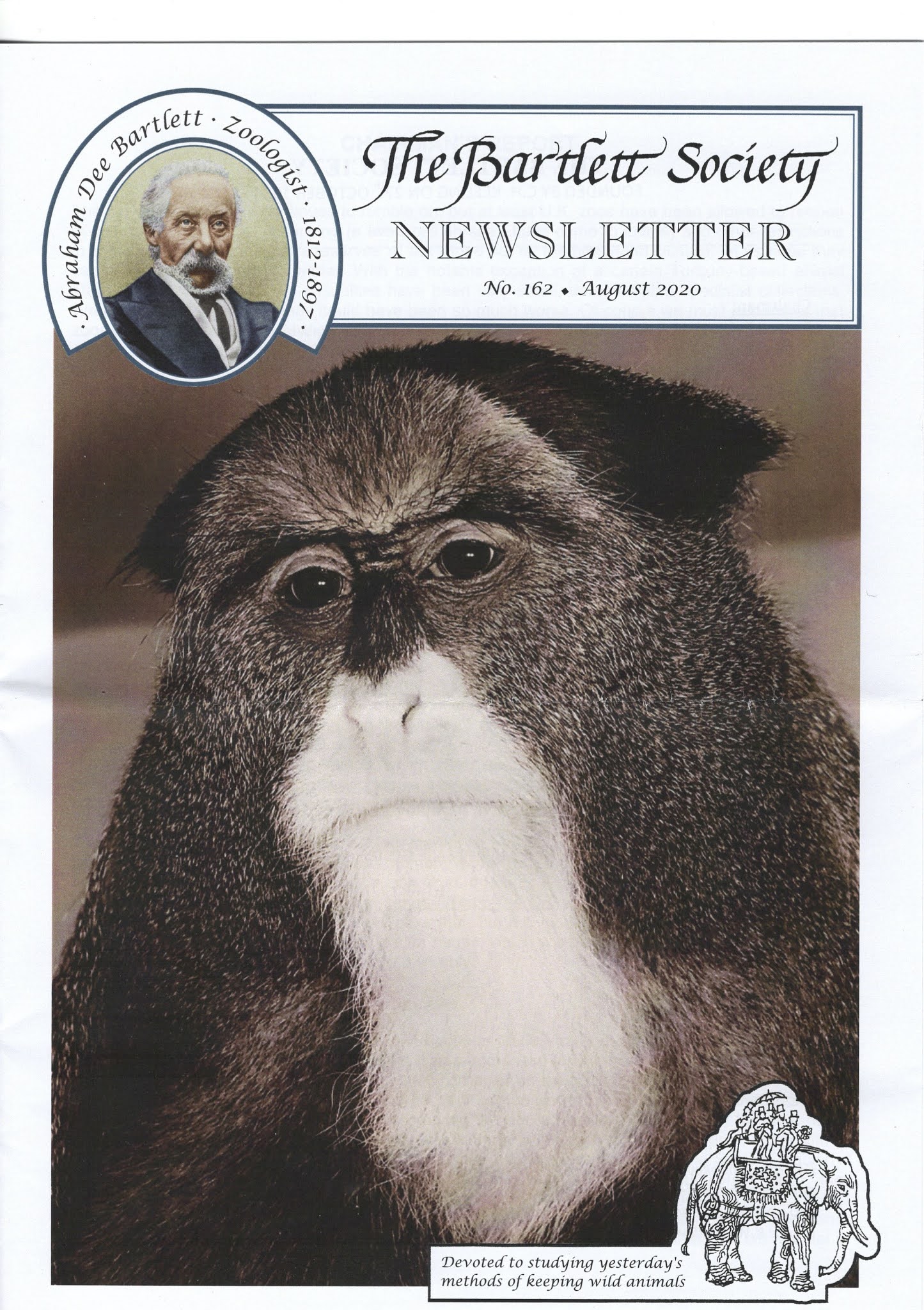
The cover of the latest edition of the Bartlett Society’s Newsletter shows a De Brazza’s Monkey, Cercopithecus neglectus, now common in zoos but in the past considered one of the more unusual monkeys to be seen in captivity; according to the Society’s checklist the first breeding in Britain was at Paignton Zoo in 1957. A question the leapt into my head: who was it that said a better name for the animal would be the Sir Thomas Beecham Monkey given the remarkable facial resemblance—complete with goatee beard—to the famous conductor? I then remembered. It was the late Clin Keeling, founder of the Bartlett Society, at one of my first visits to Pan’s Garden, the Keelings’ ill-fated collection at Ashover in Derbyshire in 1960. How the esoteric topic of De Brazzas’s Monkey came up I cannot remember but since the name Molly Badham came up whenever monkeys were being discussed I wonder if she, in the days before Twycross Zoo, had acquired some.

I was delighted to see De Brazza’s Monkey in the wild in 2014 in the Republic of Congo. Indeed there is no more appropriate place in which to do so since the capital to which we had flown from Paris is Brazzaville. The monkey is named after one Italian-born Frenchman, Jacques Camille Savorgnan de Brazza (1859–1888); the capital after his elder brother, Pierre Paul François Camille Savorgnan de Brazza (1852-1905). Jacques was responsible for the collection of natural history specimens in West Africa which were sent to France. As a result, in 1886 Henri Milne-Edwards, the half-English French zoologist, named the species Cercopithecus brazzae. Later it was realised that the species had been described ten years earlier by Hermann Schlegel and it is his name, C. neglectus, that was adopted because it had priority. Some then some began using the common name Schlegel’s Guenon or Monkey as the common name but it is as De Brazza’s that the monkey is now known. It is then a case of mismatch between the origins of the scientific name and the common name. It is a pity that the word guenon has fallen out of use for cercopithecine monkeys. Guenon, as in De Brazza’s Guenon gives an indication of geographical origin in the common name; monkey does not.


Distribution Map from the IUCN website


In the Congo


We were drifting with the current down the Lekoli River when we saw the De Brazza’s Monkeys high in the trees. We were staying at the nearby Lango Camp in the Odzala-Kokoua National Park. The monkeys were behaving as described in the book: a small group in dense vegetation; close to a river; not associating with other monkeys. While I had a good view through the binoculars of 2-3 individuals, I had insufficient time to take any video. They soon scampered behind the vegetation at the end of a thick branch.


De Brazza’s were not the only primates we saw in the Republic of Congo. As well as the the Western Lowland Gorillas I have described in earlier posts, there were: Grey-cheeked Mangabey (Lophocebus albigena); Moustached Monkey (Cercopithecus cebus); Putty-nosed Monkey (Cercopithecus nictitans); Guereza (Colobus guereza); Southern Needle-clawed Galago (Euoticus elegantulus).


None of the monkeys we saw, except the Guereza Colobus around the camp, hung around to be admired or came close to us, although I did get good footage of the Putty-nosed. Whether their apparent timidity was related to the fact that they are on the local menu as bushmeat I do not know.


Here are a couple of photographs of the Lekoli River. They are stills taken from video footage, hence the poor quality. 


Wednesday, 27 February 2019

Western Lowland Gorillas—New research on their social structure and possible implications for the transmission of ebola virus

It is good to see old friends in print. This time it is the Western Lowland Gorillas we were privileged to visit and watch at Ngaga in the Odzala-Kokoua National Park of the Republic of Congo (Congo, Brazzaville) nearly five years ago (see my post of 18 August 2014).

We visited two groups just a few miles apart and it is the interactions that occur between the three group in the immediate vicinity of Ngaga that is the subject of a paper just published in Proceedings of the Royal Society.

I cannot overemphasise the enormous amount of work that went into this study done between 2013 and 2017. Behaviour of the groups was monitored on approximately 305 days each year. The trackers (who move at speed through the forest) located the groups each morning. Every individual gorilla can be recognised by the trackers and researchers. Notes were made of their behaviour for an average of two hours per day, itself a difficult undertaking because of the dense vegetation. And the authors do not even mentikon the sweat bees.

The behavioural work was done by Magdalena Bermejo (who heads the whole project in the Republic of Congo) and Germán Illera, with help from the same trackers who took us from the lodge to the groups of gorillas.

In addition to the behavioural observations, gorillas over a wide area were genotyped from samples of their faeces collected from the nests they build and occupy at night.

Previous observations on Western Lowland Gorillas (Gorilla gorilla gorilla) at bais (open grassy clearings often surrounding a body of water) suggested a very different behaviour from the Mountain Gorilla (G. beringei beringei). Groups of the former met without aggression—in marked contrast to encounters between group of the latter. In Ngaga, an area without bais, these observations were not only confirmed those but indicated a dynamic community structure. In the words of the authors:

Both approaches revealed a social system much more dynamic than anticipated, with non-aggressive intergroup encounters that involved social play by immature individuals, exchanges of members between groups likely modulated by kinship, and absence of infanticide evidenced by infants not fathered by the silverback of the group where they were found. This resulted in a community composed of groups that interacted frequently and not-aggressively, contrasting with the more fragmented and aggressive mountain gorilla (G. beringei beringei) societies. Such extended sociality can promote the sharing of behavioural and cultural traits, but…

The but refers to the disease that has devastated local gorilla and human populations, including the area studied—ebola. The authors make the point that interaction between groups could promote the rapid transmission of the virus:

Social behaviour may thus have greatly contributed to the massive impact of past Ebola outbreaks that have resulted in an increase of the threat level for the species, raising major conservation concerns about population declines in the future. Understanding group dynamics in social species is of utmost importance when coming to model the transmission of pathogens such as Ebolavirus. However, since the high mortality imposed by outbreaks is likely to select against this social behaviour, its persistence in W[estern] L[owland G[orilla] implies that either such massive die-offs may have been rare in the past, or that the associated benefits outweigh the disadvantages. In any case, the peculiar social behaviour of western lowland gorillas is an outcome of its evolutionary history and will definitively impact its fate.

I do wonder though whether the dynamic social structure and outbreeding may actually ensure a higher degree of immunocompetence of individuals. In other words, and turning the argument round, whether the social structure is actually protective to individuals exposed to potentially lethal infections.

Here is a link to the video included in the paper.

And here  again are my videos of the gorillas at Ngaga:


Forcina G, Vallet D, Le Gouar PJ, Bernardo-Madrid R, Illera G, Molina-Vacas G, Dréano S, Revilla E, Rodríguez-Teijeiro JD, Ménard N, Bermejo M, Vilà C. 2019. From groups to communities in western lowland gorillas. Proceedings of the Royal Society B 286: 20182019. http://dx.doi.org/10.1098/rspb.2018.2019 

Thursday, 18 September 2014

Sitatunga in the Congo Basin

I like antelope. While the tourist safari buses search out lions I look at the antelope, from the ones you can’t miss on the plains to the small ones in the bush. Having been in several places in Africa where we could have seen Sitatunga, swamp dwellers, but didn’t, it was a delight to see one trotting along the far side of the bai as we arrived on the deck of the ‘camp’ (for camp read luxury lodge) at Lango in the Republic of Congo.


The next day we were lucky to see these two males from a boat as we drifted downstream with the engine off. They clearly had their minds on seeing each other off as we came upon them by the side of the river:


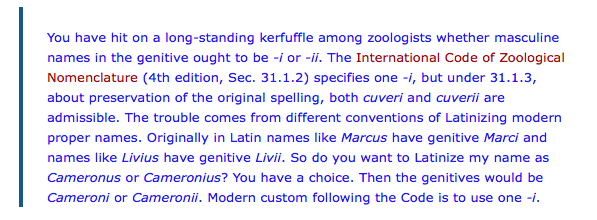
The Sitatunga (Tragelaphus spekii) was described in 1863 by John Hanning Speke (1827-1864), explorer of the Nile, but named by Philip Lutley Sclater. Some authors refer to it as T. spekei, I think in what was an attempt to use the modern use of one -i rather than two, -ii. I found this explanation of using one or two:

I know that the sitatunga is not in the least endangered. I know the economic arguments for permitting hunting by wealthy individuals. But I really find it utterly revolting to find videos on the internet of grown American men and women hunting and killing Sitatunga with crossbows for ‘sport’. What sort of mentality drives such people to make a sitatunga snuff movie?

Friday, 12 September 2014

Ebola: Gorillas and other wild animals

Female gorilla in the Jupiter Group
Ngaga Camp,
Republic of Congo, May 2014
Her toddler was clambering in the trees
above her
The conversation at the funeral of a former colleague with another former colleague, a microbiologist with wide interests who I had not seen for some years, turned to the outbreak of ebola virus (EBOV) in West Africa and how it may spread between wild, domesticated and human mammals, and the characteristics needed for one or more reservoir species, in other words, those that carry but do not suffer to the point of rapid mortality the infectious agent.

In May we were at the site of the 2003 outbreak in the Republic of Congo and heard of the devastating effect ebola had on the Western Lowland Gorilla population. Since returning I have had the chance of catching up with the literature on that outbreak and how it was established that ebola has such a devastating effect on the survival of gorillas, with a mortality rate of 90-95% and the estimated loss of 5000 gorillas from a relatively small area.

Magda Bermejo who lives at the camp in the Republic of Congo we visited (see post of 18 August 2014) after the effective loss of her study groups at Lossi to the ebola outbreak, established the death of gorillas and chimpanzees during human outbreaks, found ebola virus in a number of the carcasses and showed an apparent passage from group to group of gorillas rather than independent transmission form a putative reservoir species. But then, and apart from the enormous potential effect on survival of the great apes in Africa, all sorts of question arise as to who or what becomes infected first and how does the infection (not that easily transmitted according to the evidence with contact through body fluids being needed) pass between groups.

Bushmeat has been implicated as the initial source of human infection while bats, particularly, but also duikers, pigs and domestic dogs are suspected as possible reservoir species. Recently, I see those sequencing the virus collected during the current outbreak have found rapid changes and are reaching different conclusions on the origins of EBOV. The article by Gretchen Vogel in Science (29 August 2014) reads:

Some researchers theorized, based on early sequencing data, that EBOV had circulated for decades, undetected, in animals in the region. But the new analysis, strengthened by the unprecedented number of genomes, supports another theory: that the virus spread, via animal hosts, from Central Africa within the last decade. Researchers aren’t sure which animal to blame, but fruit bats are their leading suspects (Science, 11 April, p. 140). At least one fruit bat species known to carry ebolavirus has a population range that stretches from Central Africa across to Guinea.

That more research on ebola and much more money to fund that research are necessary are truisms. The dangers to those working in a human outbreak to collect samples in areas where facilities for the safe care of patients and basic hygiene are poor also cannot be overestimated. Five of those who collected samples for sequencing  in the current human outbreak have died. Until really hard evidence is obtained from extensive surveys in wild (and domestic) animals over meaningful periods of time and over a wide geographical area, speculation and soft epidemiological evidence may have to suffice in the meantime. But, in that meantime and beyond, alongside local outbreaks that devastate human populations, the great apes of Africa are at risk.

Tom, our former colleague, would I am sure have been delighted that his funeral was the occasion for several coffee-room type discussions on science and science politics; Scottish politicians were not rated highly in the latter.

-------------------
Useful starting points for further reading:

Bermejo M et al. Ebola outbreak killed 5000 gorillas. Science 314, 1564
Vogel G. 2014. Are Bats Spreading Ebola Across Sub-Saharan Africa? Science 344, 140
Vogel G. 2014. Genomes reveal start of ebola outbreak. Science 345, 989-990
Walsh PD et al. 2003. Catastrophic ape decline in western equatorial Africa. Nature 422, 611-614
Wittmann TJ et al. 2007. Isolates of Zaire ebolavirus from wild apes reveal genetic lineage and recombinants. Proceedings of the National Academy of Sciences of the USA 104, 17123-17127

Monday, 18 August 2014

A Visit to Gorillas in the Congo

One of my earliest memories is of the first non-domestic animal I saw—a gorilla, ’Alfred’ at Bristol Zoo in summer 1946. The snapshot in my brain has the zoo entrance to the left and Alfred’s cage in front of me. My great (grand in genealogical terminology) uncle and aunt and my grandparents are to my left and my parent are to my right. Alfred is dragging a piece of sacking from left to right.

Alfred was an animal celebrity and a source of great pride in Bristol where he lived from 1930 until he died in 1948.

Another gorilla but this time a dead one also made a strong impression on a little boy.‘George’ (I cannot remember his ever been called this in the 1950s) was in the natural history museum at Wollaton Hall. Mounted impressively, upright, hanging on a tree, with his teeth bared and reproductive organs in full view (small remember in the gorilla) he towered above the visitors and this small boy can remember being more than a little scared every time I was taken to see him (probably two or three times a year). George is still there but Wollaton Hall as a natural history museum is a shadow of its former self and confirms my belief that museum display professionals must learn to leave things alone. This gorilla, I read now, was bought by Nottingham Corporation from the 1878 Paris Exposition held to mark the recovery of France from the Franco-Prussian War.

The next time I saw Alfred he was stuffed and on display in the Bristol’s museum, still the cause of great civic pride as recounted by Hannah Paddon in Sam Alberti’s The Afterlives of Animals. That was in 1957. Bristol Zoo went on to have other gorillas in the 1950s and I took photographs of the new accommodation when I went to my last visit to Bristol Zoo in 1963.

Bristol Zoo Gorilla House, 1963

As I wrote in my post of 16 June, the privilege of being able to visit groups of Western Lowland Gorillas and observe the other mammals, birds, reptiles and amphibians in the Congo Basin is an experience of a lifetime. In the middle of May we were with a group of ten clients of Naturetrek in the camps in the Republic of Congo run by Wilderness Safaris, Ngaga and Lango, 340 miles from Brazzaville, both in or adjacent to the Odzala-Kokoua National Park.

At Ngaga we divided into parties of two or four and visited two groups of gorillas, each headed by a silverback, ‘Jupiter’ and ‘Neptune’. These gorillas were habituated by Dr Magda Bermejo and her colleagues. Because of the effects of outbreaks of ebola on the population, the IUCN classification of the Western Lowland Gorilla is 'critically endangered’.

Filming was difficult through the thick vegetation. The camera was often at arms length and liable to shake. However, the footage below also shows the dense Marantaceae foliage, a major source of food for the gorillas, the environment in which they live and the sweat bees they have to put up with. What the video does not show is a female gorilla moving behind us and coming closer to see what we were about. She had a good look from a few yards away and then moved on to join the rest of the group as they climbed into the tops of the trees.

I shall never forget the sight of Neptune climbing the tree with consummate ease—and even striking the pose of the long-dead George. But the large tooth display was the result of a languid yawn as he paused before climbing even higher.


There is no greater privilege in the world than seeing a group of lowland gorillas in the wild in the Congo—sixty-eight years after seeing that unfortunate but great ambassador for gorillas, Alfred.

Saturday, 12 July 2014

Forest Buffalo in the Republic of Congo. What Species Is That?

Forest Buffalo
Kurt Dundy at English Wikipedia
As a detached but interested outsider looking in on the world of taxonomy and systematics, I have been kept entertained by the arguments and battles between parties and concepts that have raged over the decades. When looking over Lango Bai in the Republic of Congo in May, all these arguments coalesced into one thought: what species are these, referring of course to the Forest Elephant and the Forest Buffalo? I considered the Forest Elephant in my earlier post (16 June with video showing these two species). More recently, I have been looking up what the current thoughts are on the status of Forest Buffalo, a very different looking animal from its savanna counterpart.

From our all too brief observations in the Congo, the name Forest Buffalo seems inappropriate. They were all in the patches of savanna that characterise this region or in the bai. Indeed, work in the Central African Republic on their local distribution found them to be ‘highly dependent on clearings, as well as on the more open forest stands, characterised by large trees and open canopy’.

I always start to twitch when I read that the Forest Buffalo is a subspecies of Syncerus caffer. I hate the use of subspecies as a concept and regard it as an example of the past muddleheadedness of people who cannot bear uncertainty. However, that is not to say that geographical variation is not important nor that conservation measures based on geographical populations are not worthwhile.

The standard treatment of African buffalo is to treat the Forest form as a subspecies of S. caffer, S.c. nanus. In early years, the mammalian morphologists had it split as a separate species whereas mammalian taxonomists of the last century tended to be lumpers. Across Africa, the view was taken that these populations were freely inbreeding and, therefore, the same species.

The late Peter Grubb and his co-author Colin Groves took a different approach. They adopted the phylogenetic species concept to examine African ungulates. This species concept can be summed up informally as: if it looks markedly different then it is different. Applying this species concept and using quantitative morphometric data, they found a clear grounds for separating Syncerus nanus, now a full species, from Syncerus caffer. Such revisions brought howls of protest from some quarters on the grounds that conservation measures would be more difficult to apply with so many more species split on similar grounds. That argument, to me, is worthless: conservation policies must be informed by the science however uncomfortable that may be for practitioners and fundraisers of the former; scientific hypotheses guided by conservation politics are not science at all. They published their results in a book, Ungulate Taxonomy, published in 2011, nearly five years after Peter Grubb’s death.

I greatly enjoyed reading Groves and Grubb’s chapter, Theory of Ungulate Taxonomy since it neatly speared many of the trendy pursuits such as gathering DNA data, explained simply the problems in applying the biological species concept and discussed whether phenotypic plasticity can explain morphometric differences. In their criticism of using only mitochondrial DNA to provide “molecular evidence” they relate the story of sika and wapiti deer. I had not heard it and so I repeat it here:

The third reason is, of course, introgression. Hybridization between two species is frequently asymmetrical. This idea was put forth more than half a century ago by Flerov, who described hybrids between sika and wapiti in N China and the Russian Far East: “These hybrids are encountered comparatively frequently in the wild state and have been long known to the Chinese. The male wapiti during rutting drives away the weaker spotted deer male and covers his females. If this superiority of wapiti stags also applied in F1 and subsequent generations—as it well might since the size of the hinds would increase in consecutive backcross generations, and they would become accessible only to wapiti stags—then the proportion of sika DNA would halve in each successive generation, until we would end up with populations that were effectively wapiti but with sika mtDNA. This effect, known as nuclear swamping, seems widespread along ruminants…”.

So what is the available “molecular evidence” on the Forest Buffalo? Well there is some but as far as I can see it is all on mtDNA. I have read it but until nDNA results are reported I shall not consider it further here.

My guess at the moment is that Groves and Grubb are right and that it will be shown that the Forest Buffalo, S. nanus, is a ‘good’ species with a hybrid zone around it.

However, the physiologist then takes over. How many genes are responsible for the morphological differences between the two species and how—and when—do the products of those genes exert their effects?


Groves C, Grubb P. 2011. Ungulate Taxonomy. Baltimore: Johns Hopkins University Press.


Melletti M, Penteriani V, Boitani L. 2007. Habitat preferences of the secretive forest buffalo (Syncerus caffer nanus) in Central Africa. Journal of Zoology 271 178-186.

Monday, 16 June 2014

Forest Elephants in the Republic of Congo. What Species Were We Observing?

Opportunities to see the animals of the central African rainforests do not come every day. So the privilege of being able to visit groups of lowland gorillas and observe the other mammals, birds, reptiles and amphibians in the Congo Basin is an experience of a lifetime. In the middle of May we were with a group of ten clients of Naturetrek in the camps in the Republic of Congo run by Wilderness Safaris, Ngaga and Lango, 340 miles from Brazzaville, both in or adjacent to the Odzala-Kokoua National Park.

Lango Camp (the word ‘camp’ should be in inverted commas) is situated with views from the raised deck of Lango bai. Watching the bai as animals turn up is a delight, especially in the early morning when large flocks of African Green Pigeons fly overhead and African Grey Parrots appear from the forest to eat mud churned up by the elephants and buffalo. And by elephants I mean Forest Elephants and by buffalo, Forest Buffalo. Later in the day, solitary Bushbuck appeared and, just after our arrival, a Sitatunga.

This video shows what we saw at Lango Camp.


Talking about Forest Elephants with our guides, Justine, Alon and Adam, and the differences between forest and savanna elephants I knew that over the last century there had been arguments to and fro as to whether the Forest Elephant was a different species from the African Elephant. All the more recent books seemed to repeat the view that there was only one species of Elephant in Africa. I was also vaguely aware that the Forest Buffalo was not considered to be a separate species and that, recently, the Bushbuck had been split by somebody into two species.

Because when I actually saw Forest Elephants for the first time in the flesh and could appreciate that morphologically they were very different from the elephants we had seen in other parts of Africa, I resolved to look up their status in more detail when we got back.

Behaviourally too the Forest Elephant is very different. The nocturnal shrieks and cries that kept us awake as elephants gathered further down the bai were very different from the silence or low grumblings of other elephants. My natural tendency as a ‘lumper’ to think of one species of elephant in Africa was being shaken to the core at 2.00 am.

To cut a long story short, I am now convinced by the evidence available that the Forest Elephant is a separate species, that named by Matschie in 1900 as Loxodonta cyclotis. But in reading the papers, I was struck by the strange reluctance of many to accept this conclusion. IUCN still lumps all the elephants in Africa as Loxodonta africana.

Leaving aside the morphological differences and questions of gene flow between Forest and Savanna or Bush Elephants for the moment, the arguments that have arisen in the past 15 years or so have centred on genetic differences in populations of elephants in Africa. Different results were obtained using mitochondrial DNA (mtDNA) compared to nuclear DNA (nDNA).

The use of nuclear DNA to determine the phylogeny of elephants has been championed by Alfred L Roca’s group at the University of Illinois at Urbana-Champaign. Their first work was published in 2001 and showed a clear distinction between Forest and Savanna elephants. However, the single-species-in-Africa view continued as more work using mitochondrial DNA showed a number of geographically based clades. Nevertheless, continuing work by Roca’s group on nuclear DNA demonstrated that Forest and Savanna elephants were different and that mitochondrial DNA does not provide information on which the phylogeny of these species can be determined. In short, mitochondrial DNA provides a historical record of only the maternal line and with the introgression of genes by early hybridisation between separating lines during speciation or by later hybridisation leading to some fertile offspring, the mitochondrial DNA may bear no relation to the nuclear DNA of the species as a whole. As one paper (Rohland, Reich, Mallick, Meyer, Green, Georgiadis, Roca & Hofreiter, 2010) puts it:
…mtDNA represents just a single locus in the genome and need not represent the true species phylogeny since a single gene tree can differ from the consensus species tree of the taxa in question. Generalizing about species relationships based on mtDNA alone is especially problematic for the Elephantidae because their core social groups (‘‘herds’’) are matrilocal, with females rarely, if ever, dispersing across groups. This results in mtDNA genealogies in both African and Asian elephants that exhibit deeper divergence and/or different phylogeographic patterns than the nuclear genome.
Further strengthening of the case for two species in Africa came from work comparing these two elephants with the Asian Elephant and the relatively recently extinct Woolly Mammoth and American Mastodon.  Rohland et al. (2010) reported (with my emphasis in bold characters):
We have used a combination of modern DNA sequencing and targeted PCR amplification to obtain a large data set for comparing American mastodon, woolly mammoth, Asian elephant, African savanna elephant, and African forest elephant. We unequivocally establish that the Asian elephant is the sister species to the woolly mammoth. A surprising finding from our study is that the divergence of African savanna and forest elephants—which some have argued to be two populations of the same species—is about as ancient as the divergence of Asian elephants and mammoths. Given their ancient divergence, we conclude that African savanna and forest elephants should be classified as two distinct species.
And then, on the two African species (with references deleted):
Our study also infers a strikingly deep population divergence time between forest and savanna elephant, supporting morphological and genetic studies that have classified forest and savanna elephants as distinct species. The finding of deep nuclear divergence is important in light of findings from mtDNA, which indicate that the F-haplogroup is shared between some forest and savanna elephants, implying a common maternal ancestor within the last half million years. The incongruent patterns between the nuclear genome and mtDNA (‘‘cytonuclear dissociation’’) have been hypothesized to be related to the matrilocal behavior of elephantids, whereby males disperse from core social groups (‘‘herds’’) but females do not. If forest elephant female herds experienced repeated waves of migration from dominant savanna bulls, displacing more and more of the nuclear gene pool in each wave, this could explain why today there are some savanna herds that have mtDNA that is characteristic of forest elephants but little or no trace of forest DNA in the nuclear genome. In the future, it may be possible to distinguish between models of a single ancient population split between forest and savanna elephants, or an even older split with longer drawn out gene flow, by applying methods like Isolation and Migration (IM) models to data sets including more individuals.

The problems inherent in using mitochondrial DNA have been stressed recently by Jerry Coyne in his blog, Why Evolution is True, in relation to the evolution of the Brown Bear and the Polar Bear in which conclusions drawn from mitochondrial DNA have been shown to confuse rather than illuminate. This is a screen grab from his blog:


This entry can be found at:
http://bit.ly/1lJEwmH

IUCN still persists in lumping all the elephants in Africa into one species. However, in a hard-hitting paragraph in the discussion of their paper, Ishida, Oleksyk, Georgiadis, David, Zhao, Stephens, Kolokotronis & Roca (2011) state the case clearly and why it is important for practical conservation:
“Mitochondrial essentialism” and the conservation of Africa's elephantsGiven that mtDNA haplotypes among elephants are an unreliable indicator of overall genetic similarity it is unfortunate that mtDNA alone continues to be used as a guide to elephant genealogical affinities. This “mitochondrial essentialism,” the continuing use of mtDNA to partition populations and species, among elephants where morphological and nuclear markers have established that mtDNA patterns may be inaccurate or misleading, might lead to adverse results for elephant conservation, as the following examples illustrate: If mtDNA data were used as the sole basis for elephant taxonomy and population structure, elephants in the Guinean forest block could be recommended for translocation to the deserts of Mali, on the grounds that their mtDNA similarity implies that they must be genetically similar. Likewise, relying on mtDNA to infer population structure would mean that savanna elephants from Tanzania could be moved west into the Congolian tropical forest, since forest and savanna elephants in these regions share similar F clade mtDNAs. Either of these translocations would be inappropriate, since even while carrying mtDNA from the same haplogroup, individuals in forest and savanna locations are very different in nuclear genotypes, belong to different species, and are thus unlikely to thrive when moved to the wrong habitats. Although the examples are extreme, it may be equally troublesome that mtDNA-based misinterpretations of African elephant taxonomy constitute an unacknowledged potential hindrance to their proper conservation by convincing conservation groups to “continue to treat African elephants as a single species”.
Although studies based solely on mitochondrial DNA appear to be useless in this and many other cases, there is a bonus as Roca and his colleagues have both pointed out and actually worked on: the use of both nuclear and mitochondrial genetic markers can more accurately determine the geographical source of poached ivory.

But now we come full circle. The Forest Elephant was described as a new species by Professor Dr (Georg Friedrich) Paul Matschie (1861-1926) in 1900. Unfortunately, Matschie, who somehow rose to be Director of the Berlin Museum in 1924, was treated as a joke by fellow professionals. An anti-Darwinian mystic, he described a new species or subspecies from pretty well every specimen that fell under his gaze. Mammalian taxonomy seems to have suffered mightily as a result of his activities. His antics and those of his protégé are described, unfortunately briefly, by Colin Groves and the late Peter Grubb in their book, Ungulate Taxonomy (Johns Hopkins University Press, 2011). The ultimate splitter caused a lumping backlash. (Groves and Grubb, incidentally were responsible for the morphological work that resurrected the two-species-in-Africa idea in 2000.) I have the suspicion that Matchie’s involvement in erecting Loxodonta cyclotis may have been one of the reasons why there was such opposition to the possibility of the existence of a separate Forest Elephant in the last century. So, sadly, it appears that Matschie, for once, was right. Maybe right for the wrong reasons but right.


For those wanting more information, these papers and the references therein contain the story as it stands at the moment.

Roca AL,  Georgiadis N,  Pecon-Slattery J, O’Brien SJ (2001) Genetic Evidence for Two Species of Elephant in Africa. Science 293, 1473-1477
Ishida Y, Oleksyk TK, Georgiadis NJ, David VA, Zhao K, Stephens RM, Koloktronis, S-O, Roca AL (2011) Reconciling Apparent Conflicts between Mitochondrial and Nuclear Phylogenies in African Elephants. PLoS ONE 6(6): e20642. doi:10.1371/journal.pone.0020642
Roca AL, Georgiadis N, O’Brien SJ (2004) Cytonuclear genomic dissociation in African elephant species. Nature Genetics 37 96-104
Ishida Y, Demeke Y, Van Coeverden de Groot PJ, Georgiadis NJ, Leggett KEA, Fox VE, Roca AL. Distinguishing Forest and Savanna African Elephants Using Short Nuclear DNA Sequences. Journal of Heredity 2011 610-616
Rohland N, Reich D, Mallick S, Meyer M, Green RE, Georgiadis NJ, Roca AL, Hofreiter M. (2010) Genomic DNA Sequences from Mastodon and Woolly Mammoth Reveal Deep Speciation of Forest and Savanna Elephants. PLoS Biol 8(12): e1000564. doi:10.1371/journal.pbio.1000564