Friday, 28 June 2024

Coucals Taking the Sun on a Hot Day in Hong Kong


AJP saw these Greater Coucals (Centropus sinensis) in the garden on a hot day last week. Resident in Hong Kong they are known to sunbathe, particularly in the mornings. More often they are spotted clambering around shrubs or on the ground in search of food, animal and vegetable. They make short flights but always seeming to have difficulty in doing so.

For decades these birds wered known as crow-pheasants since they do resemble both a crow and a pheasant. However they are cuckoos but not brood parasitic ones, building a well-hidden nest in May and June.

They were one heavily trapped for sale in Chinese medicine. We found noose traps, illegal then as now, which used a bent twig as the spring, set along a path in the New Territories in January 1968


A noose trap set on a track (which must now be part of the Maclehose Trail)
January 1968

.

Friday, 21 June 2024

Terrapins in the Algarve. A North American Field Guide Would Have Been Useful


I was hoping we would see Spanish Terrapins (Mauremys leprosa) and European Pond Terrapins (Emys orbicularis) when we were in Portugal in early April. We did but in the Algarve we also saw very large numbers of North American sliders (Trachemys scripta) in a freshwater lake behind the saline lagoon and beach at Quinta do Lago (part of the Ria Formosa National Park). I spent ages looking through the photographs in order to try and identify what we had been seeing basking in the spring sunshine. I then found a paper from 2018 which describes an extensive survey of the National Park, which extends along the coast of the Algarve, done between 2011 and 2013. Over that period the most common species was M. leprosa (79% of all captures). Then came E. orbicularis (12%) with introduced North American species on 9%. That paper clearly demonstrated for the first time that the introduced terrapins were breeding. I also discovered that the lake, surrounded by a golf course and holiday apartments, is used as a place to release rescued native terrapins. Whether that lake is typical of other freshwater lakes and ponds of the Ria Formosa National Park I do not know but it was clear to us that introduced sliders vastly outnumbered M. leprosa while only a few E. orbicularis were evident. 


The authors of the 2018 paper raised the alarm in view of evidence that North American sliders compete for food and basking sites with E. orbicularis. Throughout its range E. orbicularis is decreasing in numbers and is now classified as Near Threatened in the IUCN Red List. The question is if and will anything be done to control the number of introduced terrapins in Portugal.

I should point out that I am following British terminology for freshwater chelonians in using ‘terrapin’ for all these species, rather than the North American ‘turtle’. However, to complicate matters, Emys orbicularis was often called the European Pond Tortoise. ‘Spanish Terrapin’ is also misleading since the species also occurs in North Africa. In Portugal and elsewhere, Mediterranean Pond Terrapin is also used as a name for M. leprosa. 

We also travelled inland and on one reservoir and a slow-moving river saw only the two native species.

I am puzzled by the presence in the same locations of E. orbicularis and M. leprosa, as I was at Butrint in Albania, where E. orbicularis and the Balkan Terrapin (Mauremys rivulata) live side by side. Are those pairs of species not in competition? And if not why not?

Sliders in Europe represent either the declining remnants of the once enormous trans-Atlantic trade in ‘baby terrapins’ in the north or a thriving feral  population in the south. As the baby terrapins grew, they were released by owners unable to house them. However, before that stage was reached only when word spread on how to rear them successfully. Until then virtually all died from being kept too cold and from being given unsuitable food deficient in vitamins and calcium. However, when kept properly the cute baby grows very rapidly.

The sliders we saw represent the two phases of the trade. Initially—and apart from ones captured in the wild for the dealers selling to amateur herpetologists—the ones which came in were Red-eared Sliders (Red-eared terrapins, Trachemys scripta elegans). The late 1950s saw the start of the mass trade in Britain. What we didn’t know was that these terrapins were being bred on ‘turtle farms’ in the southern USA and that they were fed the waste from chicken carcasses. It did not take all that long for Salmonella from the chicken and contaminated water to make its presence felt, both in the USA and in Europe. Eventually that trade was banned. But then a second wave, I think also coinciding with the mutant ninja turtle craze, this time of another subspecies of slider, brought the Yellow-bellied Slider (Trachemys scripta scripta) to pet shops. It was these two forms that were present at Quinta do Lago. In contrast to 2011-2013 data when Red-ears predominated (98% of the sliders), Yellow-bellied were as least as common, if not slightly more so, than  the Red-ears, as would be expected. 

Of the sliders I could see clearly, I did not spot any obvious hybrids between the two subspecies. This could mean that many of the large terrapins are of the original stock or it could indicate assortative mating.

The EU banned the import, sale, breeding or exchange of all forms of T. scripta in 2015, a position maintained in Britain after Brexit.


Martins BH, Azevedo F, Teixeira J. 2018. First reproduction report of Trachemys scripta in Portugal Ria Formosa Natural Park, Algarve. Limnetica, 37, 61-67. DOI: 10.23818/limn.37.06


Thursday, 13 June 2024

An Undesirable Alien in Deepest Ayrshire: New Zealand Flatworm


SJP realised that the worm in the topsoil of the allotment was not the usual earthworm. It was though a different sort of worm, one which had us trying to remember all we could about platyhelminths, a phylum which last impinged upon our cerebral cortices 60 years ago. It is a New Zealand Flatworm, now named Arthurdendyus triangulatus, an invasive species that first appeared in Britain in the early 1960s, probably in the soil of imported plants. It has spread throughout the country and seems well suited to the damp (wet, to be honest) soil of Ayrshire. I am told it is particularly prevalent on some allotments because of a communal composting scheme that was in operation in the past.

It was put into the category ‘invasive’ because of the damage it can do to earthworm numbers and therefore soil quality and fertility. It apparently feeds almost exclusively on earthworms which are killed and digested outside the body. The flatworm wraps itself around the earthworm, extrudes its pharynx which produces digestive enzymes, and then ingests the resultant slurry (paté?) of earthworm. Earthworm populations may be reduced by 20%. As well as in soil it lives in damp laces above ground, around the bases of plants, under pots, stones, logs etc. In spring they lay egg capsules about the size of a blackcurrant. Each holds 5-8 young which hatch after two months.

It is forbidden under the Wildlife and Countryside Act(s) to distribute New Zealand Flatworms which means that any found have to be killed and not released alive.

This species was first described by Arthur Dendy (see here and here) as Geoplana triangulata in 1896. The eponymous genus Arthurdendyus was erected by Hugh D. Jones in 1999.

The mucus is said to be a skin irritant. However SJP survived unscathed from wrangling this most undesirable alien.


Tuesday, 11 June 2024

The Heart of the Salamander: Science in the Making 1940-41

The Royal Society sometimes publishes papers from the archives under the heading Science in the Making. A recent one certainly drew my attention since it is a letter from 1940 concerning a paper and people I have written about previously. It provides an amusing insight into how papers were refereed and of why the whole business of selecting scientific papers for publication by peer review is so fraught with difficulty, why mistakes are often made and how good papers are sometimes rejected while utter garbage gets published sometimes, sadly, by what were/are highly-regarded journals. Before I digress into a tirade on the decline in standards of present-day refereeing and editing, back to the paper in hand.

The letter from the archives was written from Trinity College, Cambridge on 28 December 1940 by Carl Frederick Abel Pantin FRS (1899 –1967) of the Department of Zoology. From the letter’s content it is obvious that he had been asked by John David Griffith Davies (1899-1953, the Assistant Secretary from 1937 until 1946) to provide a second opinion on a paper submitted for publication. Griffith Davies was trying to keep the publication system working as war took its toll and he was running from pillar to post moving records to safety, compiling a register of scientists for the war effort and running the London operation. The first refereewas Alan Nigel Drury FRS (later Sir Alan) (1889-1980) who recommended publication but that the introduction should be shortened. Here I declare a personal interest since after Sir Alan retired for the first time from the Lister Institute and having established a blood transfusion and blood products system during the war, he was persuaded to become head of the pathology department at the then new Institute of Animal Physiology at Babraham. After his second retirement he still kept a close interest in the people and work of the Institute. Although he was then 88 and frail, on my last day at Babraham before leaving for Ayr he asked to be picked up from home and brought to my lab in order to wish me well.

The paper in question was The Heart of the Salamander (Salamandra salamandra, L.), with Special Reference to the Conducting (Connecting) System and its Bearing on the Phylogeny of the Conducting Systems of Mammalian and Avian Hearts by Francis Davies (1897-1965) and Eric Thomas Brazil Francis (1900-1993) of the Departments of Anatomy and Zoology, respectively of the University of Sheffield.


Francis Davies
Eric Francis


Pantin’s first criticism was that the historical introduction was far too long. ETBF was following the tradition set by his former professor of zoology at Reading, Francis Joseph Cole FRS (1872-1959) with regard to immensely long histories of the subject of the publication. Pantin and Drury were right.

On the second point, that the paper needed to refer the paper to somebody from a human anatomy department, since the work would only be of interest to anatomists, was wrong. This anatomical paper, with as much physiology as the authors could do at the time, was about a physiological and evolutionary question. In short, as the title states it was about the conducting system within the heart responsible for the co-ordinated contraction of the heart muscle. In mammals and birds there are specialised muscular fibres within cardiac muscle which conduct the signal to contract from the pacemaker in the sino-atrial node to all parts of the ventricle. However, Davies and Francis could found no trace of these tracts, like the Bundle of His, or the smaller Purkinje fibres, in mammals. Thus they concluded that the wave of contraction that passes through the amphibian heart is the result of one contracting cardiac muscle cell setting off its neighbour, as in a line of falling dominos.

The implications for the way the heart works has very great implications in terms of the force of contraction and maximum heart rate that can be achieved. The wave of contraction is slow in amphibians compared with the rapid conduction to all parts of the heart in mammals and birds. In turn, the rate of metabolism of amphibians and reptiles is constrained making them ‘slow animals’ as opposed to the mammals and birds which have higher metabolic rates. There has been some suggestion that the development of specialised conducting fibres may also be related to the complete separation of the two sides of the heart in mammals and birds since in crocodilians, which have a full septum between the ventricles, there appears to be the rudiments of a conducting system. Davies and Francis later turned their attention to the crocodilian conducting system but that is a story for another time.

Despite Pantin missing the point completely, the paper was then sent to a third referee of the background Pantin suggested,  James Thomas Wilson FRS (1861-1945), Emeritus Professor of Anatomy in Cambridge. Although he was ill and felt unable to provide a detailed report, he considered it ‘a work of considerable interest and importance’. Wilson was a good choice. He had a reputation as a comparative anatomist with considerable knowledge of monotremes and the evolution of mammals gained while working at the University of Sydney.

The Davies and Francis paper was published in Philosophical Transactions, with a historical introduction that was still too long. It, together with later work on crocodilians, is still widely quoted since Davies and Francis were onto something of major importance in the evolution of vertebrates (Pantin was very much and invertebrates man) and of how animals work and why they work the way they do. The working of the heart, sadly only possible to address by exercises in armchair physiology, is also vital to understanding how dinosaurs managed to work at all.

The letters and reports from Drury, Pantin and Wilson certainly provide a snapshot from 1940 of science in the making.


Thursday, 6 June 2024

A Leopard in Wartime Hong Kong

Henry Wong recently posted a cutting on the Facebook Group, The Battle of Hong Kong 1941 To 1945. It described, complete with photograph, the appearance and killing of a Leopard (Panthera pardus) in the New Territories on 26 November 1943. Yes, you read that right: a Leopard, not a Leopard Cat (Prionailurus bengalensis) which is still extant in Hong Kong and the size of a domestic tabby (not that its size has prevented it from being mistaken for a Tiger in the past). It is difficult to search newspapers or other material online because searching for ‘leopard’ and not getting ‘leopard cat’ is very difficult seeing that both are cats.

I hesitate to write that the source of the article was a ‘newspaper’ since it was the English-language propaganda sheet, The Hongkong News. This publication started out as a Japanese-owned English-language newspaper. It was revived in January 1942 at the start of the Japanese Occupation from the offices of the South China Morning Post. Amongst attempts to persuade its readers that all was well, by reporting on the resurrected horse racing at Happy Valley, for example, while the local inhabitants were starved, beaten, tortured, killed or forced into mainland China, there were some news items, like this one on the Leopard.


Leopard Killed At Taimoshan

Exciting Hunt By Gendarmerie Police

     Measuring five feet six inches from nose-tip to his tail-end and weighing about 70 catties, a male leopard was killed by a posse of Gendarmerie Police at the foot of Taimoshan (about seven kilometres from Taipo, in the New Territories) on Friday.

     The first report regarding the presence of the animal was made at 9.30 a.m. on Friday. The report stated that the spoor of a tiger had been found at the foot of Taimoshan. The message was

eventually sent to the Hongkong Gendarmerie Headquarters, which immediately dispatched a posse of Gendarmerie police to the scene in order to capture the beast.

     While searching for the tiger, one of the Chinese Gendarmerie police, who displaying fine presence of mind, drew his revolver and shot the leopard under the chin, although he was injured by the leopard's claws on the right shoulder and leg.

     The leopard, although hit, managed to get away, and it was not until 5.30 p.m., which was about seven hours later, that the leopard was sighted again, this time by an Indian Gendarmerie Policeman, Amaru Khan. This time the police marksman made no mistake and riddled the leopard to death with a number of shots.


Seven km from Tai Po would make the position south of the mountain Tai Mo Shan and at its foot would suggest somewhere around the position I have marked on a modern satellite view of Hong Kong from Google Earth.


Locations of the 1931 and 1944 (approximate area) Leopard sightings on a 2020s Google Earth satellite view

In 1942 the Japanese reconstituted a police force from local and Indian former policemen as well as new local recruits. This ‘gendarmerie’ operated under the close control of Japanese and was directly involved in terrorising the population. Although the majority avoided official retribution after the Japanese surrender in 1945, it is known that a number of gendarmerie members were quietlyhunted down by local groups and executed Chinese style by a bullet in the back of the neck. I wonder if the fate of the two men of the ‘Chinese Gendarmerie’ and the ‘Indian Gendarmerie’ involved in shooting the leopard is known.

In his book, The Hong Kong Countryside, first published in 1951, Geoffrey Herklots did not mention this incident which occurred while he was interned at Stanley on Hong Kong Island. He may not have been aware of its existence. He describes another leopard being found in 1931:


     …On 20th December, 1931, one was shot near the village of Chung Pui to the north of the Pat Sin range. The villagers had been in the habit of setting traps to catch the barking deer and on the morning of that date a woman, hearing a noise and disturbance amongst some bushes, thought a deer had been caught in a trap and called out the good news to her friends below. Up rushed a party of villagers the first man with a sack which he intended to place over the head of the deer. He went ahead into the bushes to find the animal but the animal found him! A leopard had been caught in the trap by its left fore paw, it had broken the rope which had attached the trap to a tree but was somewhat handicapped in its movements by the trap on its foot. It sprang upon the man mauling his face and head which were badly scratched.

     A council of war was held and one of the party was then sent to the village where lived three men who owned rifles. The men arrived and shot the leopard. An argument now followed as to the ownership of the body; the armed men insisted that as they had shot the animal the body was theirs. This argument prevailed. The beast was skinned and the flesh, bones, skull, teeth, whiskers and claws were sold to bidders amongst the villagers for the large sum of $150 (then about £15.0.0.). The skin remained the property of the villagers but was transferred temporarily to Sha tau kok police station where, through the courtesy of Sergeant Coleman, I was able to examine and photograph it. Three bullet holes were noticed, two in the head, one in the back. Tip of snout to base of tail 4 feet 2½ inches, tail 2 feet 4 inches; total length 6 feet 6% inches; width just behind fore limbs 1 foot 11 inches. The skin was in good condition.


The 1931 animal (sex unknown) was therefore a little longer than the 1944 beast. The weight of the latter converts to 42 kg which would suggest a young male. The geographical form of the Leopard occurring in years past from South China to the Malay Peninsula is Panthera pardus delacouri. It is now thought to be close to extinction in China. Were the ones that did reach Hong Kong wandering young animals seeking to establish their own territory but which met a similar fate to those found in 1931 and 1944?

Herklots prefaced his remarks with:

The visit of a leopard to the Colony [Hong Kong] is a much rarer event than that of a tiger.

The last authenticated record of a leopard in Hong Kong that I am aware of was that referred to by Patricia Marshall and John Phillips in their proposal for conservation measures in Hong Kong that was published in 1965:

The last known leopard to visit us was shot 8 miles from Sha Tau Kok in December, 1957.

There may have been others that went unspotted but the hills were so well worked by grass cutters and trappers that it seems unlikely. It is also possible that Leopards were once—when the human population was really sparse—and along with Tigers and Dhole just part of the scenery in Hong Kong and the surrounding parts of mainland China.

UPDATED 7 March 2025

Marshall P, Phillips JG. 1965. Plans for conserving the wildlife of Hong Kong. Oryx 8,  107-112 DOI: https://doi.org/10.1017/S0030605300004154

Thursday, 30 May 2024

Roland Anderson Coulson. From Vitamins in Wartime London to Pioneering Research on Alligators in Louisiana with Thomas Hernandez

I was at a symposium on energy metabolism two years ago. During a discussion I tried to remember early research on the relation between tissue blood flow and oxygen consumption. I could not remember the name of the people who worked on animals with a slow metabolic rate and who stressed that the rate of delivery of oxygen and metabolic substrates to the cell is just as important as the biochemical events within the cell. A couple of weeks ago something jogged my memory and I remembered who it was and the unusual but classic publication which described it.

ROLAND ARMSTRONG COULSON (1915-2004) and THOMAS HERNANDEZ (1914-2002) of Louisiana State University worked on the Mississippi Alligator for most of their scientific careers. In 1964 they published a book entitled Biochemistry of the Alligator. A Study of Metabolism in Slow Motion. That was brought up to date in 1983 by Alligator Metabolism, Studies on Chemical Reactions In Vivo which was published as a special edition of the journal Comparative Biochemistry and Physiology.


From Biochemistry of the Alligator

Coulson and Hernandez worked not only how alligators work but also compared their physiology with that of small and large mammals. They explored the differences and uncovered mechanisms that were seemingly different but which on closer analysis proved to be similar. In so doing, they explored biochemistry in its widest sense, i.e. physiology, trying to see if studies on enzymes in vitro could be with interpreted in terms of integration of function in the whole animal. Experimental evidence obtained was combined with armchair physiology to come up with new ideas. Although their thinking has been superseded to some extent by greater knowledge of the nature by which metabolic substrates are transported into cells, their work is still relevant to the fundamental question when comparing species of how and why metabolic rate does not increase linearly with increases in body size. It is also relevant to the control of metabolic rate within a species and to the changes that may occur at different stages of life and in different habitats.

Coulson and Hernandez started their work on the alligator in 1948. Their collaboration in the lab lasted for 35 years; their final paper together was published in 1989, 39 years after their first. Coulson continued to work on the alligator with others and the last paper I can find in PubMed was published in 2002; he was 87.

Coulson was Professor of Biochemistry and Hernandez Professor of Biochemistry and later of Pharmacology at Louisiana State University. But then you notice that Coulson had a wartime PhD from the University of London. How did that come about?

Coulson was born in Rolla, Kansas, near the Santa Fe Trail. He was born in a ‘sod house’ which I found was that very thing, a house built of sods into which normal doors and windows were included. During the great depression of the 1930s he worked on ranches and farms, and as a miner for gold and tungsten. He graduated in chemistry from the University of Wichita moving to Louisiana State University for a master’s degree and continuing into a research fellowship in zoology. A Google search shows what looks like a thesis (no further details) entitled ‘Electrophoretic studies on Antuitrin S’ (now known as Human Chorionic Gonadotrophin, HCG) suggesting he was working on the chemistry of the hormone for his masters degree. Then in 1941, before the USA declared war, he, with a number of other Americans, joined the British war effort. The accounts of this period in some of his obituaries have turned out not to be accurate and after an amount of digging, I discovered a largely forgotten branch of the Royal Air Force and of how and why Coulson arrived in Britain. In June 1941 the British Government launched a campaign in the USA for skilled American mechanics and technicians to join the RAF’s Civilian Technical Corps (CTC). They were needed, particularly, to service and maintain RAF equipment like radio and radar. More than 200 applied to join on the first day. Members  of the CTC were non-combatants and signed on for three years or for the duration of the war, whichever was shorter. They were subject to military-style discipline and had their own uniform based on that of the RAF. Headquarters were in Bournemouth and the Commandant was also a civilian, Donald Lee Gill of Brooklyn, New York, a leading light in the American Chamber of Commerce in Britain and in the American Red Cross.

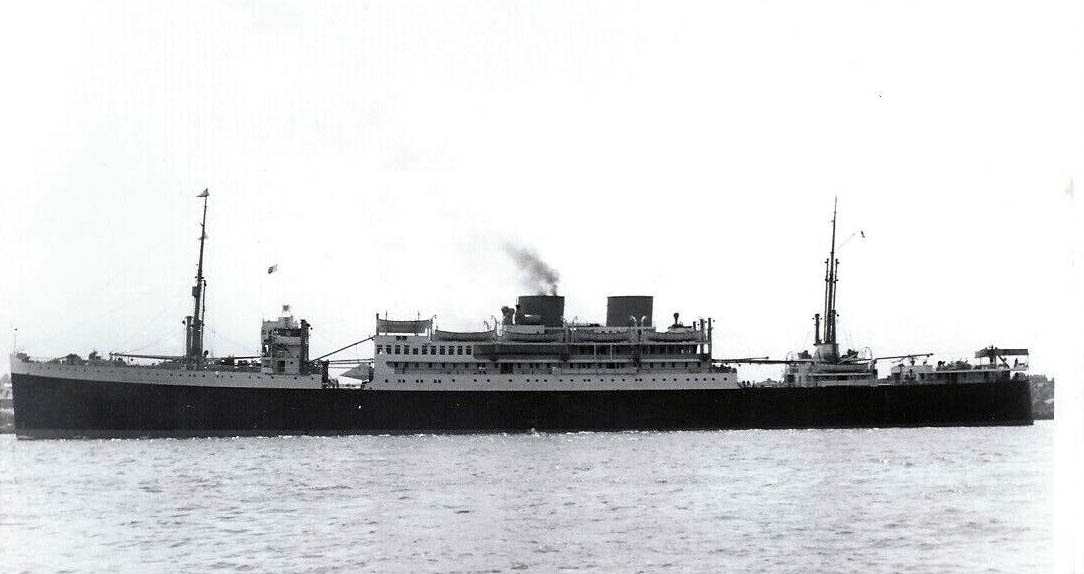
Highland Princess
Coulson volunteered for the CTC and arrived in Glasgow on 3 November on board the Royal Mail Lines ship, Highland Princess, from Halifax, Nova Scotia. Passage to Britain was a dangerous activity and the press reported that 19 members of the CTC had been killed when their ship was sunk at about the time Coulson disembarked in Glasgow. Recruitment must also have included junior scientists in biological and chemical fields because Coulson was assigned to work in nutrition at the Lister Institute in London. I write ‘London’ because during the war the various departments of the Lister Institute were widely scattered and he may, or may not, not have been at the site in central London. I do know that some of the nutritionists at the Lister were moved to Cambridge but not whether this applied to all of them. When the USA entered the war, Americans serving in the CTC were permitted to delay their call-up into US forces until they had completed their three-year contract.

At the Lister laboratories Coulson worked with Philipp Ellinger (1887-1952) who had escaped Nazi Germany in 1933 and who worked on the B vitamins. Ellinger’s obituary in Nature shows his main interest at this time was nicotinic acid, now better known as niacin or Vitamin B3, only then having recently been isolated as the agent that prevents pellagra:

…he interested himself in the metabolism of nicotinamide in man and animals, and studied very thoroughly, during the next few years, the elimination of nicotinamide methochloride in normal and nicotinamide-deficient persons. The results of these researches revealed that the intestinal bacterial flora can form a very significant extra-dietary source of nicotinamide.

Ellinger and Coulson jointly, or Coulson alone, published seven major papers from the Lister between 1944 and 1946, including three in Nature. He continued to work on nicotinamide when he returned to Louisiana State University’s medical school and until he began work on the alligator and, occasionally, other reptiles with Hernandez.

In one of his papers with Ellinger, the background to the work was explained:

This work forms part of an investigation on nicotinamide deficiency carried out on behalf of the Air Ministry. We wish to thank Air Marshal Sir H. E. Whittingham, K.B.E., K.H.P., Director-General of the Medical Services of the Royal Air Force, for facilities provided, and Flight Lieutenant G. A. Smart for collecting samples from airmen. Our thanks are also due to L.A.C.W. [Leading Aircraft Woman] A. E. Wrigglesworth for technical assistance and to members of the Scientific and Technical Staff of the Lister Institute who volunteered as experimental subjects.

     …One of the authors (R.A.C.) is a member of the Civilian Technical Corps of the Air Ministry attached to the Lister Institute of Preventive Medicine for an investigation of nicotinamide deficiency.

The work on nicotinamide formed the basis of his PhD thesis awarded by the University of London. By working for the CTC Coulson completed a PhD in a little more than half the time needed in the USA. He completed his three years’ service and crossed the Atlantic on board SS Nieuw Amsterdam, fitted out not as the luxury liner but as a troopship, which left Gourock in the Clyde on 19 October 1944. He arrived in Boston on 25 October, en route, it was noted, to Canada and, presumably, the CTC transit centre there. 

This photograph from the Imperial War Museum shows the uniform
of the CTC being worn by William Henry Manning of Del Rio, Texas,
He was being presented with the British Empire Medal by Sir
Archibald Sinclair, Secretary of State for Air, on 19 May 1944.
On the left is Donald Lee Gill of Brooklyn, Commandant of the
Civilian Technical Corps. Image: IWM (CH13143)
In 1946 it was announced that those who had served in the RAF’s Civilian Technical Corps were being awarded the Defence Medal.

While Coulson and Hernandez seemed ahead of the game in stressing the integrative approach to physiology and biochemistry. They must have made the medical school at Louisiana State University a very different place to that is most universities.

Coulson was invited to London in 1983 to speak at a joint Zoological Society of London/British Herpetological Symposium held to mark the retirement of Angus Bellairs. I remember not being able to attend because I was already booked for another event. I regret not being able to have been present all the more now since It may have been my only opportunity to have heard and met Coulson.

A symposium, The Biology of the Crocodilia, was held at the annual meeting of the American Society of Zoologists held in New Orleans in 1987. An appreciation of Coulson’s achievements was given by Herbert Clay Dessauer (1921-2013), Coulson’s former student and also a professor of biochemistry in the same department—and a pioneer in molecular systematics of anole lizards. Dessauer (who also provided a list of Coulson’s publications up to 1989) concluded: 

Research has been central to Coulson's career, but he has many other interests and skills. He has been a champion of academic excellence at the Louisiana State University Medical Center: the organizer and first dean of its Graduate School, and a valued counsel to University administrators. He is somewhat of an eccentric, a wonderful story teller, and a warehouse of information on virtually any subject. He is a professor in the best sense of the title: a stimulating teacher, a "silver-tongued" lecturer, and a productive, innovative and imaginative scientist.


From Dessauer 1989


Coulson RA, Hernandez T. 1964. Biochemistry of the Alligator. A Study of Metabolism in Slow Motion. Baton Rouge: Louisiana State University Press.

Coulson RA, Hernandez T. 1983. Alligator Metabolism, Studies on Chemical Reactions In Vivo. Comparative Biochemistry and Physiology B 74, 1-182. doi: 10.1016/0305-0491(83)90418-2

Dessauer HC. 1989. Roland Armstrong Coulson. American Zoologist 29, 823-829.


Sunday, 26 May 2024

Angled Red Forester. A Butterfly in Hong Kong


AJP found this butterfly in Hong Kong last week right next to the Great Barbet nest he found earlier.

The Angled Red Forester (Lethe chandica) was first recorded was first recorded in Hong Kong in 2011. It is not known if these butterflies have simply expanded their range in southern China or if they were introduced as eggs or caterpillars on imported plants. Given they are found in Guangdong, my bet would be on the former.